 In 30 Seconds




Narendra Modi third term news: This news analysis explains Narendra Modi third term news for readers searching for clear, current and useful context from an India-focused global news outlet.
Narendra Modi third term news: key context for readers
The reason Narendra Modi third term news matters is that it connects headline developments with policy choices, markets, technology, diplomacy and the way India is understood by audiences in the West. This article keeps the search intent simple: what happened, why it matters, and what readers should watch next.
In focus: Narendra Modi third term. This analysis explains why Narendra Modi third term matters for readers in India and the West, and how it connects to policy, markets, technology or diplomacy.
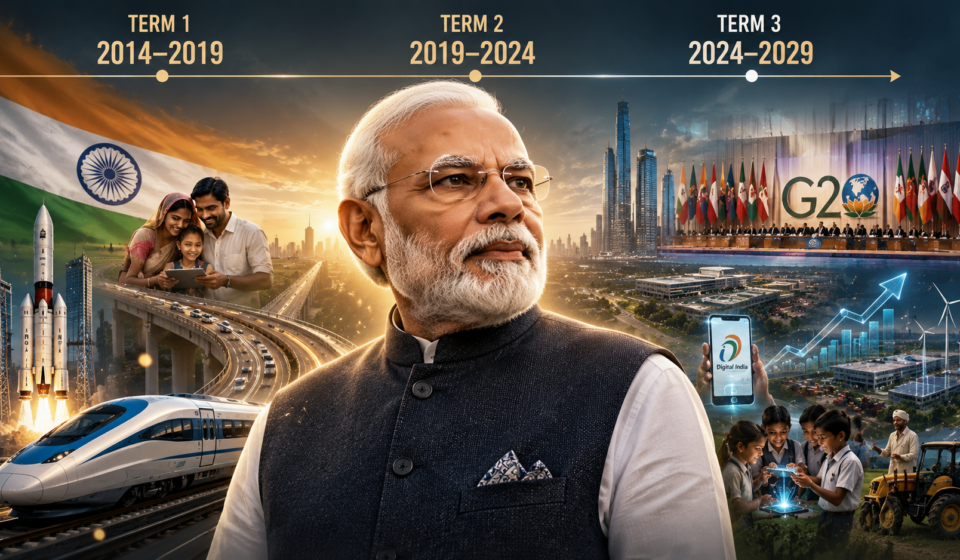
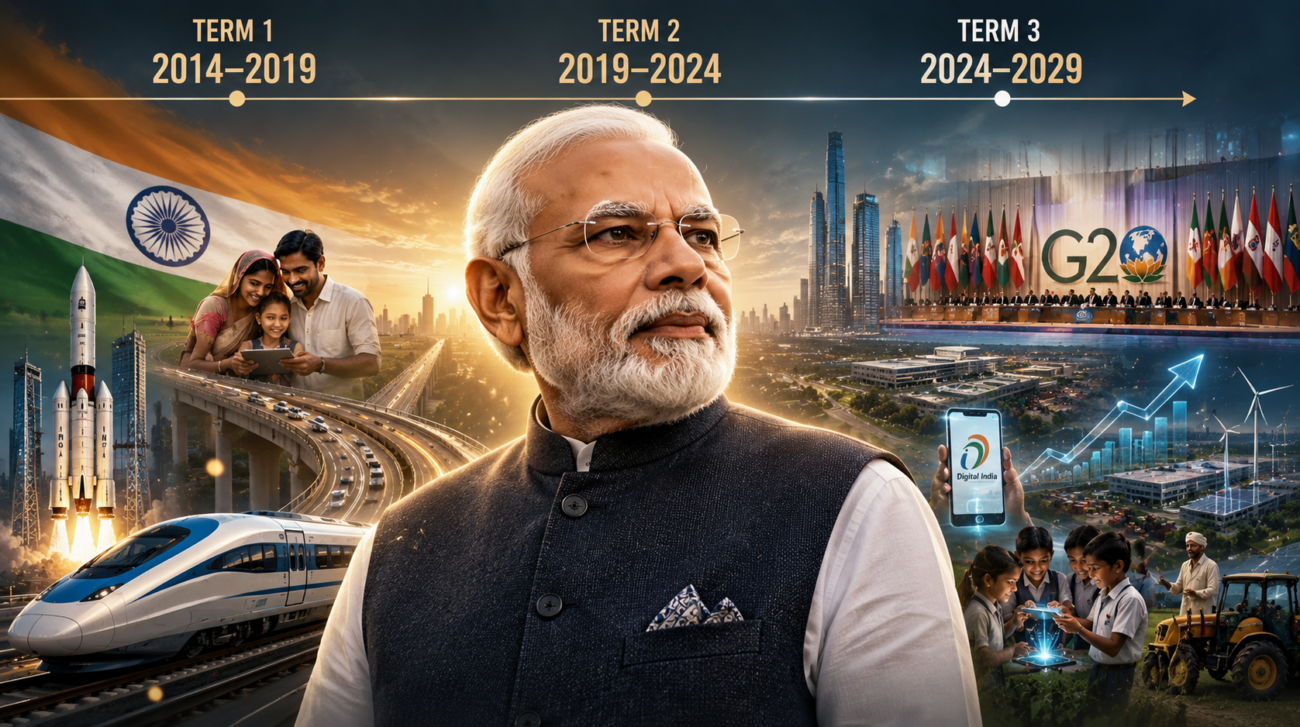
Narendra Modi has now spent twelve years as India’s prime minister, a span long enough that an entire generation of voters has never known a different occupant of the office, and earlier this month he became India’s longest continuously serving democratically elected prime minister, a milestone that prompted congratulatory messages from heads of government around the world. The framing his own office has chosen for the occasion, twelve years dedicated to trust, development and public welfare, is naturally the framing of a government marking its own anniversary. Whatever one makes of the rhetoric, the underlying record of activity is difficult to dispute, even for critics who disagree sharply with the direction it has taken.
The pace of public engagement around the milestone has been notable even by the standards of an office that rarely slows down. Within the span of a single week in June, Modi disbursed close to two thousand four hundred crore rupees in incentives under the Pradhan Mantri Viksit Bharat Rozgar Yojana, a scheme aimed at youth employment, met with Amazon chief executive Andy Jassy to discuss the company’s record forty eight billion dollar investment commitment in India, led the national observance of International Day of Yoga from Red Road in Kolkata, and inaugurated infrastructure projects worth more than forty seven thousand six hundred crore rupees in Mayurbhanj district of Odisha, marking two years of the state government there. He also commissioned three indigenously built naval ships, INS Dunagiri, INS Sanshodhak and INS Agray, at a port in Kolkata, a small but telling detail for a government that has made domestic defence manufacturing a consistent thread of its messaging.
What makes this period politically interesting is not the volume of activity itself, which has been a constant of Modi’s tenure since 2014, but the speculation now building around a potential cabinet reshuffle, with reports suggesting changes to the Union Cabinet could come as early as June 28 or 29. Reshuffles in the Indian system tend to function as signals rather than mere personnel changes, an opportunity for a government well into its third term to recalibrate which ministries and which individuals are trusted with the portfolios that matter most heading into the second half of the term. Whether this particular reshuffle, if it happens on the timeline being discussed, represents a genuine course correction or a more modest reshaping of responsibilities will only become clear once the actual list of appointments is announced.
There is also a quieter diplomatic rhythm running underneath the domestic activity that is easy to overlook amid the headlines. Modi met Britain’s Prime Minister Keir Starmer at the G7 summit in mid June, where the two leaders discussed the newly struck Iran peace deal and the importance of keeping the Strait of Hormuz open without tolls, a reminder that India’s economic interests are tied closely enough to Gulf stability that its prime minister is now a regular presence at conversations about Middle Eastern easing of conflict, a role that would have seemed unlikely for an Indian leader a decade or two ago. He is set to travel to Seychelles later this month as guest of honour for the country’s golden jubilee national day celebrations, a smaller but symbolically significant engagement that fits a broader pattern of India positioning itself as a steady partner across the Indian Ocean region.
Twelve years into any leadership, the interesting question stops being whether the person in charge is still working hard, since the evidence on that point rarely changes, and becomes instead whether the system around them is still capable of genuine course correction when the moment calls for it. The coming cabinet reshuffle, whenever it actually lands, will be one small but useful test of exactly that.
Why this matters for India and the West
For Indian readers, this story matters because it connects to national interest, economic security, technology access or India as a force in a changing world. For readers in the West, it offers a clearer view of India as an active decision maker in global affairs.
Key takeaways
- Main search intent: Narendra Modi third term.
- India angle: the issue can affect policy, markets, diplomacy, technology access or public debate.
- Western angle: it helps explain how global decisions are shaped by India scale, demand and strategic choices.
- What to watch: follow official statements, market reactions, policy updates and company announcements.
Explore more: India coverage | A Cabinet Reshuffle and What It Would Actually Signal
Frequently asked questions
What is the main focus of this article?
The main focus is Narendra Modi third term, explained with context rather than headline noise.
Why should Indian readers care?
Because the issue may influence India economy, foreign policy, technology base, public policy or strategic autonomy.
Why does it matter to readers in the West?
Because India choices increasingly affect supply chains, energy, technology, diplomacy and investment decisions beyond South Asia.
Sources and further reading
Latest news context
Readers looking for Narendra Modi third term news are usually trying to understand the current development, the background behind it and the likely impact. The Indic Journal frames this story for an audience in India and the West, with emphasis on credible facts, calm analysis and useful next steps.
How should readers follow this story?
Follow official statements, market signals, diplomatic updates, company announcements and policy documents. For continuing coverage, check the India section and related analysis across The Indic Journal.