
 In 30 Seconds




Story
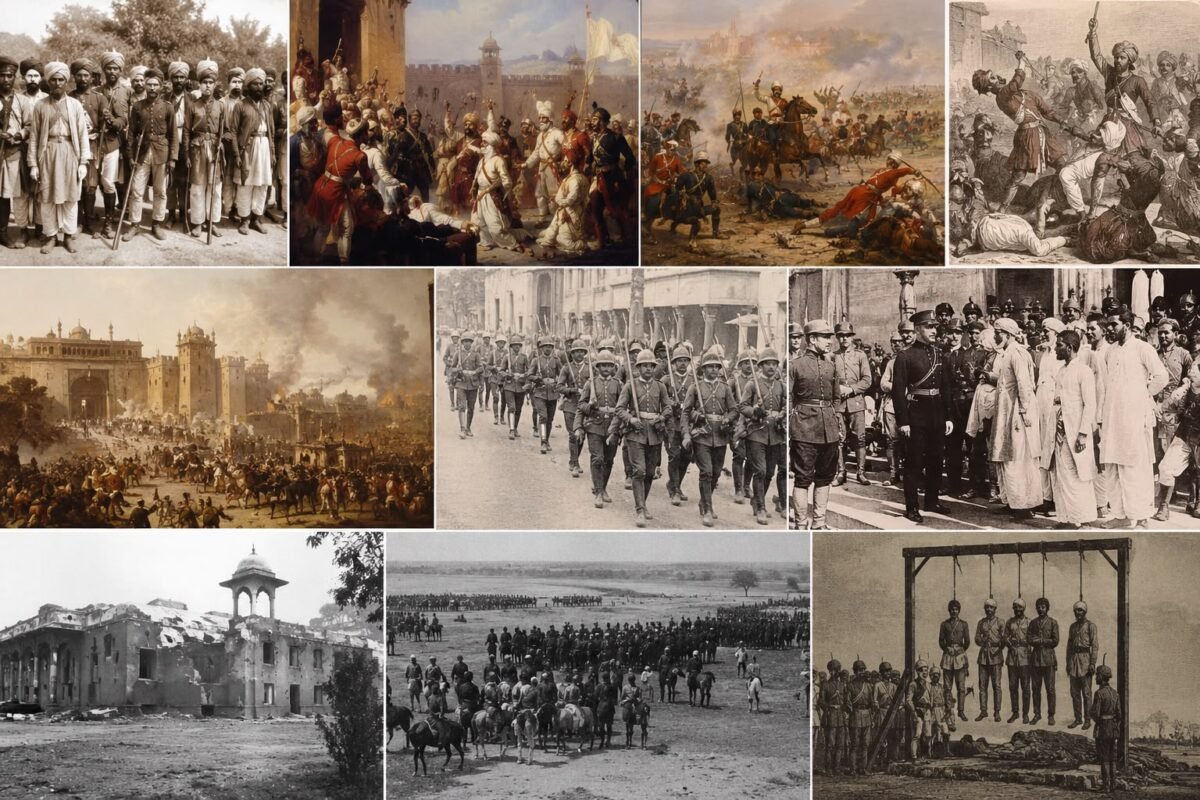
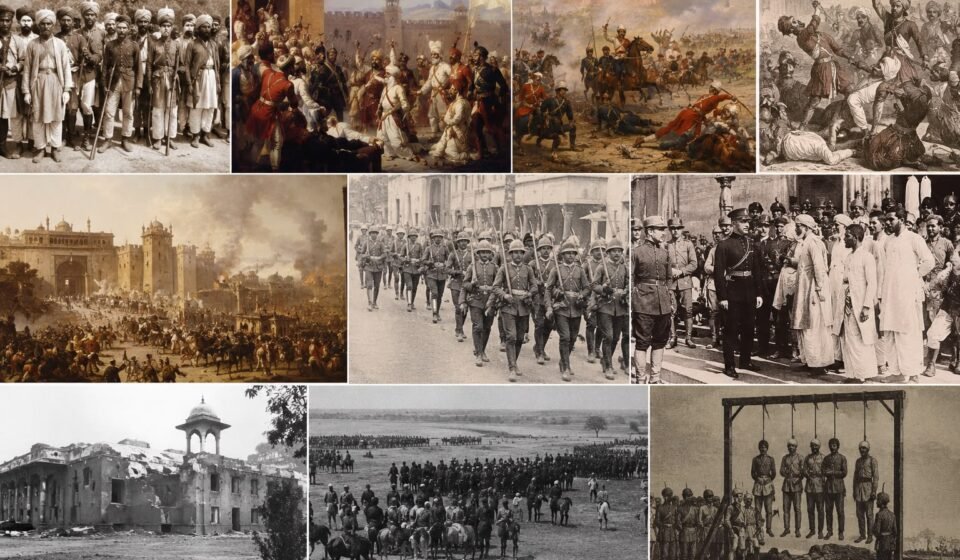
On the evening of 10 May 1857, sepoys of the Bengal Army stationed at Meerut broke open the jail, freed their imprisoned comrades, killed their British officers and marched through the night toward Delhi. By the following morning they had reached the walls of the old Mughal capital and proclaimed the reluctant emperor Bahadur Shah Zafar as their sovereign. What began as a soldiers’ mutiny swelled within weeks into the largest armed challenge the British Empire faced anywhere in the nineteenth century.
The immediate spark is well known. The new Enfield rifle required soldiers to bite open cartridges rumoured to be greased with the fat of cows and pigs, an affront to Hindu and Muslim sepoys alike. But the cartridge was only the match. The tinder had been gathering for decades. Lord Dalhousie’s Doctrine of Lapse had swallowed Satara, Jhansi, Nagpur and finally, in 1856, the wealthy kingdom of Awadh, whose annexation humiliated the very region from which the Bengal Army drew most of its soldiers. Peasants groaned under heavy land revenue demands. Artisans had watched their livelihoods wither as machine made British cloth flooded the bazaars. Religious anxieties deepened as missionaries grew bolder and reformist legislation touched matters of custom and faith.
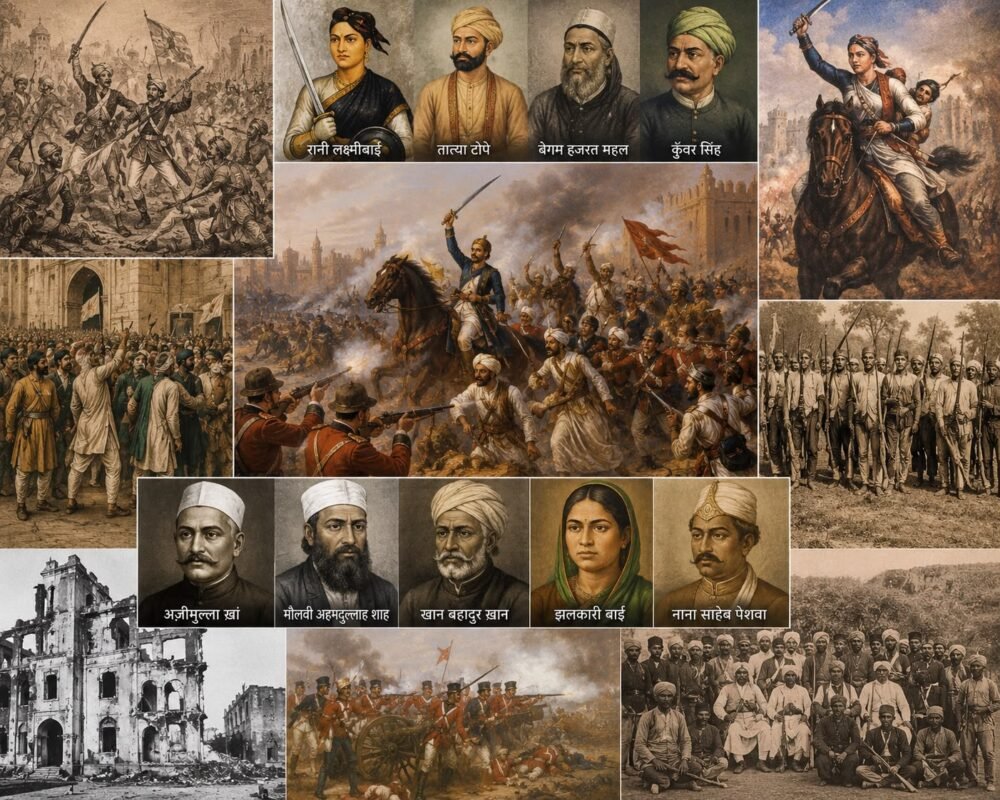
Once Delhi fell to the rebels, the revolt spread across the Gangetic plain with astonishing speed. In Kanpur, Nana Saheb, the adopted heir of the last Peshwa whom the Company had denied a pension, took command. In Lucknow, Begum Hazrat Mahal ruled in the name of her young son and besieged the British Residency for months. In Jhansi, Rani Lakshmibai, denied her adopted son’s succession, transformed from a wronged widow into the most celebrated warrior of the rebellion. In Bihar, the aged zamindar Kunwar Singh, nearly eighty years old, fought the Company’s forces across hundreds of miles. Tatya Tope, Nana Saheb’s brilliant lieutenant, kept armies in the field long after the great cities had fallen.
Yet the revolt, for all its fury, remained fatally uneven. The Punjab, only recently conquered, stayed quiet, and Sikh soldiers marched with the British against Delhi. The Bombay and Madras armies did not rise. Most princely states, whatever their private feelings, calculated that the Company would win and lent it troops, money and supplies. The rebels had courage in abundance but no unified command, no common plan and no answer to the telegraph, which allowed the British to move information faster than any horseman could ride.
The reconquest was merciless. Delhi fell in September 1857 after a siege of extraordinary violence, and the city was given over to plunder and execution. Bahadur Shah Zafar was tried and exiled to Rangoon, his sons shot without ceremony. Lucknow was retaken in March 1858. Rani Lakshmibai died in battle near Gwalior in June 1858, dressed as a soldier, and even the British general who fought her called her the best and bravest of the rebel leaders. Tatya Tope was betrayed, captured and hanged in 1859. Villages suspected of sympathy were burned, and men were blown from the mouths of cannon in spectacles of calculated terror.
Historians have argued ever since about what to call these events. The British wrote of a Sepoy Mutiny, a word chosen to shrink the rebellion into an affair of disgruntled soldiers. Vinayak Damodar Savarkar, writing in 1909, named it the First War of Indian Independence. Modern scholarship tends toward a middle ground, seeing a great uprising in which mutinous soldiers, dispossessed princes, ruined landlords, anxious peasants and angry townsmen fought side by side for many different reasons, united chiefly by the desire to be rid of the Company’s rule.
What no one disputes is the scale of its consequences. The East India Company, which had ruled India for a century, was abolished. The Crown assumed direct control through the Government of India Act of 1858. The army was reorganised so that Indian soldiers would never again outnumber British ones so heavily, and artillery was kept in British hands. The policy of annexation was abandoned and the princes were converted from victims into pillars of the Raj. A deep mutual suspicion settled between rulers and ruled that never fully lifted.
The revolt failed on the battlefield, but it succeeded in the imagination. The names of Lakshmibai, Kunwar Singh and Begum Hazrat Mahal passed into folk song and legend, and when a new generation of nationalists arose half a century later, they reached back to 1857 as proof that India had never accepted foreign rule quietly. The uprising was crushed in blood, yet it drew the line from which the long road to 1947 would eventually be measured.



Wow, what a story, truly inspiring.