
 In 30 Seconds




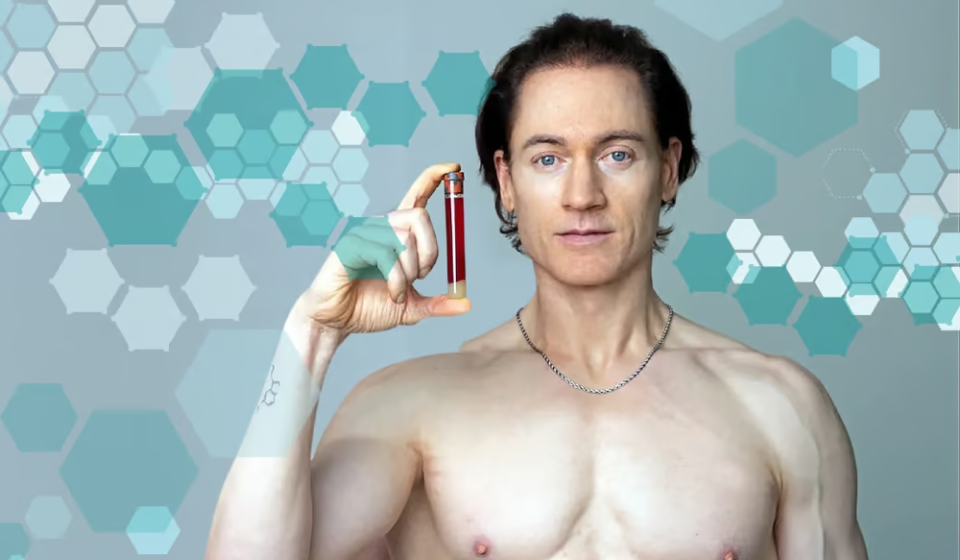
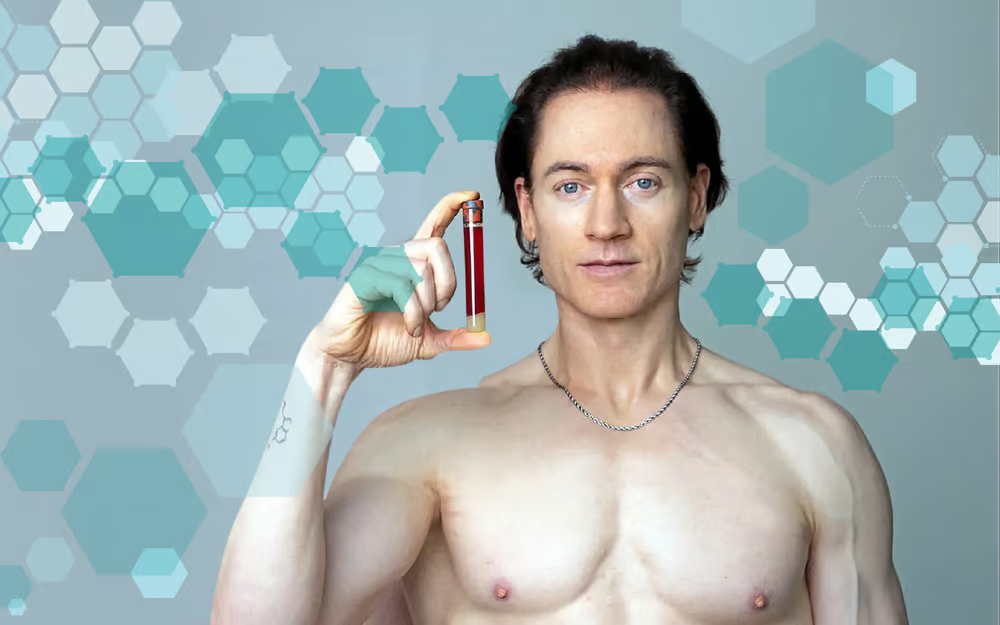
Bryan Johnson, the widely recognized figure in the longevity space, has recently disclosed a significant health challenge, an incurable autoimmune disease identified as autoimmune gastritis. This revelation, first reported by NDTV, has cast a new light on his relentless pursuit of biological youth, particularly given his own stark description of the condition: “My Stomach Is Eating Itself.” Johnson, known for investing an estimated $2 million annually into his intricate regimen for age reversal, has concurrently announced an experimental strategy to tackle this latest medical hurdle.
The news sends a ripple through the biohacking community and beyond, as Johnson epitomizes the aspiration for extreme human lifespan extension and the optimization of bodily functions through meticulous self experimentation. His public pronouncements and detailed sharing of his health data have made him a focal point for discussions surrounding the future of human health and the boundaries of current medical science. The diagnosis of an incurable condition presents a profound irony for someone so dedicated to conquering the physiological declines associated with aging, forcing a reconsideration of the inherent complexities and unpredictable nature of the human body.
Background
Bryan Johnson rose to prominence as a software entrepreneur before dedicating his considerable resources and personal focus to the ambitious endeavor of reversing biological age. His initiative, famously dubbed Project Blueprint, involves an extraordinary daily regimen encompassing strict dietary controls, rigorous exercise protocols, and an extensive array of medical tests and interventions. The project aims to achieve the biological markers of a much younger individual through a data driven approach, making Johnson a leading proponent of biohacking and an icon in the longevity movement.
His public persona is built upon a foundation of scientific rigor and an unwavering commitment to health optimization, often sharing insights into his blood work, organ health, and various biometric data points. This transparency has drawn both fervent admirers and skeptical critics. Johnson’s stated goal is to achieve maximal health and minimize the rate of aging for every organ in his body, striving for a level of physiological performance typically seen in an 18 year old. The financial outlay for this project, reportedly around $2 million each year, underscores the intensity and scale of his efforts, employing a team of medical professionals to oversee his every biological parameter. The diagnosis of an autoimmune disease, which by definition involves the body’s own immune system attacking healthy tissues, introduces an unexpected and formidable challenge to this meticulously managed quest for perpetual youth and optimal health.
Timeline of Events
2026-07-06 09:16:16: Story first reported. Longevity guru Bryan Johnson has been diagnosed with an incurable autoimmune disease, autoimmune gastritis, and has revealed an experimental plan to address it. This singular event marked the public disclosure of a significant health development for the prominent biohacker, initiating widespread discussion across various media outlets including NDTV, MSNBC, The Times of India, The Economic Times, and AFR, according to reports.
Why It Matters
This diagnosis carries substantial weight, not only for Bryan Johnson personally but also for the broader discourse around longevity science, biohacking, and the inherent limitations of human biology. For Johnson, whose entire public image and project are predicated on controlling and optimizing every facet of his health, an incurable autoimmune disease represents a formidable and seemingly intractable obstacle. It challenges the very premise that sufficient data, resources, and dedication can entirely circumvent the complexities of biological degradation and disease.
The revelation highlights the unpredictable nature of the human body, even under the most scrutinized and controlled conditions. While Johnson seeks to achieve biological markers of youth, his immune system has paradoxically turned against his own gastric cells. This situation prompts important questions about the ultimate ceiling of human health optimization and whether certain conditions are simply beyond the reach of current or even foreseeable biohacking interventions. For his followers and the wider longevity community, the diagnosis could serve as a sobering reminder that even the most advanced and well funded efforts may encounter unforeseen biological hurdles. It might also ignite further debate on the ethical implications and realistic expectations surrounding the pursuit of extreme longevity, particularly when confronted with conditions that current medicine deems incurable. The incident could influence public perception of biohacking, shifting focus from a purely proactive, preventative narrative to one that acknowledges the unpredictable onset of disease.
What Could Happen Next
Following this significant health announcement, several developments could unfold. Bryan Johnson will likely continue to share updates on his condition and the progress of his experimental plan. Given his track record of transparency and detailed self reporting, these updates will be closely monitored by medical professionals, longevity enthusiasts, and the general public. The specifics of his experimental treatment, though not fully detailed in initial reports, will be scrutinized for their scientific basis and potential efficacy, potentially opening new avenues of research for autoimmune gastritis or related conditions.
The broader scientific community may observe Johnson’s case as a unique, albeit uncontrolled, study in the challenges of managing autoimmune disease within an extreme longevity regimen. His experience could contribute to a deeper understanding of the interplay between lifestyle, diet, and immunological responses, even if his individual results are not directly generalizable. Furthermore, the commercial landscape of longevity and anti aging products may see an impact, with increased discussions about the limits of what these interventions can truly achieve. Public discourse on health and aging is also expected to evolve, incorporating the nuances of unforeseen biological challenges, even for those at the forefront of health optimization. Johnson’s journey will likely continue to spark conversations about the very definition of health and the pursuit of longevity in the face of conditions that defy conventional solutions.
Frequently Asked Questions
What is autoimmune gastritis?
Autoimmune gastritis is a chronic condition where the body’s immune system mistakenly attacks healthy cells in the stomach lining. This attack leads to inflammation and damage, particularly to the parietal cells responsible for producing stomach acid and intrinsic factor, which is crucial for absorbing vitamin B12. Over time, this can result in impaired digestion, nutrient deficiencies, and increased risk for certain other health issues.
How does this affect Bryan Johnson’s longevity goals?
The diagnosis of an incurable autoimmune disease, particularly one affecting digestion, presents a substantial challenge to Bryan Johnson’s ambitious longevity goals. His pursuit of age reversal relies heavily on meticulous nutrient intake and optimal bodily function. Autoimmune gastritis can compromise digestion, nutrient absorption, and overall physiological balance, directly conflicting with his aim to achieve and maintain the biological markers of a much younger individual. It forces him to contend with an internal biological adversary, highlighting the inherent complexities of the human body that even extensive biohacking efforts may not entirely mitigate.
What is Project Blueprint?
Project Blueprint is Bryan Johnson’s highly publicized and data driven initiative aimed at reversing biological aging. It involves an extremely rigorous and personalized regimen encompassing a strict vegan diet, precise exercise protocols, and a vast array of medical tests and interventions, all overseen by a team of medical experts. Johnson invests substantial resources, reportedly $2 million annually, into this project, which seeks to optimize every organ in his body to achieve the health profile of an 18 year old.