
 In 30 Seconds




The rival who forced the English to become conquerors was not Indian but French. Without the French challenge of the 1740s and 1750s, the East India Company might have remained a trading corporation for another century. It was in fighting France that the English learned the arts, and acquired the armies, that they then turned upon India itself.
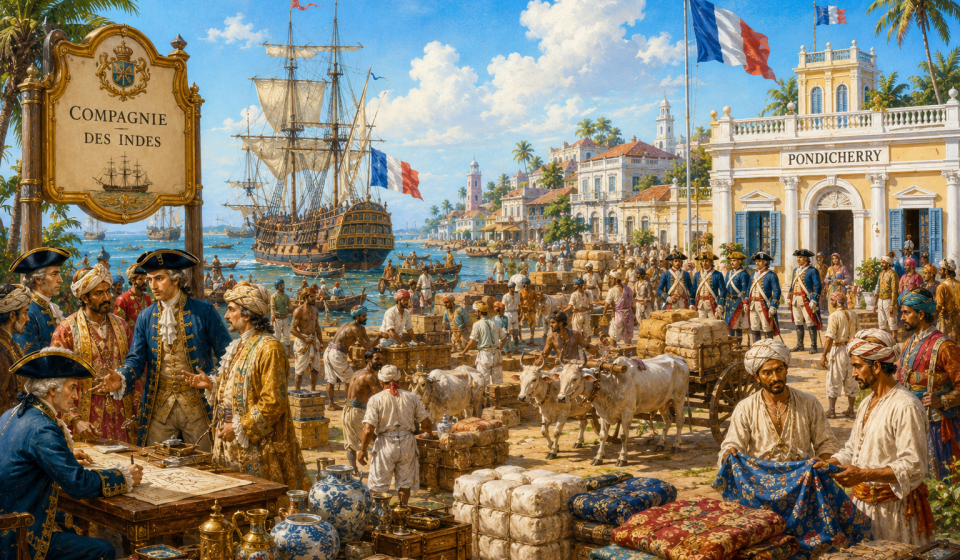
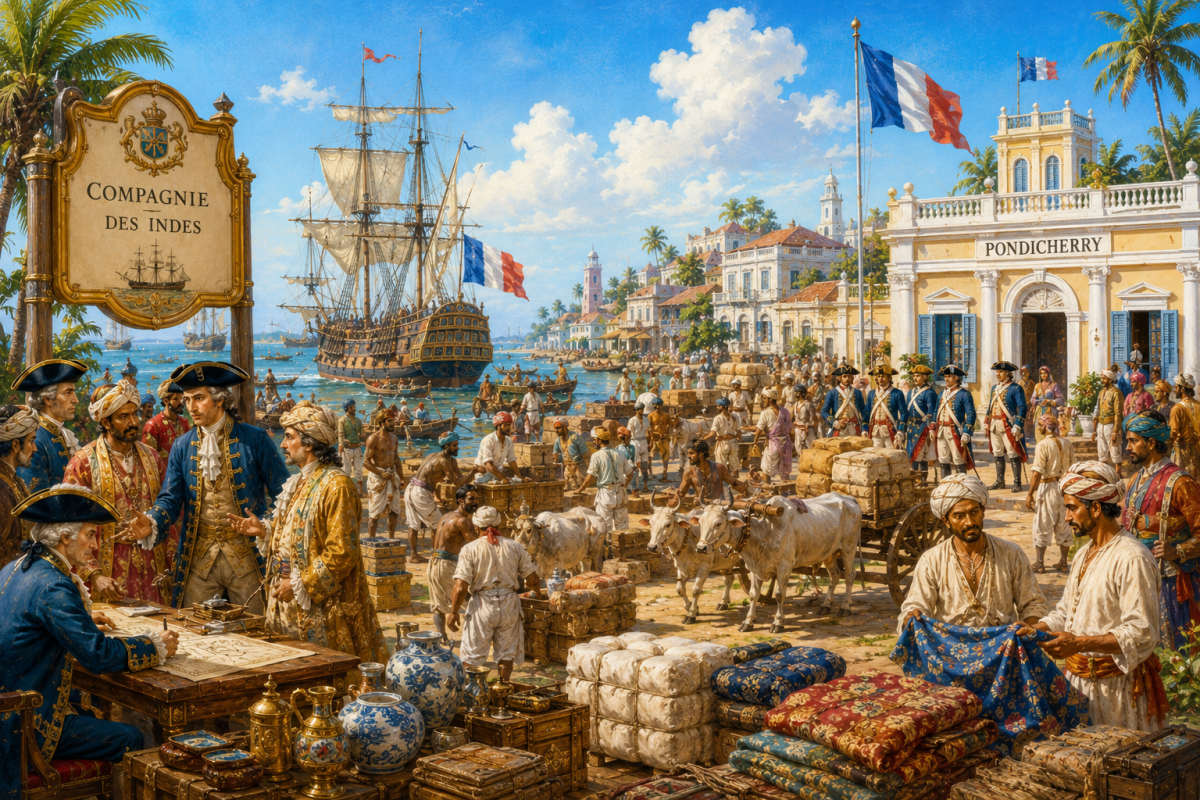
France came late to the eastern trade. The Compagnie des Indes Orientales was founded in 1664 by Jean Baptiste Colbert, the great minister of Louis XIV, as an instrument of state policy rather than a venture of merchants. That origin marked it forever. Where the English and Dutch companies were owned by investors who disciplined them toward profit, the French company depended on royal subsidy, royal appointments and royal purposes, flourishing when the crown was attentive and starving when the crown was at war in Europe, which was often. Its capital was subscribed largely under pressure from the court, and its direction answered to ministers in Paris.
Its Indian foundations were nevertheless laid with skill. Francois Martin established Pondicherry on the Coromandel coast in 1674, a modest purchase from the local ruler that he nursed through war and Dutch occupation into the finest European town in India, laid out on a grid with white walled streets that still stand. Chandernagore, upriver from Calcutta in Bengal, was acquired in the 1680s and grew into a serious commercial rival to the English settlement below it. Factories at Surat, Masulipatnam, Mahe on the Malabar coast and Karaikal completed the chain, and the islands of Mauritius and Reunion, then Ile de France and Bourbon, gave France the naval way stations of the eastern seas.
After decades of languor, the company was reorganised in the 1720s and entered its golden age. Under governors Lenoir and Benoit Dumas, and with Chandernagore transformed by the energy of a rising administrator named Joseph Francois Dupleix, French trade in the 1730s and 1740s grew to rival and in some years to press hard upon the English. Pondicherry’s population swelled, its Indian merchants and weavers prospering under a rule that was, by the standards of the age, orderly and lawful. Dumas obtained from the Mughal authorities the right to a personal rank and honours, and began the practice, pregnant with the future, of lending French soldiers to Indian princes in their quarrels, receiving territory and revenue in payment.
The French establishment had, however, three weaknesses beneath its polish. Its finances rested on the state, and the state’s heart belonged to Europe, where every war drained the navy and the treasury that Asia needed. Its trade, though grown large, remained smaller than the English, giving it a thinner cushion for the costs of conflict. And its greatest strength, the brilliance of individual servants, was also a weakness, for brilliance quarrelled with brilliance, and Paris, far away and preoccupied, umpired badly. The feud between Dupleix and the naval commander La Bourdonnais at the taking of Madras in 1746 would cost France the fruits of victory, and the recall of Dupleix himself in 1754 would decapitate French policy at its most ambitious moment.
Yet in the 1740s none of this was yet fatal, and to a clear eyed observer the French appeared at least the equals of the English in the coming contest. They held the better fortified capital in Pondicherry, the abler leadership in Dupleix, and the bolder vision, for it was the French who first grasped that European drilled infantry could dominate Indian battlefields and that trade could be secured, and surpassed, by political power over Indian states. Every device of the later British empire in India, the sepoy army, the subsidiary alliance, the puppet ruler maintained by European bayonets, was pioneered under the white flag of the Bourbons.
The wars that would decide the contest were ignited not in India but in Europe, when Austria and Prussia went to war in 1740 and dragged France and Britain in. The orders that reached Pondicherry and Madras in 1744 ended a century in which the companies had traded side by side in Indian ports through every European war. The age of the merchants was closing. The age of the soldiers had begun.
1707 to 1765 - The Empire Cracks, the Company Rises
Part 4 of 10 in this chapter.