 In 30 Seconds




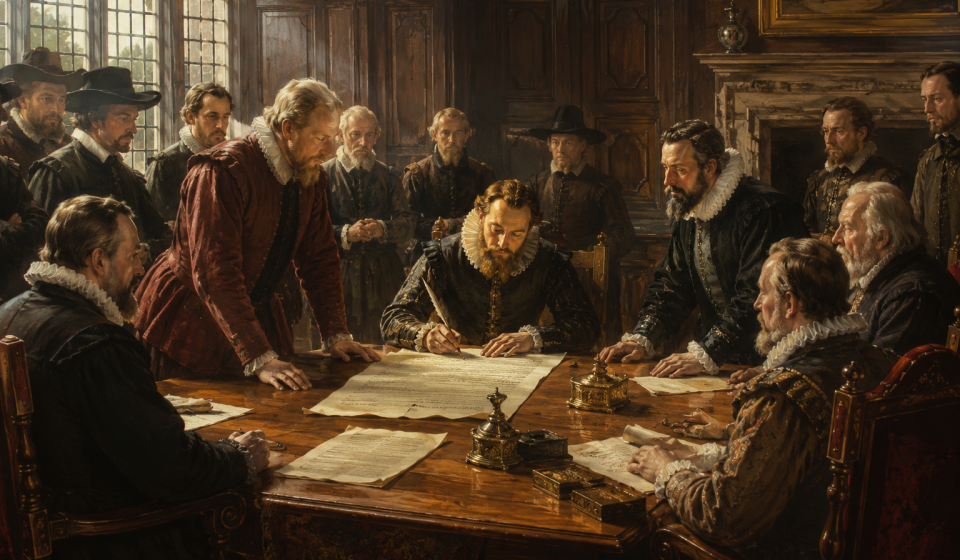
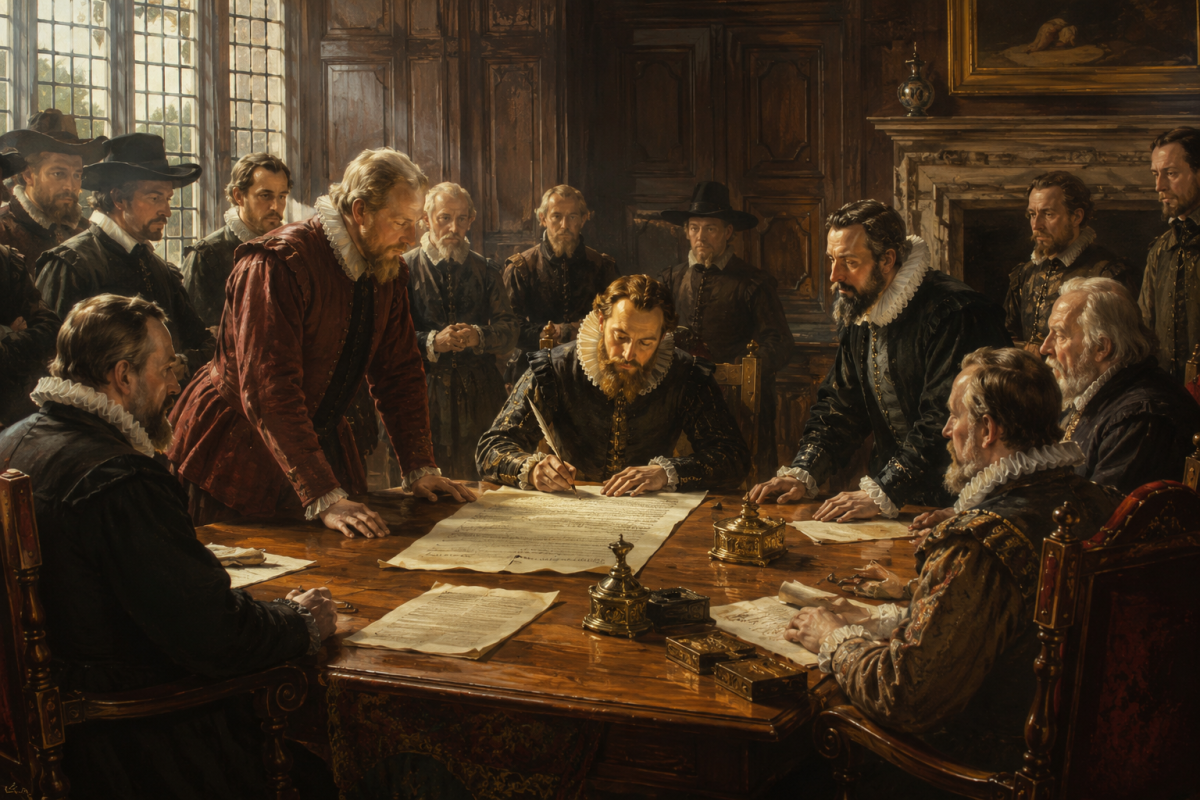
On the last day of the year 1600, Queen Elizabeth I of England signed a charter granting a group of London merchants a monopoly over English trade with all lands east of the Cape of Good Hope. The Governor and Company of Merchants of London Trading into the East Indies, as the document styled them, numbered a little over two hundred subscribers, mostly cloth traders, grocers and adventurers of the City. None of them intended to found an empire. They intended to buy pepper.
The spur was envy of the Dutch. Portugal had dominated the sea route to Asia for a century, but by the 1590s Dutch fleets were breaking that monopoly and returning from the spice islands with cargoes that made their investors rich beyond precedent. When the Dutch then raised the price of pepper in European markets, the merchants of London resolved to fetch it themselves. They petitioned the Queen, raised a capital of around seventy thousand pounds, and prepared their first fleet.
The charter they received was a curious document, and its curiosities shaped the next two and a half centuries. It granted not merely permission to trade but a monopoly against all other English subjects, renewable at fifteen year intervals. It allowed the Company to make laws for its own servants, to punish them, and, in later renewals, to build fortifications, coin money, raise troops and make war and peace with non Christian powers. A body of merchants thus carried in its founding papers the embryonic powers of a state, though generations would pass before those powers meant anything in India.
The first voyage sailed in 1601 under James Lancaster, four ships bound not for India at all but for the pepper ports of Sumatra and Java. The early Company was a spice enterprise, and India entered its calculations sideways. Indian cotton cloth, it turned out, was the currency of the spice trade, prized in the islands far above English woollens, which unsurprisingly found few buyers in the tropics. To buy spices, the English needed calicoes, and to buy calicoes they needed a footing in India. Commerce, not conquest, drew the Company toward the Mughal coast.
The organisation evolved quickly from a loose arrangement in which each voyage was separately funded toward a permanent joint stock, settled by the middle of the century. A Governor and a Court of Committees, later called Directors, met in London, dispatched annual fleets, and wrote patient instructions to factors who would not receive them for the better part of a year. Distance made the Company’s servants in Asia semi independent from the start, a structural fact with enormous consequences, for men on the spot would repeatedly commit their distant masters to policies, quarrels and eventually wars that London had never sanctioned.
It is worth pausing on the world as it stood in 1600. The Mughal Empire under Akbar was among the richest and most powerful states on earth, with a population and treasury beside which Elizabeth’s England was a modest offshore kingdom. India produced perhaps a quarter of the world’s manufactures, its textiles clothing Asia and Africa and soon Europe. The English arrived in Indian waters not as conquerors in waiting but as petitioners, one more group of sea traders begging leave to buy. Every letter from the early factors acknowledges the asymmetry. The Company survived at Mughal sufferance and knew it.
Nothing about the charter of 1600 made empire inevitable. For a hundred and fifty years the Company remained what it claimed to be, a trading corporation holding a string of coastal warehouses, its fortunes rising and falling with pepper prices, shipwrecks and wars in Europe. The transformation into a territorial power came later, out of Mughal decline, French rivalry and the ambitions of its own servants in Bengal. But the instrument was ready. When the moment came, the merchants of Leadenhall Street discovered that their Elizabethan charter, with its rights of army, coinage and war, had made them a government in embryo all along. The empire began, as so much of modern history begins, with a document about trade.
1600 to 1720 - The Arrival
Part 1 of 10 in this chapter.