 In 30 Seconds




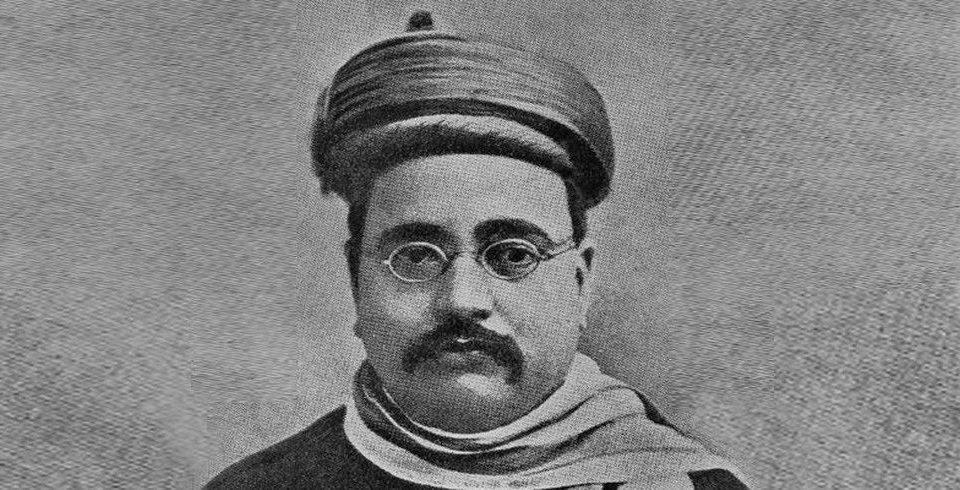
When Gandhi came home from South Africa in 1915 and was asked where he stood in India’s quarrelling politics, he answered with an image, that Pherozeshah Mehta had seemed to him a Himalaya, Tilak an ocean, but Gokhale was the Ganga, in whose refreshing stream one could bathe. Gopal Krishna Gokhale, dead that February at forty eight, had been for two decades the finest constitutional intelligence of the national movement, the empire’s most feared critic within its own rules, and the man whom both Gandhi and, remarkably, Jinnah claimed as their political guru. The moderate tradition has no better answer to its mockers than his life.
He was born in 1866 in a poor Chitpavan Brahmin family of Ratnagiri and made himself by scholarship, joining after college the band of men around the Deccan Education Society who took vows of poverty to teach at Fergusson College in Poona, a professor of English and mathematics at twenty. His public apprenticeship was served under the reformer M G Ranade, who set him to the drudgery that became his weapon, the mastery of blue books, budgets and statistics, and by his early thirties he was secretary of the Poona Sarvajanik Sabha, editor and witness, giving evidence before the Welby Commission in London on Indian expenditure with a command that startled its members. Poona politics in the plague years was a school of hard lessons, and the fiercest, the apology he tendered to the government in 1897 over relayed allegations against soldiers during the plague operations that he could not substantiate, taught him a scrupulousness about facts that became legend. His rivalry with his fellow townsman Tilak, two Chitpavan Brahmins embodying the movement’s two temperaments, gave nationalist politics its central debate for twenty years, conducted, for all its heat, between men who each acknowledged the other’s patriotism.
Elected to the Imperial Legislative Council in 1902, Gokhale made the empty ritual of the budget discussion into the event of the political year. His annual speeches, models of documented, courteous devastation, took apart military expenditure, the treatment of the famine surplus, the salt tax, whose reduction he actually forced, and the whole economics of the drain, in prose the government could neither answer nor ignore. The Viceroy’s finance members prepared for him as for an opposition, in a council that contained none. As president of the Congress at Banaras in 1905, in the storm after the partition of Bengal, he held the movement to constitutional protest while blessing the swadeshi awakening, and through the crisis years that followed, the Surat split of 1907 and the Morley Minto negotiations, he worked the London end of reform, pressing Morley toward the enlarged councils of 1909 and swallowing the disappointment of their communal electorates as the price of advance.
His deepest creation was an idea about political work itself. The Servants of India Society, founded in 1905, asked its members to take vows, poverty, obedience and the dedication of life, to the service of the country as a mission, training what Gokhale called national missionaries for education, social reform and the uplift of the poor and the depressed classes. Politics, the society’s constitution declared, must be spiritualised. Gandhi, who tried and failed to join it, borrowed the conception whole, and his ashrams and constructive program are Gokhale’s vows translated into a mass key. It was Gokhale who sent Gandhi on his tour of India with the famous counsel to travel for a year with his ears open and his mouth shut, Gokhale who raised the funds for South Africa’s satyagraha, and Gokhale whose Elementary Education Bill of 1911, defeated by official votes, first placed compulsory free schooling on India’s legislative agenda, a debt the republic acknowledged a century later.
He wore himself out at the empire’s committee tables, diabetic, exhausted, drafting evidence for the Islington Commission to the end, and died in February 1915. Tilak, released from Mandalay, came to his funeral and called him the diamond of India. The verdict that lasts, though, is the working one. The Constitution of India is written in Gokhale’s dialect, argued clause by clause in the institutions he taught his country to use, and the republic of committees, budgets and question hours is, as much as it is anyone’s, the Servant of India’s estate.
1885 to 1905 - Moderates and Awakening
Part 4 of 10 in this chapter.