 In 30 Seconds




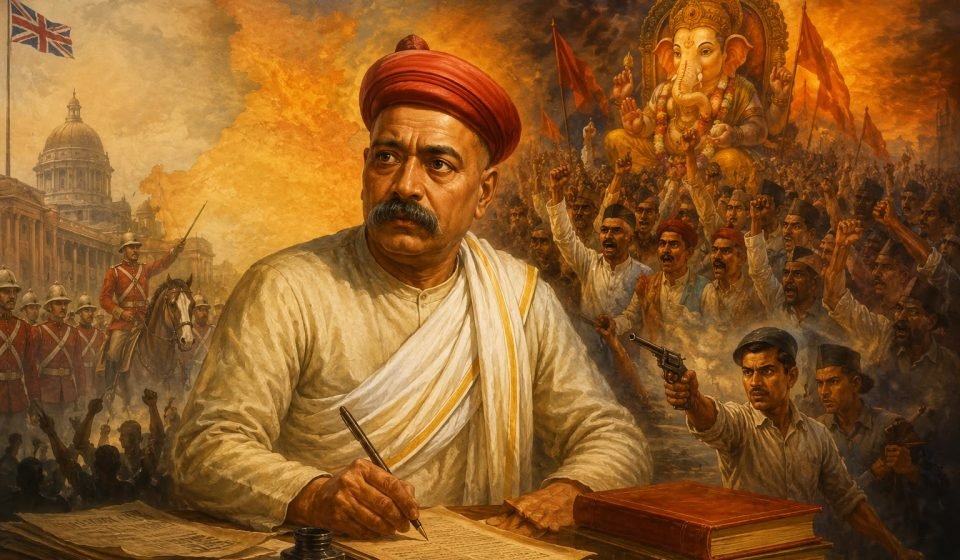
While the early Congress petitioned in English, a Poona editor was building, in Marathi, a different politics altogether, and the collision between the two would split the national movement and remake it. Bal Gangadhar Tilak, whom his people titled Lokmanya, honoured by the people, was the first Indian leader to see that freedom would be won not by persuading the rulers but by awakening the ruled, and the methods he pioneered in the 1890s, the festival, the popular press, the defiant trial, became the standard equipment of mass nationalism a generation before Gandhi nationalised them.
Tilak was born in 1856 in Ratnagiri, a Chitpavan Brahmin like his great rival Gokhale, and like him a founder of the Deccan Education Society and Fergusson College. The partnership broke early, over temperament and over the question that defined the age, whether social reform should precede political emancipation. Tilak, himself no traditionalist in private life, held that reform imposed or sponsored by a foreign government was poison, that the reformers were lending the conqueror a moral alibi, and that the nation’s self respect came first. He left the society for journalism, and his two weeklies, the Marathi Kesari, the Lion, and the English Mahratta, became the most influential publications in western India, the Kesari’s fierce, lucid Marathi reaching audiences no Congress resolution had ever touched.
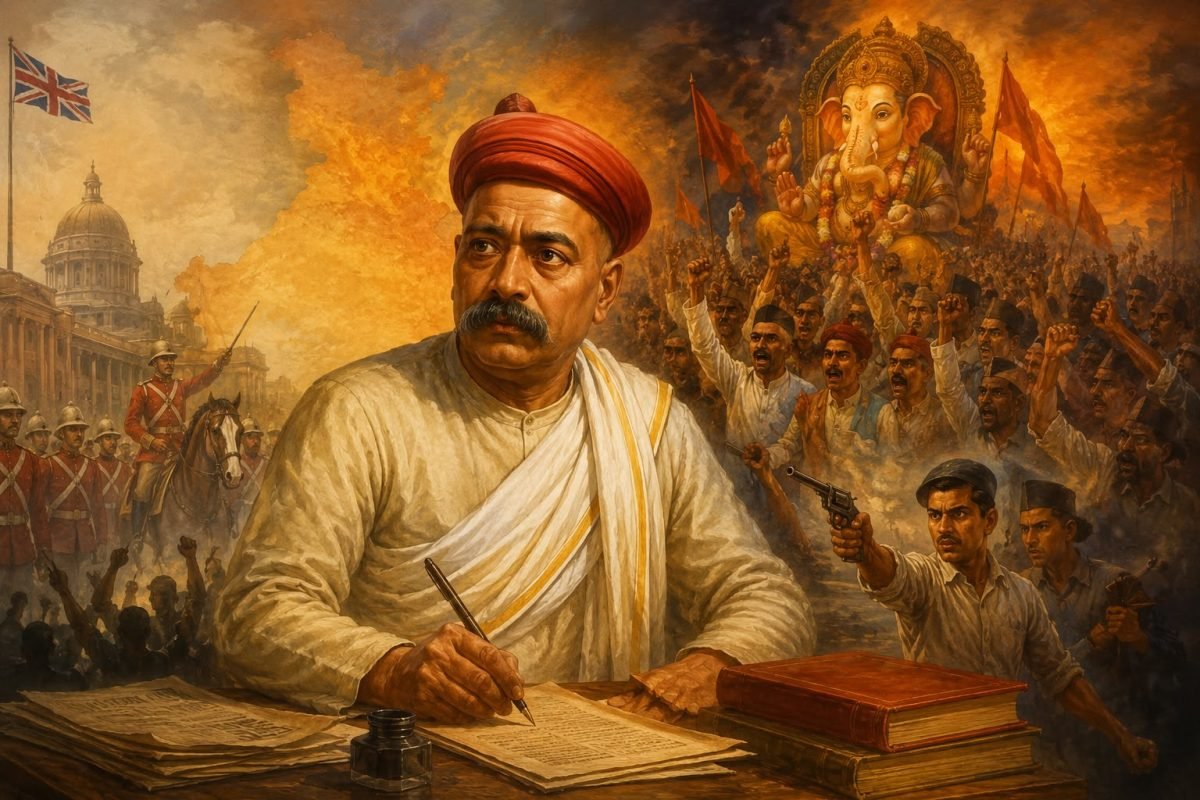
His genius was for the political use of what the people already loved. In 1893 he transformed the household worship of Ganapati into a public festival of processions, melas and lectures, and in 1895 he founded the Shivaji festival, raising the founder of the Maratha state as the symbol of self rule reborn. Both festivals built national feeling in an idiom the masses owned, and both, being Hindu idioms deployed in a decade of communal friction, drew then and draw now the criticism that the awakening they achieved carried a religious colour that the secular movement would later have to pay for. Tilak’s politics of popular energy was inseparable from this ambivalence, and honest history carries both halves.
The famine of 1896 and the plague that followed made him the tribune of the Deccan. Against the famine he sent Kesari to the villages with the Famine Relief Code translated, telling the peasant that relief was his legal right and not the government’s charity, the first no tax agitation in nationalist history in embryo. In plague stricken Poona, where the searches and evacuations under W C Rand’s committee outraged the city, Kesari thundered against the humiliation of homes and shrines. When the Chapekar brothers assassinated Rand in June 1897, the government, unable to implicate Tilak in the deed, prosecuted him for sedition on his Shivaji festival writings, and the trial made him a national figure. Convicted by a jury whose European majority outvoted its Indian members and sentenced to eighteen months, he emerged from prison the Lokmanya, the first leader whose imprisonment was a coronation. The state would try the instrument twice more, in 1908, when his defence of the bomb era’s young men earned him six years in Mandalay, where he wrote his commentary on the Gita as a gospel of action, and in 1916, when the prosecution failed and his doctrine, by then, had won the movement.
That doctrine was self reliance made political. Swaraj, self rule, he preached as a right and not a request, crystallised in the sentence forever joined to his name, that swaraj is my birthright and I shall have it. After the partition of Bengal in 1905 he carried to the national stage the fourfold program of the new party, swadeshi and boycott, national education and passive resistance, and at Surat in 1907 the Congress broke over precisely this program, the Moderates keeping the body, Tilak’s Extremists taking the future. His last phase, after Mandalay, built the Home Rule Leagues with Annie Besant, reunited the Congress at Lucknow in 1916 and signed there the pact with the Muslim League that briefly made Hindu Muslim unity a treaty. He died on 1 August 1920, on the eve of the launch of Non Cooperation, and Gandhi, taking up a movement Tilak’s methods had made possible, called him the maker of modern India. The Moderates had built the platform. Tilak had brought the people to it, and Indian politics has been a mass affair ever since.
1885 to 1905 - Moderates and Awakening
Part 5 of 10 in this chapter.