 In 30 Seconds




Anthropic models news: This news analysis explains Anthropic models news for readers searching for clear, current and useful context from an India-focused global news outlet.
Anthropic models news: key context for readers
The reason Anthropic models news matters is that it connects headline developments with policy choices, markets, technology, diplomacy and the way India is understood by audiences in the West. This article keeps the search intent simple: what happened, why it matters, and what readers should watch next.
In focus: Anthropic models. This analysis explains why Anthropic models matters for readers in India and the West, and how it connects to policy, markets, technology or diplomacy.
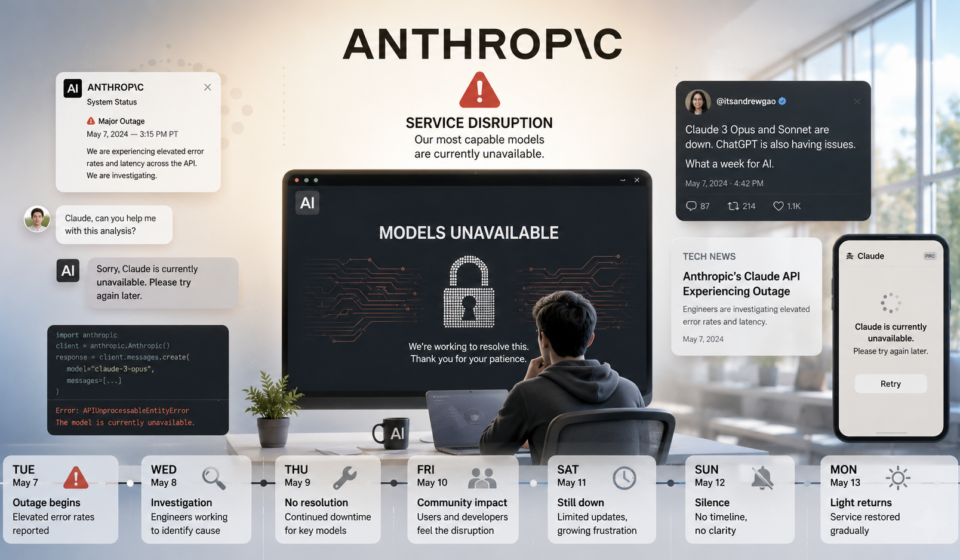
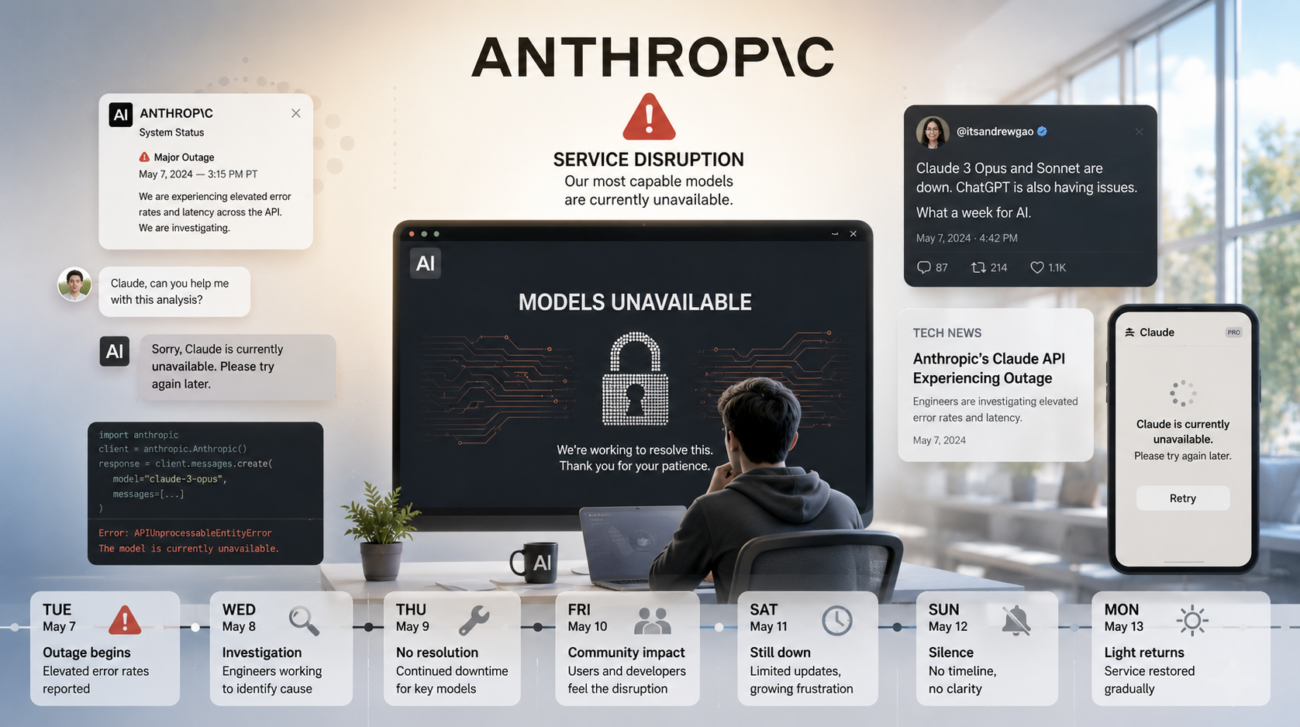
On June 9, Anthropic released Claude Fable 5 and Claude Mythos 5, the first models in what the company calls its Mythos tier, sitting above the existing Opus line in raw capability. By June 12, both were gone, pulled offline worldwide after the United States Department of Commerce issued an emergency export control directive citing national security concerns. As of late June, more than two weeks later, neither model has returned, and the episode has become one of the defining AI stories of the month, not because of what the models could do, but because of what their disappearance revealed about how fragile access to frontier AI has become.
The directive’s stated concern was narrow and specific, that safeguards built into the models to prevent their use in discovering software vulnerabilities could potentially be bypassed by sufficiently determined users. Anthropic’s response, reported widely in the days that followed, was that the underlying issue affected only a limited set of circumstances and could be replicated using other publicly available models, making the case that disabling two flagship products for every user on the planet was a wildly disproportionate reaction to a contained technical risk. The government’s order, however, demanded that Anthropic block foreign nationals specifically from accessing the models, a requirement the company says it had no reliable way to implement at the speed and accuracy the directive required, given how difficult it is to verify nationality in real time at internet scale. Faced with a choice between an unreliable partial block and a complete shutdown, Anthropic chose the latter.
Reporting since the directive has added an uncomfortable layer of context. Amazon chief executive Andy Jassy reportedly raised security concerns about the models directly with senior Trump administration officials before the restriction was issued, a detail that has fuelled speculation about how much of this decision was driven by genuine national security calculus versus competitive pressure from a company that has its own significant stake in the AI infrastructure market. More than a hundred cybersecurity professionals and industry leaders have since signed an open letter urging the government to reverse the restriction, arguing that the cybersecurity capability in question is not unique to Anthropic’s models and that the move does little to slow adversaries while meaningfully weakening the defensive tools available to everyone else.
The practical consequence for developers and researchers outside the United States has been immediate. With Fable 5 and Mythos 5 unavailable, attention shifted almost overnight to open weight alternatives, most notably GLM-5.2 from China’s Zhipu AI, released under a fully permissive MIT licence on June 13 with no regional restrictions whatsoever. Benchmark comparisons published in the days since show GLM-5.2 scoring competitively against the closed American frontier on coding and agentic tasks, while costing a fraction as much to run through its API, a combination that has made it the default fallback for any team locked out of the suspended Anthropic models. Anthropic’s own Claude Opus 4.8 and Sonnet 4.6 remain fully available throughout this period and continue to lead on several capability benchmarks, a detail that has somewhat undercut the narrative that the restriction has left users with nowhere else to turn within Anthropic’s own product line.
What this episode has actually established, whether or not the restriction is ever lifted, is a precedent that the AI industry had not fully reckoned with before this month. Export controls on chips take months or years to meaningfully bite, because building and shipping new hardware is slow. Export controls on a trained model can disable a product overnight, for the whole world, on the basis of a single government directive issued in a matter of days. That asymmetry, between how long it takes to build frontier AI and how quickly access to it can be switched off, is now part of the calculation every country and every company building on top of these systems will have to factor into their own planning.
Why this matters for India and the West
For Indian readers, this story matters because it connects to national interest, economic security, technology access or India as a force in a changing world. For readers in the West, it offers a clearer view of India as an active decision maker in global affairs.
Key takeaways
- Main search intent: Anthropic models.
- India angle: the issue can affect policy, markets, diplomacy, technology access or public debate.
- Western angle: it helps explain how global decisions are shaped by India scale, demand and strategic choices.
- What to watch: follow official statements, market reactions, policy updates and company announcements.
Explore more: Technology coverage | Open Weight Models Are Eating the Frontier’s Lunch | Agentjacking and the New Vulnerability Hiding Inside AI Coding Tools
Frequently asked questions
What is the main focus of this article?
The main focus is Anthropic models, explained with context rather than headline noise.
Why should Indian readers care?
Because the issue may influence India economy, foreign policy, technology base, public policy or strategic autonomy.
Why does it matter to readers in the West?
Because India choices increasingly affect supply chains, energy, technology, diplomacy and investment decisions beyond South Asia.
Sources and further reading
Latest news context
Readers looking for Anthropic models news are usually trying to understand the current development, the background behind it and the likely impact. The Indic Journal frames this story for an audience in India and the West, with emphasis on credible facts, calm analysis and useful next steps.
How should readers follow this story?
Follow official statements, market signals, diplomatic updates, company announcements and policy documents. For continuing coverage, check the Technology section and related analysis across The Indic Journal.