
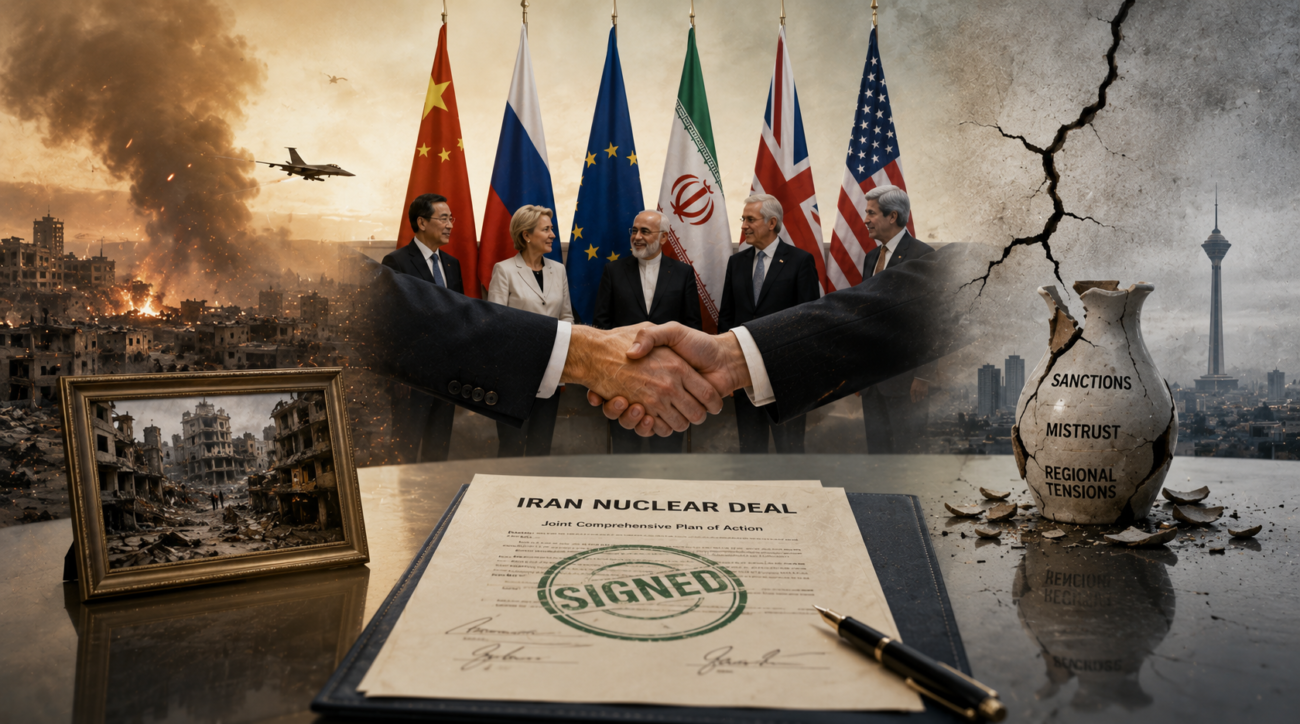
Iran deal news: This news analysis explains Iran deal news for readers searching for clear, current and useful context from an India-focused global news outlet.
Iran deal news: key context for readers
The reason Iran deal news matters is that it connects headline developments with policy choices, markets, technology, diplomacy and the way India is understood by audiences in the West. This article keeps the search intent simple: what happened, why it matters, and what readers should watch next.
In focus: Iran deal. This analysis explains why Iran deal matters for readers in India and the West, and how it connects to policy, markets, technology or diplomacy.
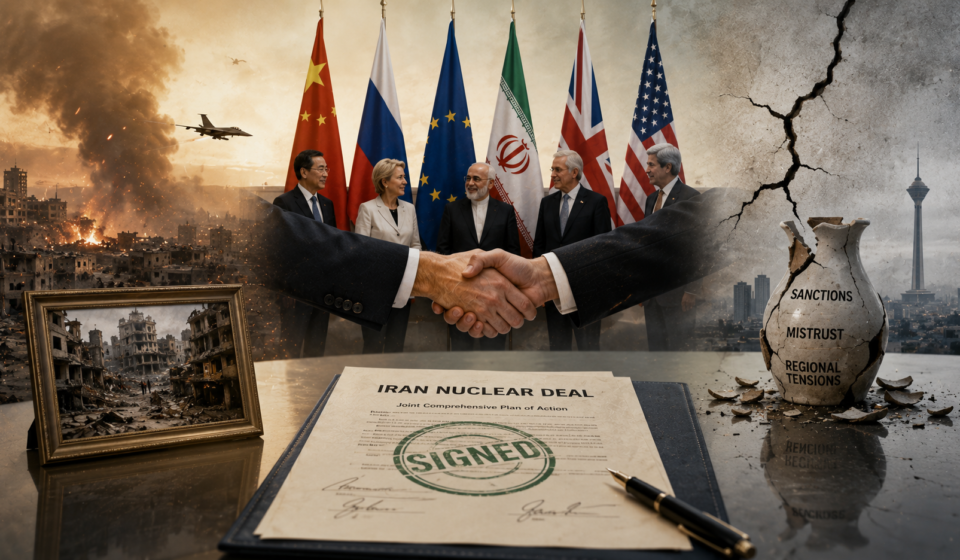
There is a particular kind of relief that arrives when a war pauses rather than ends, and the world has spent the past two weeks learning to live inside that feeling. On June 17, President Trump and Iranian President Masoud Pezeshkian signed what is being called the Islamabad Memorandum, a document that brought a formal close to more than a hundred days of conflict between the United States, Israel and Iran. The signing itself was almost theatrical in its staging, with Trump putting his name to the agreement remotely from the Palace of Versailles during a dinner with French President Emmanuel Macron following the G7 summit, while Pezeshkian signed his copy back in Tehran. Two men, two continents, one uneasy truce.
What the memorandum actually delivers is narrower than its language suggests. The Strait of Hormuz, blockaded in different ways by both sides for months, is to reopen without tolls, a detail that mattered enough to global markets that oil prices fell nearly five percent the day the deal was announced and the S&P 500 climbed almost two percent in response. The naval blockade the United States had imposed on Iranian ports is meant to lift. Hostilities in Lebanon, where Hezbollah and Israel have continued exchanging fire despite an official ceasefire, are supposed to stop, though Israeli Defence Minister Israel Katz said within a day of the signing that Israeli troops would remain in southern Lebanon indefinitely, a statement that tells you everything about how fragile the word ceasefire has become in this conflict.
What the memorandum does not deliver is anything resembling resolution. The question that started the war, what happens to Iran’s nuclear programme, has simply been deferred into a sixty day negotiating window that began on June 17 and will determine whether this becomes a lasting peace or merely an intermission. Trump told the New York Times that Iran would be permitted some level of low enrichment, a notable softening from his earlier insistence that the programme be dismantled entirely, the very justification he gave for going to war in February. Iran, for its part, wants access to billions of dollars in frozen assets and a lifting of sanctions that have strangled its economy for years. Neither side has published the full text of the agreement, which has allowed both governments to describe it to their own people in the most favourable possible terms, a tactic that works until the other side’s version of events becomes public and the gaps between the two stories start to matter.
Inside the United States, the deal has split opinion in ways that map uneasily onto party lines. Senate Minority Leader Chuck Schumer called it a fiasco and accused Trump of giving away the store, pointing to reports that the agreement could direct as much as three hundred billion dollars toward Iranian reconstruction. Even some of the war’s most enthusiastic supporters within Trump’s own coalition have started to ask why the administration will not release the full text of the memorandum, a question that tends to follow agreements which look better in summary than in detail. Talks in Switzerland the following week, at a luxury hotel overlooking Lake Lucerne, produced what negotiators called constructive but tense progress, including a new mechanism meant to prevent the Lebanon front from reigniting the entire deal.
For India and for the wider world, the most immediate consequence has been economic rather than diplomatic. A war that kept Gulf oil supplies uncertain for months had pushed energy costs higher across Asia, and the reopening of Hormuz, however fragile the arrangement proves to be, has already nudged forecasts in India’s favour, a connection we explore separately in our coverage of the country’s revised growth outlook. The deeper lesson of these two weeks, though, is one that diplomats have understood for a long time and that the rest of us keep relearning. A memorandum of understanding is not a peace treaty. It is a promise to keep talking, backed by nothing more durable than the willingness of both sides to honour it once the cameras move on to the next crisis.
Why this matters for India and the West
For Indian readers, this story matters because it connects to national interest, economic security, technology access or India as a force in a changing world. For readers in the West, it offers a clearer view of India as an active decision maker in global affairs.
Key takeaways
- Main search intent: Iran deal.
- India angle: the issue can affect policy, markets, diplomacy, technology access or public debate.
- Western angle: it helps explain how global decisions are shaped by India scale, demand and strategic choices.
- What to watch: follow official statements, market reactions, policy updates and company announcements.
Explore more: World coverage | Venezuela earthquake: Two boys pulled from rubble among 33 people rescued | Can the so-called nanobubbler save the Reflecting Pool?
Frequently asked questions
What is the main focus of this article?
The main focus is Iran deal, explained with context rather than headline noise.
Why should Indian readers care?
Because the issue may influence India economy, foreign policy, technology base, public policy or strategic autonomy.
Why does it matter to readers in the West?
Because India choices increasingly affect supply chains, energy, technology, diplomacy and investment decisions beyond South Asia.
Sources and further reading
Latest news context
Readers looking for Iran deal news are usually trying to understand the current development, the background behind it and the likely impact. The Indic Journal frames this story for an audience in India and the West, with emphasis on credible facts, calm analysis and useful next steps.
How should readers follow this story?
Follow official statements, market signals, diplomatic updates, company announcements and policy documents. For continuing coverage, check the World section and related analysis across The Indic Journal.