 In 30 Seconds




Middle East ceasefire news: This news analysis explains Middle East ceasefire news for readers searching for clear, current and useful context from an India-focused global news outlet.
Middle East ceasefire news: key context for readers
The reason Middle East ceasefire news matters is that it connects headline developments with policy choices, markets, technology, diplomacy and the way India is understood by audiences in the West. This article keeps the search intent simple: what happened, why it matters, and what readers should watch next.
In focus: Middle East ceasefire. This analysis explains why Middle East ceasefire matters for readers in India and the West, and how it connects to policy, markets, technology or diplomacy.
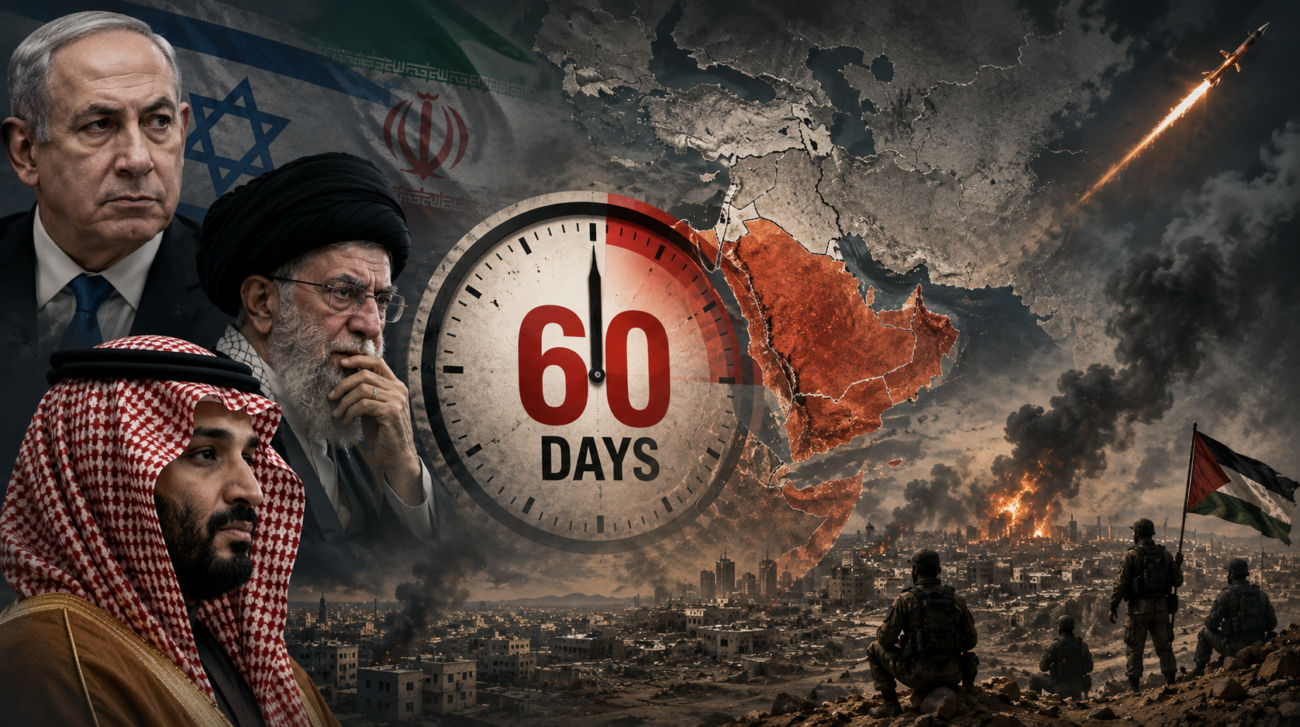
Wars do not usually end with a calendar attached, but the Islamabad Memorandum has given this one exactly that, a sixty day window beginning June 17 during which American and Iranian negotiators are meant to turn an interim truce into something permanent. Spend any time with the reporting coming out of the technical talks in Switzerland and you begin to understand why so many regional governments are treating the clock with more suspicion than relief.
The talks held at Burgenstock, the resort complex above Lake Lucerne, brought together a delegation led on the American side by Vice President JD Vance, Trump’s special envoy Steve Witkoff and his son in law Jared Kushner, with Pakistan’s Prime Minister Shehbaz Sharif playing the role he has occupied throughout this process, that of the indispensable go between. Iran’s Foreign Minister Abbas Araghchi described the session as having delivered major progress, listing waivers for oil and petrochemical exports, the lifting of the port blockade, partial release of frozen assets and the beginnings of a reconstruction plan as concrete gains for Tehran. A senior American official, speaking to reporters afterward, was more circumspect, describing the discussions as having covered every element of the nuclear file without claiming any of them had actually been settled.
The most fragile piece of the entire architecture is Lebanon. The memorandum’s framers built in a so called deconfliction cell, a mechanism involving the United States, Iran and Lebanon, facilitated by the same mediating countries that have shepherded this process from the start, intended to prevent fighting between Israel and Hezbollah from collapsing the wider deal. Araghchi himself called this Lebanon mechanism the first real test of the agreement, which is a diplomat’s way of admitting that everyone involved expects it to be tested early and often. Within days of the memorandum’s signing, Israel struck a Hezbollah stronghold in the southern suburbs of Beirut, prompting an unusually public rebuke from Trump, who wrote that the attack should not have happened on a day so close to peace, language that revealed both his investment in the deal’s optics and the limits of his influence over Israeli operations in Lebanon.
There is a structural tension here that the sixty day window cannot resolve on its own. Israel has stated plainly, through Prime Minister Netanyahu and Defence Minister Katz, that its military will remain in Lebanon for as long as it judges necessary, regardless of what Washington and Tehran agree between themselves. Iran has made an end to that very occupation one of its conditions for a lasting peace. The Strait of Hormuz, the artery through which a significant share of the world’s oil moves, has been declared open by the United States and closed by Iran’s Revolutionary Guard at different points within the same week, with each side accusing the other of bad faith over a waterway that neither fully controls.
What happens if the sixty days pass without a final agreement is the question nobody in Washington or Tehran wants to answer directly. The honest answer is probably that the ceasefire gets extended again, as it already has been once before, because neither government currently has the appetite to resume open war, and because the economic relief that has already flowed into global markets, falling oil prices, a calmer Strait, a rallying Dow, has created its own quiet constituency for keeping the peace alive even if nobody can fully agree on what it actually contains.
Why this matters for India and the West
For Indian readers, this story matters because it connects to national interest, economic security, technology access or India as a force in a changing world. For readers in the West, it offers a clearer view of India as an active decision maker in global affairs.
Key takeaways
- Main search intent: Middle East ceasefire.
- India angle: the issue can affect policy, markets, diplomacy, technology access or public debate.
- Western angle: it helps explain how global decisions are shaped by India scale, demand and strategic choices.
- What to watch: follow official statements, market reactions, policy updates and company announcements.
Explore more: Geopolitics coverage | Kuwait and Bahrain say Iran targeted them with drone and missile strikes | Washington’s New Export Control Doctrine and What It Means for the Rest of the World
Frequently asked questions
What is the main focus of this article?
The main focus is Middle East ceasefire, explained with context rather than headline noise.
Why should Indian readers care?
Because the issue may influence India economy, foreign policy, technology base, public policy or strategic autonomy.
Why does it matter to readers in the West?
Because India choices increasingly affect supply chains, energy, technology, diplomacy and investment decisions beyond South Asia.
Sources and further reading
Latest news context
Readers looking for Middle East ceasefire news are usually trying to understand the current development, the background behind it and the likely impact. The Indic Journal frames this story for an audience in India and the West, with emphasis on credible facts, calm analysis and useful next steps.
How should readers follow this story?
Follow official statements, market signals, diplomatic updates, company announcements and policy documents. For continuing coverage, check the Geopolitics section and related analysis across The Indic Journal.