
 In 30 Seconds




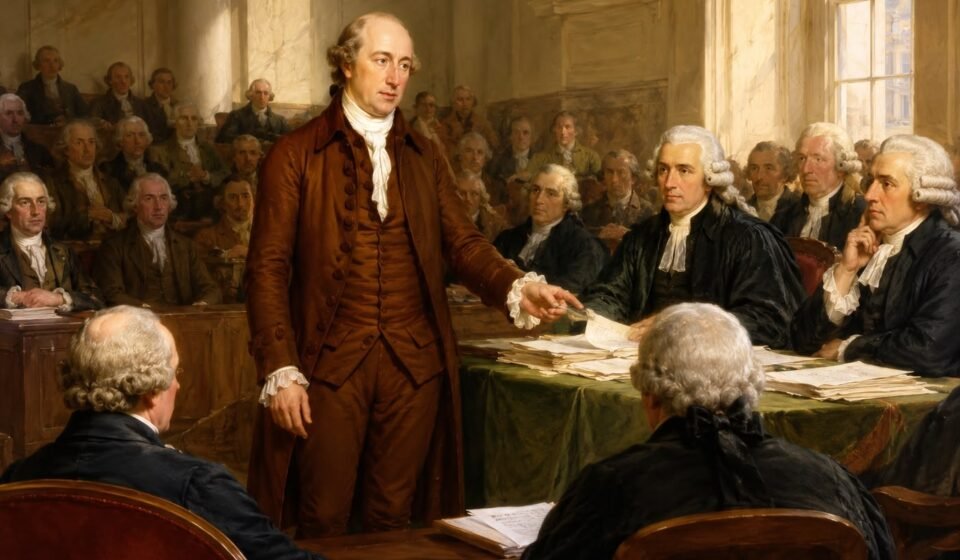
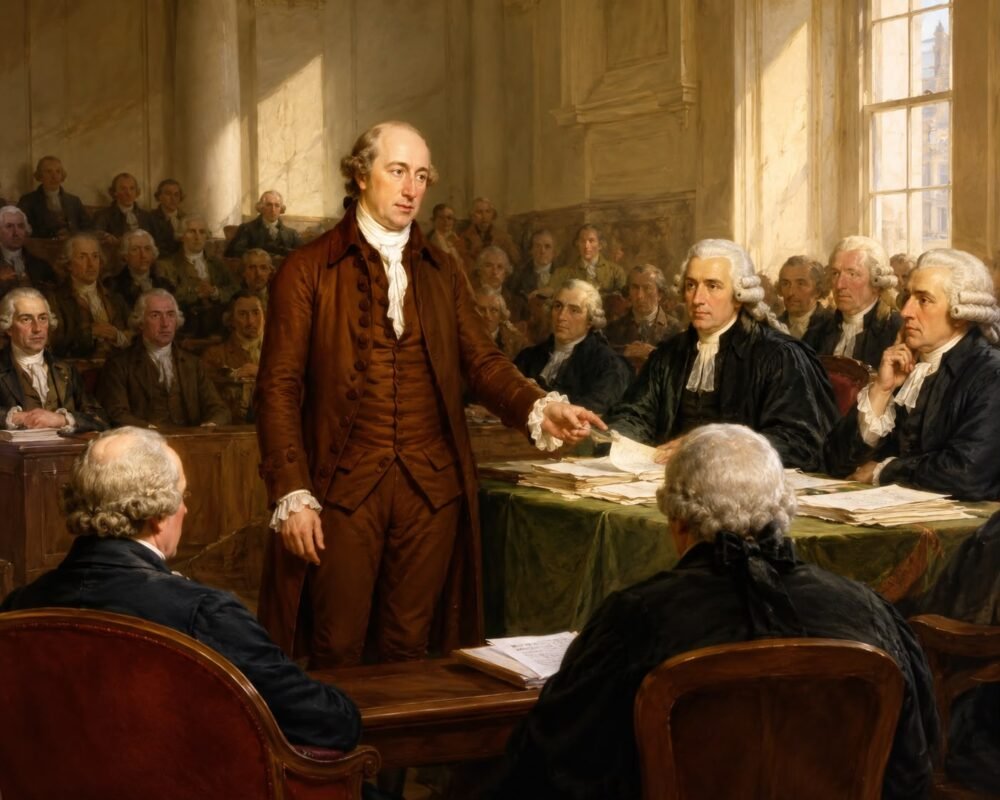
On 13 February 1788, in Westminster Hall, where kings had been tried, the peers of Great Britain assembled to judge the first Governor General of Bengal. London society fought for tickets, Queen Charlotte attended, and for four days Edmund Burke opened the case against Warren Hastings in an oration that men who heard it never forgot, arraigning him, in the name of the people of India, whose rights he had trodden down and whose country he had turned into a desert. The trial that began in that thunder lasted seven years, ruined the defendant financially, exhausted the nation’s attention, and ended in acquittal on every charge. It settled nothing about Hastings and everything about the question it really tried, which was whether an empire could be made answerable to conscience.
The impeachment was the work of an improbable alliance, Burke’s moral fury and the parliamentary interest of Philip Francis, Hastings’ old enemy from the Calcutta council, who fed Burke a decade of documents and grievances. Burke had convinced himself, not without material, that the Company’s rule in India was a system of oppression and that Hastings was its arch criminal, the captain general of iniquity. The charges that survived parliamentary scrutiny centred on the Benares affair, the deposition of Raja Chait Singh after impossible demands, on the treatment of the Begums of Awadh, whose treasure had been extracted for the Company under duress applied to their servants, and on presents and contracts alleged to be corrupt. The Commons voted the impeachment when Pitt, unexpectedly, allowed the Benares charge, and the great trial began.
As law, the proceeding was a slow catastrophe. It sat only a few days in each parliamentary session, so that seven years yielded under a hundred and fifty sitting days, and by the end a third of the peers who began it were dead. The managers, Burke, Fox and the playwright Sheridan, whose speech on the Begums of Awadh was reckoned the most dazzling parliamentary performance of the age, ran a prosecution of magnificent rhetoric and untidy evidence. Hastings, proud, unbending and increasingly pitied as the years ground on, complained that he was being tried by eloquence for the crime of having saved India for Britain. In April 1795 the Lords acquitted him by great majorities on every article. The defence had cost him some seventy thousand pounds and left him dependent on the Company’s pension and loans. He lived on, in scholarly retirement among his Indian memories, until 1818, receiving in old age the applause of a Parliament that had once arraigned him, and declining, it is recorded, ever to forgive Francis.
Posterity’s verdict has been more divided than the peers’ was. Few historians now accept Burke’s portrait of a monster, and fewer still the Victorian counterportrait of a spotless empire builder traduced. Hastings governed under desperate pressures, wars on three fronts and a council at his throat, by methods that mixed statesmanship, learning and real sympathy for Indians with acts of extortion and reason of state that his own defenders preferred to call necessity. The Benares demands were oppressive, the Awadh confiscations were what they appeared, and the Nandakumar hanging shadows everything. Yet beside the open plunderers of the diwani decade he was an architect and, by his lights, a guardian.
The trial’s true importance lay above the defendant’s head. Burke used it to plant in the public law of Britain a principle that empire had never before been forced to hear stated, that the people of India were not the property of their conquerors, that political power over them was a trust, and that a British subject carried British accountability wherever he carried British power. Geographical morality, the doctrine that actions criminal in England were innocent in Asia, Burke pursued through every session as the true defendant. The acquittal of the man was the age’s verdict of convenience. The conviction of the doctrine was slower but real. When the reformers, the parliamentary inquisitors and eventually the nationalists of the next century demanded that Indian government justify itself before opinion, they inherited the ground Burke had cleared in Westminster Hall, arguing for seven years an unwinnable case that established, in losing, the accountability of empire.
1765 to 1818 - Conquest
Part 5 of 10 in this chapter.