 In 30 Seconds




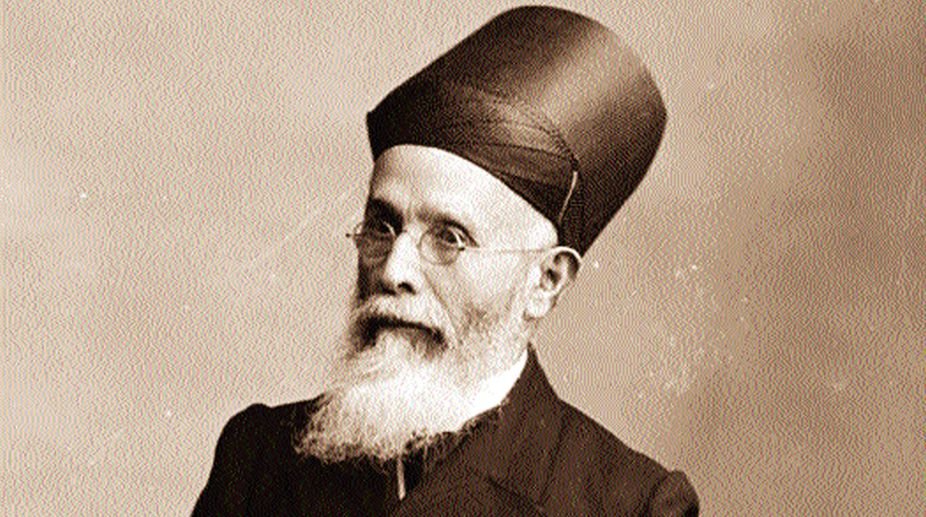
Every movement needs its arithmetic, and Indian nationalism received its sums from a Parsi professor of mathematics who spent half a century proving, with the government’s own figures, that British rule was bleeding India. Dadabhai Naoroji, the Grand Old Man of India, gave the freedom struggle its foundational economic argument, the drain of wealth, and lived long enough, at eighty one, to stand before the Congress he had helped found and pronounce for the first time from its presidential chair the word toward which all his arithmetic had pointed, swaraj.
Born in Bombay in 1825 to a poor priestly family and educated at Elphinstone College, where he became the first Indian appointed a professor, Naoroji’s life ran through every channel open to his generation. He was a social reformer among the Parsis, a founder of girls’ schools, a partner in the first Indian business house in London, where he settled in 1855, a professor of Gujarati at University College, and the founder of associations, the East India Association above all, through which he carried the Indian case to English audiences for decades. His method was the method of the age of proof. He believed the British public would do justice if shown the facts, and he made himself the supplier of facts to an empire that preferred not to audit itself.
The drain theory was his great construction, laid out in papers from the 1860s and gathered in 1901 in his masterwork, Poverty and UnBritish Rule in India. Its core was simple and devastating. India annually transmitted to Britain, without any equivalent return, a vast tribute, the Home Charges paid from Indian revenue for the Secretary of State’s establishment, pensions and furloughs of European officers, interest on debt contracted for Britain’s wars and guaranteed railways, military charges, and the remitted savings and fortunes of European officials and merchants, the whole amounting by his estimates to tens of millions of pounds a year. This unrequited export, he argued, was the first cause of Indian poverty, for it stripped the capital that might have fertilised Indian industry and agriculture, leaving the country to face famine on an income he famously computed at twenty rupees per head per year, a calculation that forced the government into decades of statistical rebuttal and conceded, in the arguing, the poverty it disputed. The evil, he insisted, was not Englishmen but the un British character of a system that violated Britain’s own principles, an empire of drain wearing the costume of trusteeship.
He carried the argument into the enemy’s own citadel. In 1892, standing as a Liberal for Central Finsbury after Lord Salisbury had sneered that no English constituency would elect a black man, Naoroji won by five votes, and the first Indian Member of Parliament spent his term moving the Indian case, securing the resolution for simultaneous civil service examinations and a royal commission on Indian expenditure, before which he laid the drain in exhaustive evidence. Thrice president of the Indian National Congress, in 1886, 1893 and 1906, he was the movement’s living link between generations, the mentor whom Gokhale revered and in whose London office a young Gandhi found counsel, and the patriarch whose word, at the stormy Calcutta session of 1906, could still hold moderates and extremists in one house by giving both the goal of self government.
His theory has been debated by economists ever since, refined, contested in its magnitudes, and repeatedly rehabilitated, but its historical work was done in its own time. The drain gave nationalism what sentiment alone could never supply, a materialist explanation of Indian misery that indicted the system rather than the sinner, taught by R C Dutt’s histories, argued in every Congress resolution on expenditure, and inherited by every school of the movement, Gandhian, liberal and socialist alike. When Naoroji died in 1917, the empire’s official mourning saluted a moderate. The movement buried the man who had proved, decimal by decimal, that the empire did not pay.
1885 to 1905 - Moderates and Awakening
Part 1 of 10 in this chapter.