 In 30 Seconds




For its first twenty years the Indian National Congress asked politely, and history has never quite forgiven it. The generation that led the movement from 1885 to 1905, remembered as the Moderates, believed in British justice, constitutional agitation and the long game, and their method was mocked in their own time as mendicancy and in the textbooks since as prayer, petition and protest. The mockery is easy. The truth is that the Moderates built the foundations on which every later stage of the freedom struggle, including the stages that despised them, stood and fought.
The men themselves were the finest flower of Macaulay’s unintended harvest, lawyers, editors, professors and reformers, Pherozeshah Mehta and Badruddin Tyabji of Bombay, Surendranath Banerjee and W C Bonnerjee of Calcutta, Ananda Charlu and Subramania Iyer of Madras, Naoroji and Gokhale above all, men fluent in Burke and Mill who took the professions of empire seriously and proposed to collect on them. Their political theory was gradualist by conviction, not timidity. India, they held, was not yet a nation but must become one, and premature confrontation with an invincible power would invite crushing and set back the schooling of the people in public life. The Congress was that school, its annual sessions the first all India public institution Indians had ever possessed, where Bengali and Tamil, Hindu, Parsi and Muslim learned to deliberate as countrymen.
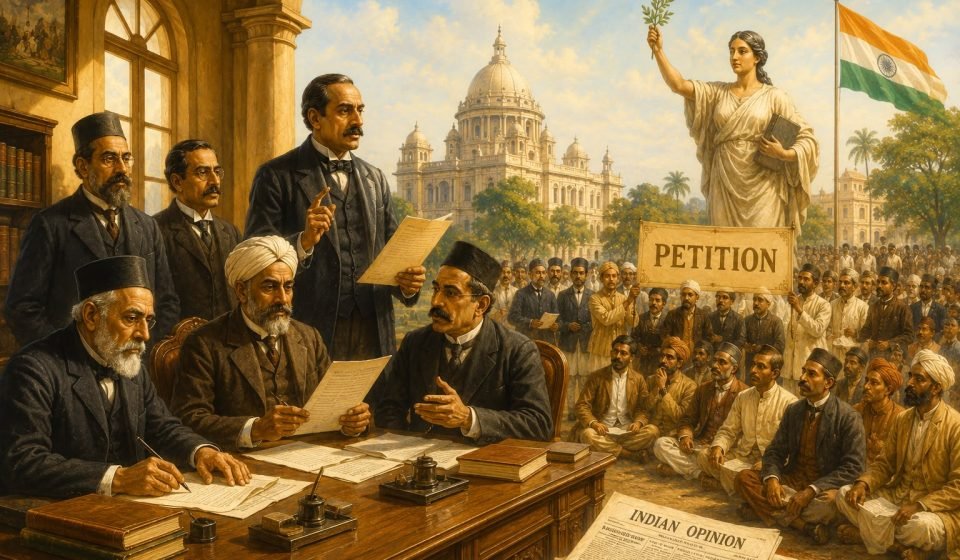
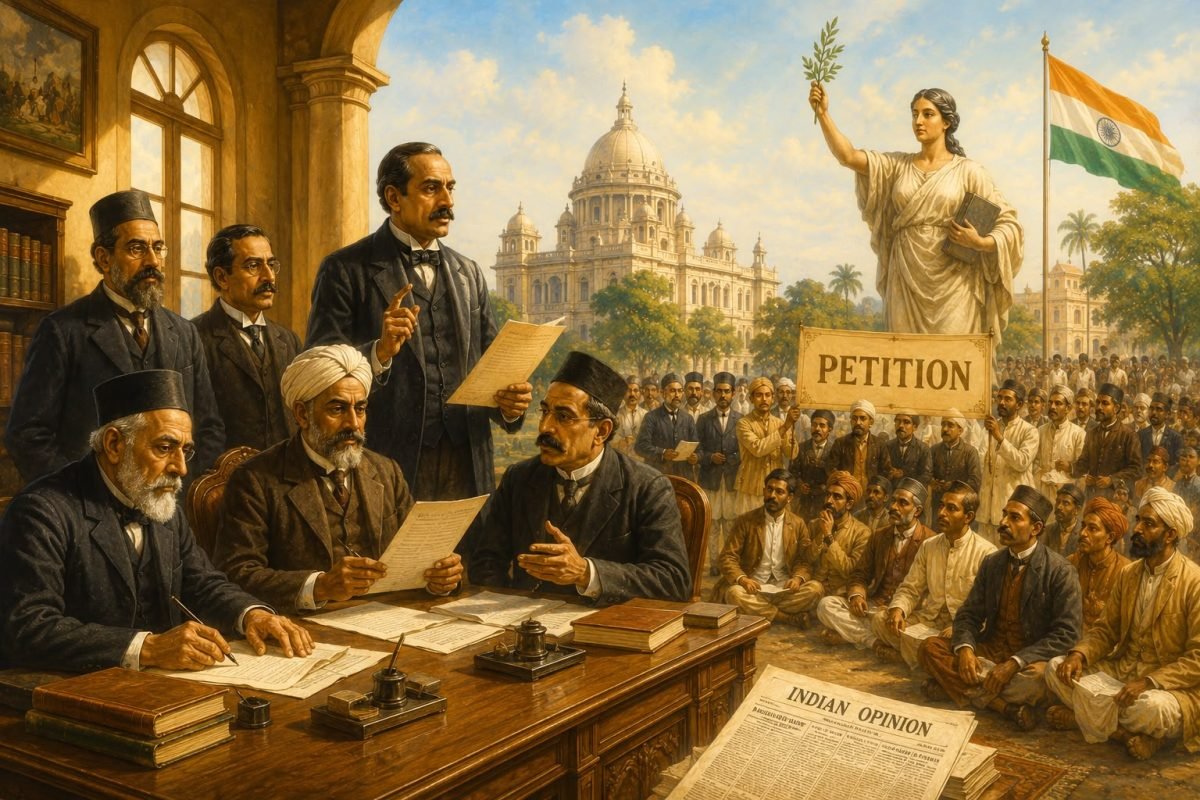
Their asks were constitutional and precise. Expansion of the legislative councils with elected Indian members, simultaneous civil service examinations, separation of judicial from executive functions, reduction of military expenditure and the Home Charges, extension of trial by jury, repeal of the arms act’s discriminations. Their method was the memorial, the council speech, the press, and the appeal to the British electorate through the British Committee of the Congress and its journal India, on the theory, not absurd in the age of Gladstone, that the conscience of British liberalism was a lever that could move the India Office. Their victories were real but meagre, the Councils Act of 1892 conceding indirect election in homeopathic doses, the welsh of the simultaneous examinations resolution of 1893, the Welby Commission on expenditure giving Naoroji and Gokhale a stage and India little else. By the century’s end the balance sheet of concession was thin enough that the young were asking what politeness had purchased.
Yet the Moderate achievement lay deeper than the concessions they failed to win. They performed, first, the intellectual demolition of the empire’s economic case. Naoroji’s drain theory and R C Dutt’s economic histories, delivered in the idiom of British political economy, converted loyal grievance into systemic indictment, and every subsequent school of nationalism fought with weapons from this armoury. They created, second, the institution. The Congress they built and financed and dragged across the subcontinent each December survived schism, repression and its own tedium to become the vehicle of Gandhi’s mass movement, which inherited its name, its network and its legitimacy. And they established, third, the ground rules of Indian political culture, secular in membership, constitutional in aspiration, all India in horizon, rules that outlasted the Raj itself.
Their limits were equally constitutive. They were a class speaking for a nation they had not yet met, English educated professionals whose sessions transacted business in English and whose resolutions never touched the land revenue that ground the peasant or the social order that ground the untouchable. Their faith in British justice survived the evidence longer than it should have, and the partition of Bengal in 1905 fell upon it like an axe. The generation of Tilak, Lajpat Rai and Bipin Chandra Pal rose against their method, the Surat split of 1907 broke the house, and history’s spotlight moved to the bolder players.
Gokhale, the last and greatest of the school, offered the fairest verdict in advance, telling his critics that his generation had to be judged by what it found and what it left. It found a conquered population without political existence. It left a nation with an address, an argument and an assembly. The freedom struggle’s later chapters were written in bolder ink, but they were written on pages the Moderates had bound.
1885 to 1905 - Moderates and Awakening
Part 2 of 10 in this chapter.