
 In 30 Seconds




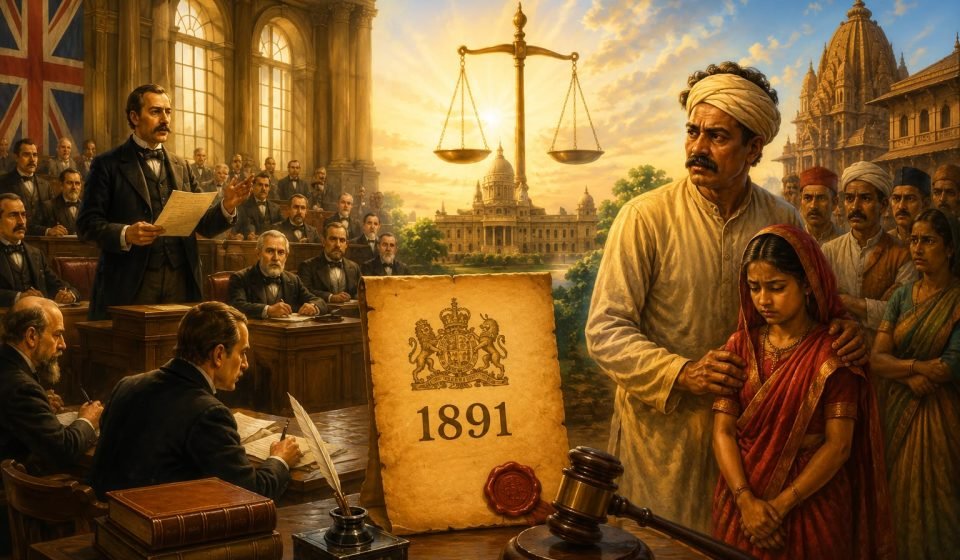
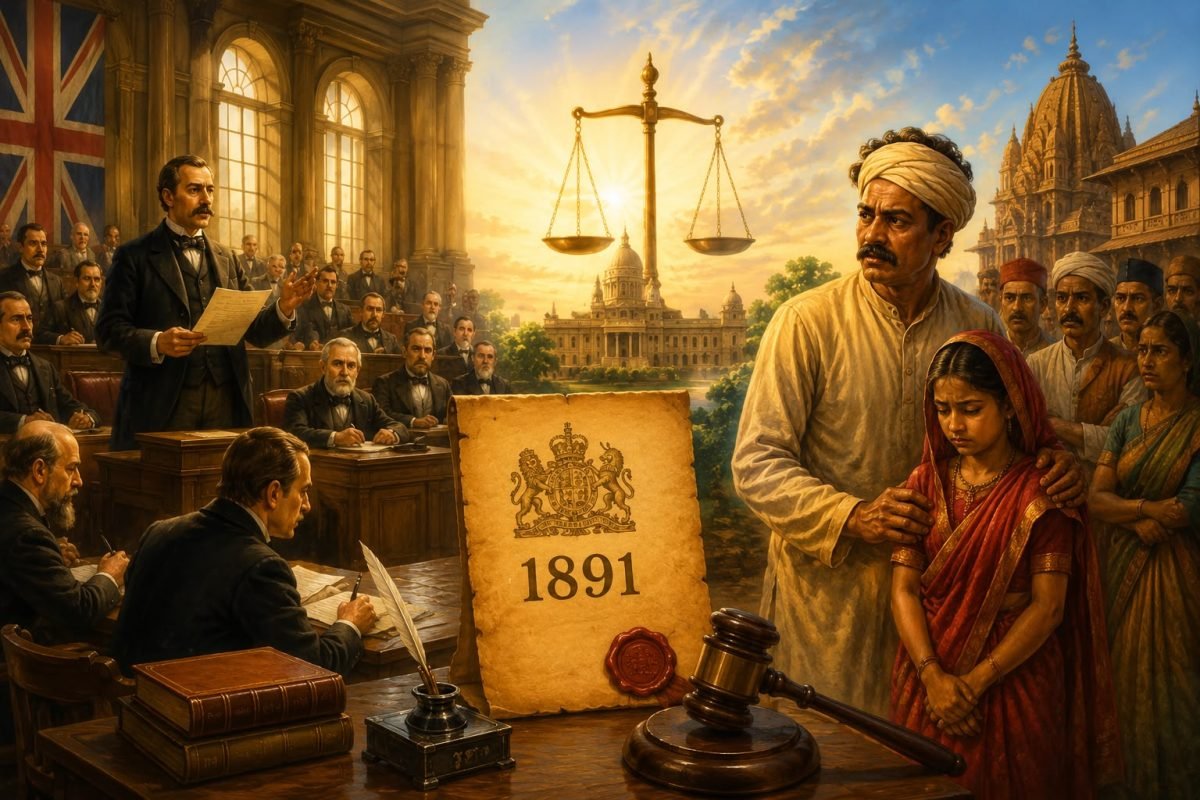
In 1889 a ten year old Bengali girl named Phulmoni died of injuries inflicted by her adult husband on their wedding night, and the husband, since Phulmoni was above the legal age of ten, could not be charged with the gravest offence. The case, laid out in unbearable medical detail before a Calcutta court, forced upon British India a question it had avoided since the sati legislation of 1829, whether the state would again reach into the sanctum of Hindu domestic custom, and the Age of Consent Act of 1891, which raised the age from ten to twelve, ignited the fiercest public controversy of its generation, a war not only over girlhood but over who owned the right to reform India.
The ground had been prepared by Indians. Behramji Malabari, a Parsi journalist of Bombay, had since 1884 bombarded the government and the public with his Notes on infant marriage and enforced widowhood, carrying the campaign to England itself, and the reform party, Ranade and the Prarthana Samajists in the west, the heirs of Vidyasagar in Bengal, had long argued that child marriage was custom, not scripture, and cruelty besides. The celebrated case of Rukhmabai had already nationalised the question, a young Bombay woman, married in childhood, who refused in the 1880s to live with a husband chosen for her infancy and fought the restitution suits through every court, writing under the name of a Hindu lady letters whose intelligence startled two continents, and who, saved finally by an appeal that reached the Queen’s notice, became one of India’s first women doctors. Reformist India, in short, demanded the law, and the government of Lord Lansdowne, presented with Phulmoni’s inquest, at last obliged with a minimal measure, criminalising consummation, within or without marriage, below the age of twelve.
The storm that answered it exceeded anything the sati regulation had faced. In Bengal and Maharashtra vast meetings denounced the Act as the destruction of religion, monster petitions went to Calcutta, and the orthodox press proclaimed that a foreign government had laid its hand on the garbhadhan rites and on the shastras themselves. The most formidable opposition came not from any priest but from Tilak in Poona, and his ground, carefully chosen, was not the merit of child marriage, which he did not defend and in his own family did not practise, but the sovereignty of the question. Reform, he argued, must come from the society itself, by its own awakening and its own hands. Every reform imposed by alien rulers weakened the nation’s self respect and strengthened the ruler’s claim to civilise, and the reformers who invited the foreign state into the Hindu home were selling the nation’s autonomy for a statute. Against him the reformers, Ranade, Gokhale’s mentors, Malabari, answered that a child’s body was not a fit sacrifice to anyone’s theory of national self respect, and that a society that could not protect its daughters had no autonomy worth the name. The argument, conducted at full volume for two years, broke friendships, split sabhas, and in Maharashtra founded the political rivalry of reformer and nationalist that ran for decades.
The Act itself, once passed, changed little directly. Enforcement inside marriage was practically nil, prosecutions were a handful, and the marriage age itself remained untouched by law until the Sarda Act of 1929. But the controversy’s consequences were foundational. It created the template of colonial social legislation, the reformer’s appeal to the state, the traditionalist’s cry of religion in danger, the nationalist’s third position that made the question one of sovereignty, a template replayed over widow remarriage enforcement, the Sarda Act and beyond. It marked the entry of mass mobilisation, meetings, petitions and the vernacular press, into questions of social custom, politicising the Hindu home. And it announced the arrival of the woman question at the centre of Indian public life, where Rukhmabai’s letters had put it, never to leave. Phulmoni’s name faded from the debate that her death began, as the names of victims do, but the long Indian argument between reform and self rule, and its eventual resolution that the two were one cause, descends from the winter of 1891.
1885 to 1905 - Moderates and Awakening
Part 6 of 10 in this chapter.