 In 30 Seconds




In September 1896 bubonic plague was confirmed in the port city of Bombay, and there began an epidemic that would burn through India for over two decades and kill, by the government’s own eventual reckoning, some ten million people. The plague years reshaped Indian cities, Indian science and Indian politics, and in Poona in 1897 they produced the first political assassination of the nationalist era, the act that opened the revolutionary chapter of the freedom struggle.
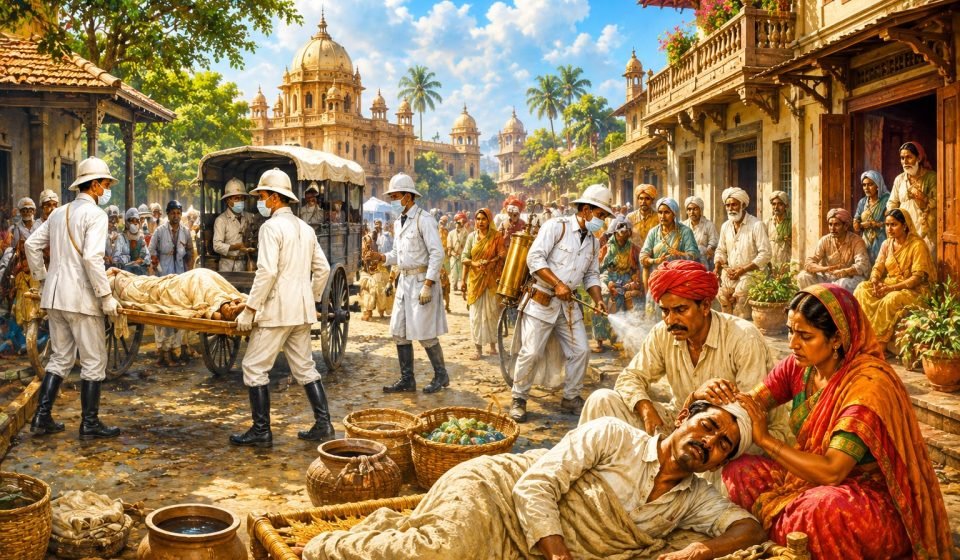
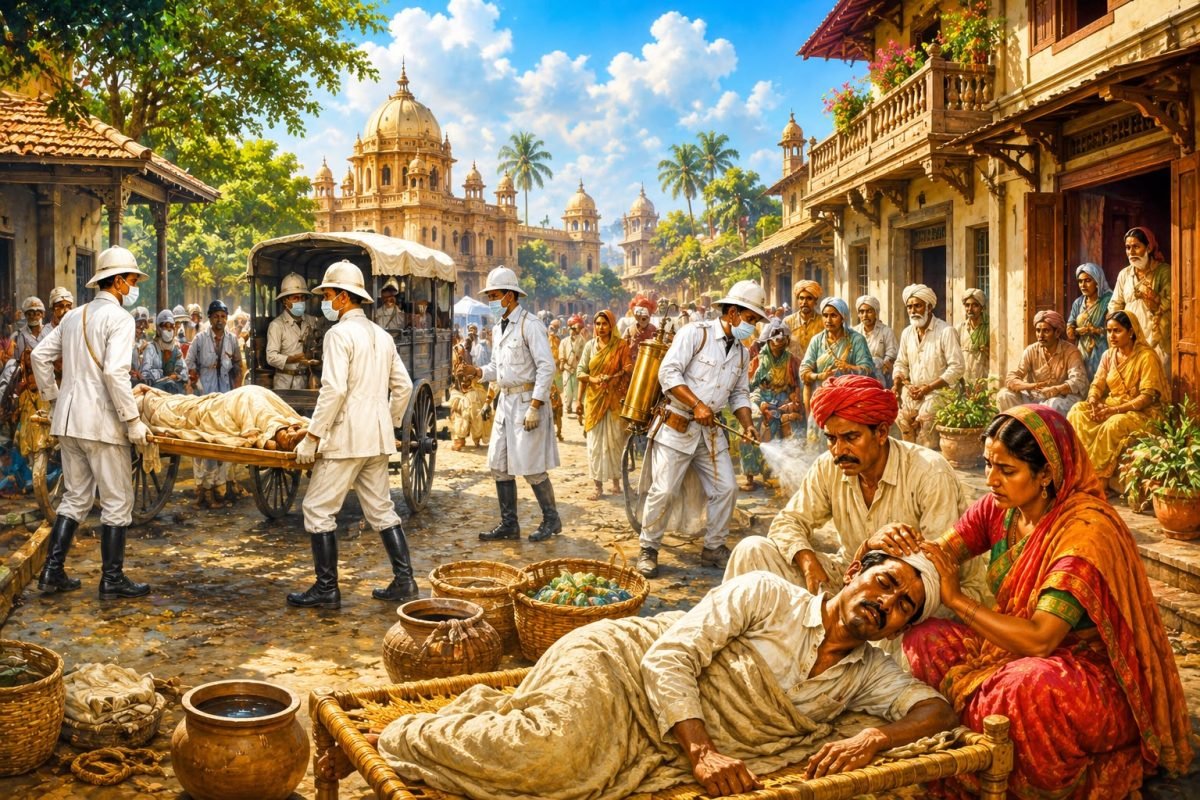
The disease arrived, most probably by sea, into the crowded chawls of Bombay, and its progress emptied the city, hundreds of thousands fleeing and carrying infection inland to Poona, Karachi and beyond. The government’s response was driven by two fears, of the epidemic itself and of the international embargoes strangling Bombay’s trade, and the Epidemic Diseases Act of 1897, rushed through in February, armed executives with powers as absolute as any peacetime law in the empire’s history, powers of entry, inspection, segregation and demolition. What science advised was then tragically incomplete, for the rat flea’s role was not established until the next decade, and the machinery of control fell instead upon human bodies and homes, house to house searches, the stripping and examination of persons including women by soldiers and male officials, forcible removals to segregation camps, corpse inspections that outraged funeral rites, and the burning of infected dwellings and goods. Panic did the rest, and the measures spread the flight that spread the plague.
Poona under the Plague Committee of W C Rand became the symbol of the regime. Rand, an ICS officer of rigid conscientiousness, employed British troops in the searches, and the city’s account of what followed, homes violated, shrines polluted by boots, women humiliated, the sick dragged from families, filled the columns of Tilak’s Kesari through the spring of 1897, alongside the editor’s own demands that the people organise their own hospitals and his warnings, in the language of the Gita, about rulers who oppress without check. On the night of 22 June 1897, as Poona’s officials returned from the celebrations of Queen Victoria’s diamond jubilee at Government House, Ganeshkhind, the brothers Damodar and Balkrishna Chapekar shot Rand and his military escort Lieutenant Ayerst on the road. Ayerst died at once, Rand of his wounds days later. The Chapekars, sons of a kirtankar family, devout, gymnasium trained and inflamed by the plague operations and by insults to Shivaji’s memory, were betrayed, tried and hanged, Damodar going to the gallows in 1898 with the Gita in his hands, and the brothers passed into the martyrology of the revolutionary movement, remembered as its first soldiers. Among those who marked the lesson was an eleven year old in nearby Bhagur named Vinayak Damodar Savarkar, who later recorded the vow the hangings drew from him.
The state’s answer widened the wound. Unable to connect Tilak to the deed, the government prosecuted him for sedition upon his Shivaji festival writings, and the Bombay jury’s split verdict, European jurors for conviction, Indian for acquittal, and the sentence of eighteen months made the trial a national event and the editor the Lokmanya. The Natu brothers of Poona were deported without trial, the press was watched, and educated India absorbed the double lesson of 1897, that the plague regime showed how little the rulers’ civilisation weighed against their fear, and that the sedition law showed where the limits of loyal criticism lay.
The epidemic itself ground on for a generation, and its longer consequences ran in every direction. Waldemar Haffkine, working in Bombay, produced in 1897 the first plague vaccine, tested on himself, and India became the site of one of history’s great vaccination campaigns as government, chastened by 1897, learned that sanitation without consent was insurrection by other means, and turned increasingly to inoculation, Indian agency and persuasion. The Bombay Improvement Trust of 1898 began the demolition and rebuilding that shaped the modern city. And in the political ledger the plague years stand as a hinge, the moment the moderate faith met the colonial state’s naked emergency face, and a Poona road at midnight announced that some of India’s sons had drawn conclusions no petition would ever contain.
1885 to 1905 - Moderates and Awakening
Part 7 of 10 in this chapter.