 In 30 Seconds




Story
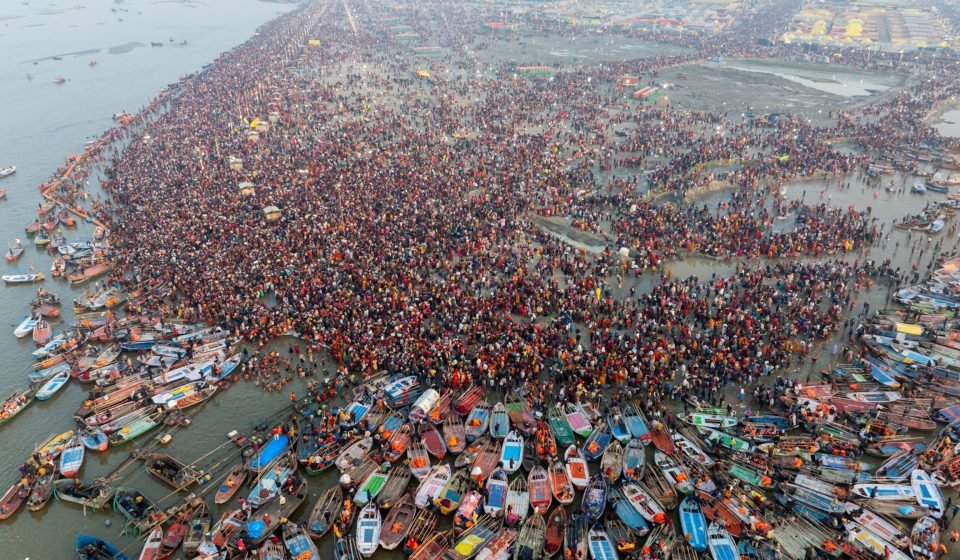
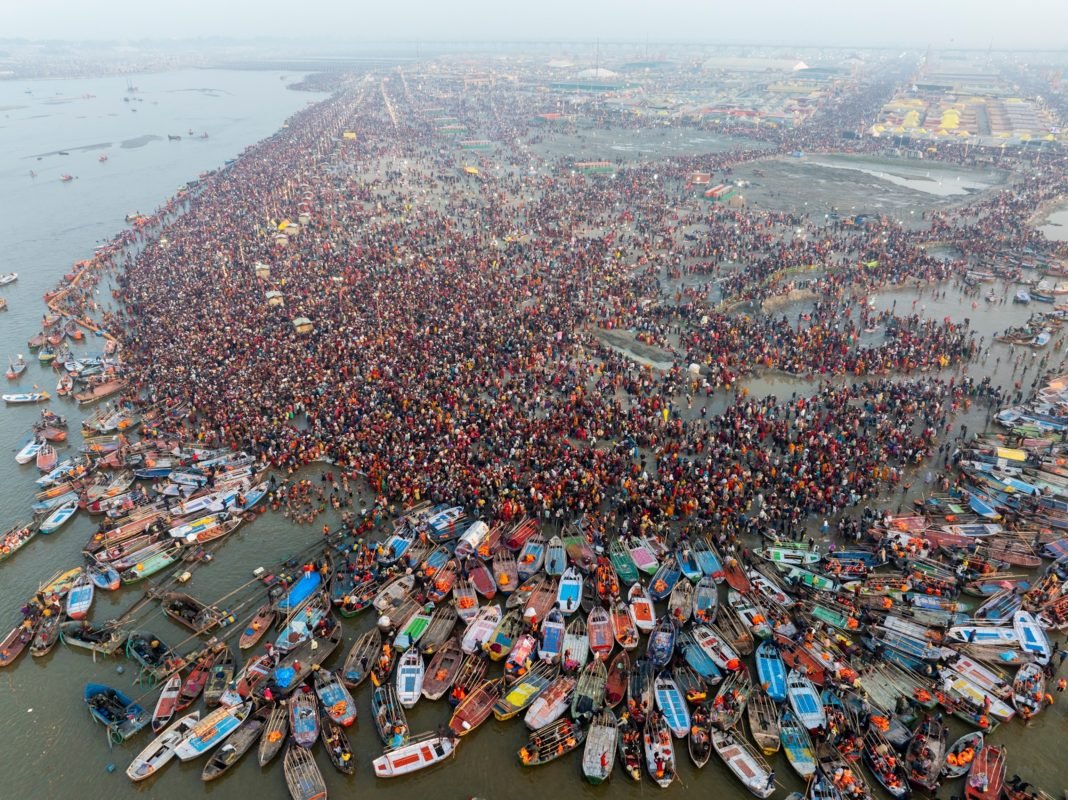
Satellites can see it. On the floodplain of the Sangam at Prayagraj, at intervals fixed by the transit of Jupiter, a city larger than most world capitals assembles out of nothing, exists for some six weeks, and vanishes, leaving sand. The Kumbh Mela is the largest gathering of human beings for a single purpose in the history of the species, and it takes place in Uttar Pradesh, which is fitting, since the state itself is humanity at maximum concentration. Every claim about UP that this series has made, of scale, of sanctity, of administration tested to its outermost limit, converges on the Kumbh.
The founding story is the churning of the ocean. Gods and demons, milking the cosmic sea for the nectar of immortality, fought over the kumbha, the pot that held it, and during the struggle drops of nectar fell at four places, Haridwar, Ujjain, Nashik, and Prayag. At each, the mela rotates on a twelve year astrological cycle, and Prayag’s, held when Jupiter enters Taurus and the sun and moon align in Capricorn, is the greatest of the four, with an Ardh Kumbh at the six year midpoint and the annual Magh Mela keeping the ground in practice. Bathing at the Sangam during the yoga of the Kumbh, the tradition holds, multiplies the merit of the bath beyond calculation, and on the principal dates the pursuit of that merit produces the largest crowds ever counted.
The counting itself has become part of the spectacle. The 2013 Kumbh was estimated at some 120 million visits across its duration. The 2019 event, formally an Ardh Kumbh but marketed and built as a full one, claimed roughly 240 million. The Maha Kumbh of 2025, promoted as a once in 144 years alignment, closed with official figures exceeding 600 million cumulative visits, numbers that independent observers could neither verify nor plausibly replace, and that in any case describe visits rather than persons. What is beyond dispute is the single day record. On the peak bathing date of Mauni Amavasya, crowds estimated in the tens of millions enter the water between one dawn and the next, the largest one day assembly of human beings anywhere, ever.
The gathering’s inner structure is monastic. Precedence at the bath belongs to the akharas, the historic orders of sadhus, and the mela’s iconic hour is the amrit snan, formerly the shahi snan, when the naga sadhus, ash smeared, naked, and bearing tridents, charge the river in procession before anyone else may enter. The akharas’ encampments, with their initiations, discourses, and displays, make the Kumbh the periodic general assembly of Hindu asceticism, where the orders recruit, confer, and settle precedence, and where, every twelve years, the kalpavasis, the month long vow keepers, live out the mela’s austere heart while the day crowds surge past.
The administrative achievement deserves its own astonishment. For each Kumbh the state erects a temporary district with its own collector and police force, thousands of hectares gridded into sectors, pontoon bridges across the rivers, thousands of kilometres of pipe and wire, field hospitals, lost and found systems that reunite families by the tens of thousands, and sanitation on a scale that has drawn study teams from Harvard and the armies of several nations. Governments have learned to treat the mela as a showcase, and the 2019 and 2025 editions doubled as statements of state capacity and, critics noted, of political branding, with budgets in the thousands of crores and returns, by the government’s own economic estimates, several times larger.
The ledger records the tragedies without which the story would be false. Colonial era melas were scythed by cholera. The 1954 Kumbh, the first of independent India, ended its principal bathing day with a stampede that killed hundreds, estimates ranging around eight hundred, a catastrophe that reshaped crowd control doctrine. A 2013 stampede at the Allahabad railway station killed dozens. And the 2025 Maha Kumbh, for all its scale, saw a crush in the Sangam area on Mauni Amavasya in which the official toll was thirty dead, with opposition figures and some eyewitness accounts alleging a higher count, claims the government denied. Managing the largest crowd on earth means that failure, when it comes, arrives at the same scale as the achievement.
UNESCO inscribed the Kumbh on its list of humanity’s intangible cultural heritage in 2017, a bureaucratic footnote to a phenomenon that needs no certificate. Something in this event exceeds every category applied to it, religious festival, political theatre, logistical marvel, economic engine. Tens of millions of ordinary people, most of them poor, most of them from the villages of this state and its neighbours, walk into a river together because their tradition told them the water is, briefly, nectar. The UP Files will report many things about Uttar Pradesh. None is more characteristic than this, that the state which struggles to run its schools periodically builds and runs, flawlessly or nearly so, the largest city of faith the world has ever seen, and then lets the river take it back.