

 In 30 Seconds




Story
Most monasteries in India keep their distance from power. One monastery in eastern Uttar Pradesh gave the state its longest serving chief minister, and its head priest signs the files of a government responsible for 240 million people. The Gorakhnath math of Gorakhpur is, by any measure, the most politically consequential religious institution in modern India, and to understand how a yogi’s shrine became a seat of power, one has to begin with the yogi.
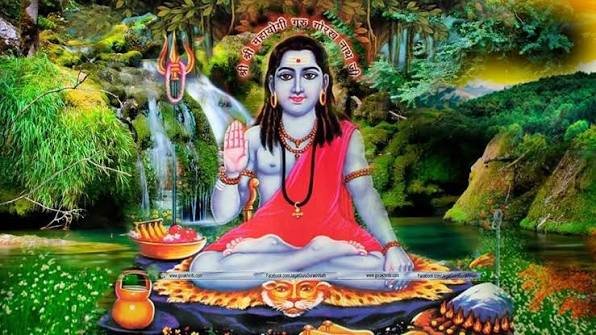
Gorakhnath, or Goraksha, the protector of cattle, stands among the most influential and least documented figures in Indian religious history. Tradition places him somewhere between the ninth and twelfth centuries, disciple of the equally legendary Matsyendranath, and credits him with organising the Nath sampradaya, the order of ascetics who wear the split ear rings that give them their popular name, the kanphata yogis. Whatever the historical uncertainties, the tradition’s impact is not in doubt. The Naths carried a distinctive package across the subcontinent, hatha yoga as a systematic discipline of body and breath, an alchemical quest for the perfected, immortal body, and a fierce indifference to caste and to the boundary between Hindu and Muslim, for the order historically initiated across both. Texts attributed to the school, the Goraksha Shataka among them, stand near the head of the hatha yoga literature, which means that every studio from Stockholm to San Francisco practising asana and pranayama is, at several removes, downstream of Gorakhnath. Folklore gave the order an even wider empire, with Gorakhnath appearing as miracle worker and kingmaker in legends from Punjab to Bengal to Nepal, where the very name of the Gorkhas descends from his.
The math at Gorakhpur, raised at the site the tradition identifies with the master’s own dhuni, his ascetic fire, grew across the centuries into the wealthiest and most prominent seat of the order, the city itself taking the yogi’s name. Its khichdi mela at Makar Sankranti draws lakhs, its temple feeds and schools thousands, and its trust runs a network of colleges, hospitals, and institutions that makes it, quite apart from politics, the dominant civic institution of eastern UP.
The politics arrived in the twentieth century, and the ledger must record the turn honestly. Mahant Digvijaynath, who took charge of the math in the 1930s, fused the seat with Hindu nationalist politics, joining the Hindu Mahasabha, and it was under his leadership that the math became a principal force in the Ayodhya agitation of 1949, when idols appeared inside the Babri mosque, an episode this series details in its Mandir batch. He entered parliament, as did his successor Mahant Avaidyanath, who led the temple movement’s monastic wing through the 1980s and founded a political tradition in which the math’s head, whoever he was, contested and won Gorakhpur. In 1998 the seat passed to a young sanyasi from the Uttarakhand hills, Ajay Singh Bisht, initiated as Yogi Adityanath, who entered the Lok Sabha at twenty six, held Gorakhpur five times, and in 2017 became chief minister of Uttar Pradesh, taking charge of the math itself upon his guru’s death in 2014. The monastery and the state now share an occupant, and this series examines his government, its admirers’ case and its critics’ case, in the batches on the BJP era.
The irony that scholars of the tradition point out is that the order’s history sits at an angle to its present. The Naths were historically the least communal of lineages, revered at dargahs, initiating Muslims, standing outside the brahminical order altogether, and Kabir himself, the subject of a later article, absorbed their vocabulary of the body as the true temple. The math’s twentieth century turn to Hindutva politics is thus not an inheritance from Gorakhnath but a choice made by his modern successors, and the tension between the yogi’s boundary dissolving legend and the seat’s boundary drawing politics is one of the quiet themes of eastern UP.
What is beyond argument is the institution’s reach. In Gorakhpur, the math is landlord, educator, employer, festival, and government at once, the model of what this series calls the institutional temple, religion functioning as infrastructure where the state historically failed to arrive. Whoever wishes to understand why eastern Uttar Pradesh votes, worships, and organises as it does must start at the dhuni that has burned in Gorakhpur for centuries, and follow its smoke all the way to Lucknow.