
 In 30 Seconds



Story
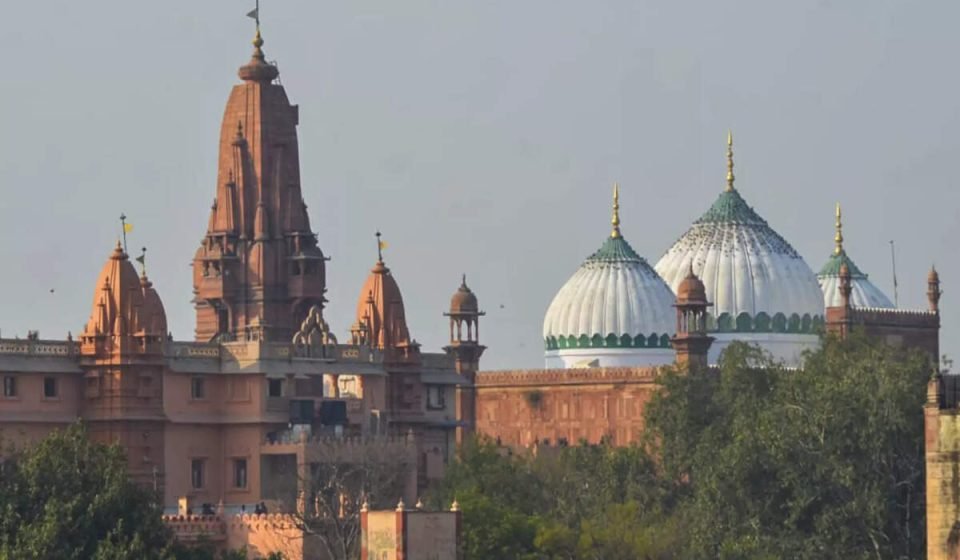
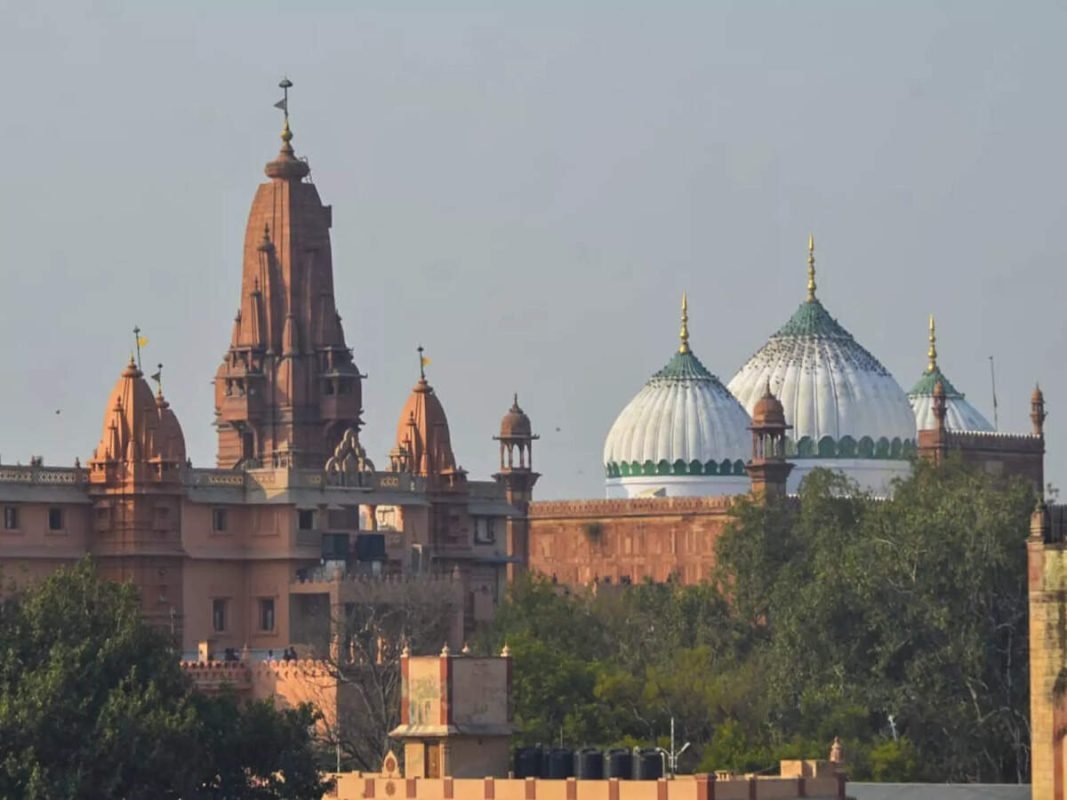
Of the three precincts that Indian shorthand groups together, Ayodhya, Kashi, and Mathura, the third has always burned slowest, and its story is instructive precisely because it has so far stayed in the courtroom. At the Katra Keshavdev site in Mathura, the Krishna Janmasthan temple complex, built over what tradition venerates as the prison cell of Krishna’s birth, adjoins the Shahi Idgah mosque, and the thirteen and a half acres they share are the subject of one of India’s most consequential pending litigations. This article states the site’s history and the dispute’s status as the record holds them.
The sanctity of the spot is among the oldest attested in the region, with the Bhagavata tradition placing Krishna’s birth in Kansa’s prison at Mathura, and temples recorded at the Katra site across the centuries, including a grand structure raised in the early seventeenth century by Bir Singh Deo Bundela of Orchha. In 1670, the year after the Kashi demolition, Aurangzeb ordered this temple destroyed, an event recorded in the Mughal chronicles, and the Shahi Idgah was erected upon the elevated portion of the site. The parallel with Gyanvapi is exact in origin, though the subsequent paths diverged. The site passed through Maratha hands in the eighteenth century, was auctioned by the East India Company in the nineteenth, and was purchased in 1815 by Raja Patnimal of Banaras, whose heirs’ title was upheld in colonial litigation against claims by Muslim parties, the courts of the era affirming the Hindu ownership of the katra while the Idgah continued in use.
The modern institutional history begins in 1944, when the industrialist Jugal Kishore Birla purchased the site’s rights, and in 1951 the Shri Krishna Janmabhoomi Trust was created to build the great temple complex that rose through the 1950s and 1960s, financed substantially by the Birla and Dalmia families. In 1968, the temple management society then administering the precinct entered a compromise agreement with the Idgah committee, delineating the two institutions’ possession, the mosque retaining its structure and the temple the remainder. That agreement is the hinge of the present dispute. The suits filed from 2020 onward, in the name of the deity Bhagwan Shri Krishna Virajman and by various Hindu plaintiffs, seek the agreement’s annulment as fraudulent and beyond the society’s authority, and the removal of the Idgah from the site’s disputed portion. The Idgah committee defends the compromise’s validity and invokes the Places of Worship Act of 1991, which froze the character of religious sites as at independence, Ayodhya alone excepted. Whether that Act bars the Mathura suits is, as at Kashi, the decisive legal question, argued through the Allahabad High Court, which consolidated the suits and held them maintainable, and onward to the Supreme Court, where proceedings, including on court ordered surveys of the Idgah, remain pending as of this writing. No survey of the Mathura site has been executed, the Supreme Court having stayed such steps while the maintainability questions are heard. The dispute, in short, is entirely alive and entirely sub judice, and this series reports it in that condition.
Around the litigation, the city keeps its own counsel. The Janmasthan complex receives its millions, the pilgrims filing past the prison cell shrine, the Idgah stands under its protections, and the two share their wall as they have for three and a half centuries, the periodic tensions of anniversaries and petitions managed by an administration long practised at the task. Political attention has waxed with the wider temple politics of the era, the slogan of the movement decades having always named Mathura third, and voices across the spectrum have urged, variously, that the site follow Ayodhya’s path to a negotiated or adjudicated restoration, or that the 1991 Act’s line hold precisely so that no further Ayodhyas occur. Both positions are part of the national argument this series maps in its Mandir batch.
What distinguishes Mathura’s question, finally, is its setting. This dispute sits not in a political capital but in the middle of Braj, the landscape of the divine play, where the devotional tradition, from Surdas to the present, has centred not on grievance but on love, and where the pilgrim’s Mathura, the ghats, the parikramas, the butter thief’s country, proceeds with an absorption the litigation has never much dented. The courts hold the question. The city, as it has through every empire, holds the child.