Meerut, May 1857: Where the Great Rebellion Began
The cartridges, the shackling of the eighty five, the Sunday evening rising, and the midnight march to Delhi: where the storm of 1857 broke first.

Read this category as an ordered editorial path. Choose a chapter, then follow the articles in sequence.
The cartridges, the shackling of the eighty five, the Sunday evening rising, and the midnight march to Delhi: where the storm of 1857 broke first.
Kalinjar's sieges, the Alha ballads, Chhatrasal's rebellion, the Maratha bargain that created Jhansi, and the droughts: the hard country's deep history.
The Pashtun confederacy of the doab, Najib ud Daula and Panipat, the mercenary war of 1774, and Rampur's library: the Rohilla story.
February 7, 1856: the misgovernment pretext, the Sleeman report, the dispossessed taluqdars, and the sepoys whose homeland the Company confiscated.
The artist king of Qaisarbagh, the Sleeman report, the refused signature of 1856, and the Lucknow rebuilt in exile at Matiyaburj: the last Nawab's two portraits.
Pehle aap, Ganga Jamuni tehzeeb, the Kathak gharana, the thumri, the tawaifs' salons, and the civilisation of manners that made Lakhnavi an adjective.
From Saadat Khan's governorship to Buxar, the subsidy trap, and the Bara Imambara built as famine relief: the century of the Nawabs of Awadh.
The grief of 1631, the marble that takes the light, the legends tested against the record, Curzon's rescue, and the smog: the Taj Mahal in full.
The red fort on the Yamuna, the thought experiment at Fatehpur Sikri, Todar Mal's revenue spine, and the fort at the Sangam: Akbar's Uttar Pradesh.
Born of Timur's wreckage, refuge of scholars, builder of the great pylon mosques, shaper of the khayal: Jaunpur's forgotten Sharqi century.
Harsha's wonder city, the tripartite war of three empires, Mahmud's sack, Jaichandra's fall at Chandawar, and the perfume capital that remains.
Ahmed Raza Khan of Bareilly, the defence of shrine devotion, the war of fatwas with Deoband, and the school that claims the subcontinent's mainstream.
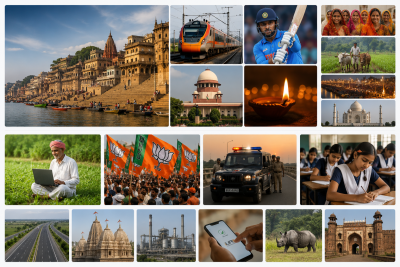 Uttar Pradesh Explained: Why One State Holds the Key to India
Why Uttar Pradesh, with 80 Lok Sabha seats, 240 million people, and India's sacred geography, remains the state…
4 Min Read
Uttar Pradesh Explained: Why One State Holds the Key to India
Why Uttar Pradesh, with 80 Lok Sabha seats, 240 million people, and India's sacred geography, remains the state…
4 Min Read
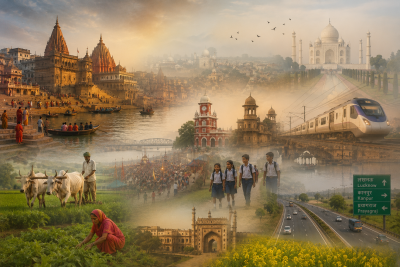 The Gangetic Heartland: The Geography That Made Uttar Pradesh Destiny
How the Gangetic plain's fertile soil, sacred rivers, and open geography created the population, the politics, and the…
4 Min Read
The Gangetic Heartland: The Geography That Made Uttar Pradesh Destiny
How the Gangetic plain's fertile soil, sacred rivers, and open geography created the population, the politics, and the…
4 Min Read
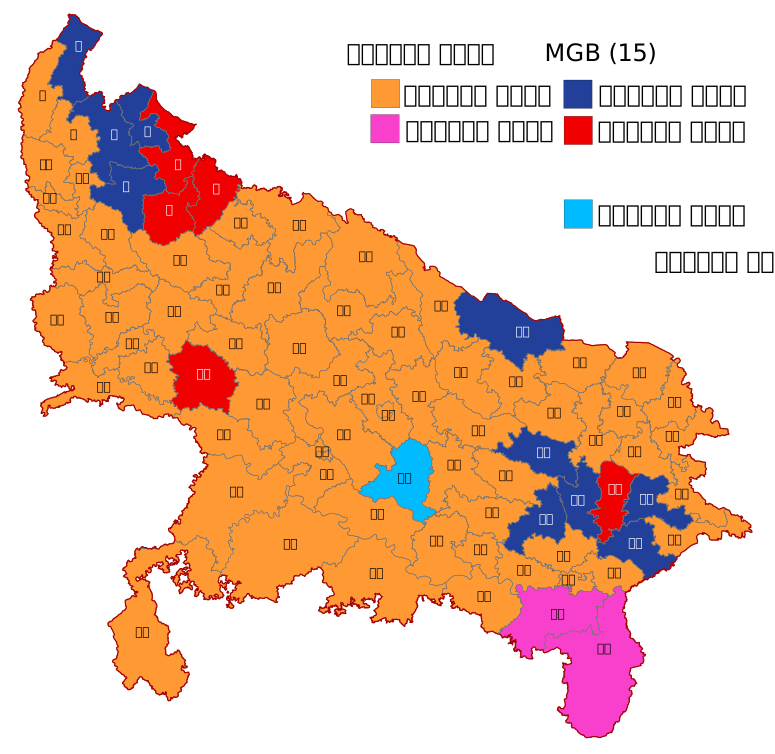 Eighty Seats: How Uttar Pradesh Decides Who Rules Delhi
UP's 80 Lok Sabha seats have made or unmade every government in Delhi, from the Congress era through…
4 Min Read
Eighty Seats: How Uttar Pradesh Decides Who Rules Delhi
UP's 80 Lok Sabha seats have made or unmade every government in Delhi, from the Congress era through…
4 Min Read
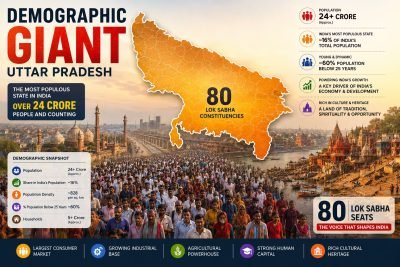 The Demographic Giant: What 240 Million People in One State Means
Uttar Pradesh's 240 million people would make it the fifth largest country on earth. What that scale means…
4 Min Read
The Demographic Giant: What 240 Million People in One State Means
Uttar Pradesh's 240 million people would make it the fifth largest country on earth. What that scale means…
4 Min Read
 From United Provinces to Uttar Pradesh: The Naming of a Colossus
From the North Western Provinces to the United Provinces of Agra and Oudh to Uttar Pradesh in 1950:…
4 Min Read
From United Provinces to Uttar Pradesh: The Naming of a Colossus
From the North Western Provinces to the United Provinces of Agra and Oudh to Uttar Pradesh in 1950:…
4 Min Read
 The Divisions That Never Came: Every Demand to Split Uttar Pradesh
From Ambedkar's three state proposal to Harit Pradesh, Bundelkhand, Purvanchal, and Mayawati's four way split of 2011: why…
4 Min Read
The Divisions That Never Came: Every Demand to Split Uttar Pradesh
From Ambedkar's three state proposal to Harit Pradesh, Bundelkhand, Purvanchal, and Mayawati's four way split of 2011: why…
4 Min Read
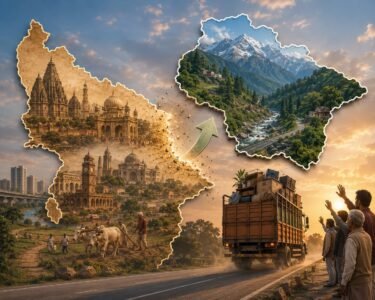 Uttarakhand Leaves: When the Hills Departed the Plains in 2000
The 1994 agitation, the Rampur Tiraha firing, and the 2000 creation of Uttaranchal: how the hills won the…
4 Min Read
Uttarakhand Leaves: When the Hills Departed the Plains in 2000
The 1994 agitation, the Rampur Tiraha firing, and the 2000 creation of Uttaranchal: how the hills won the…
4 Min Read
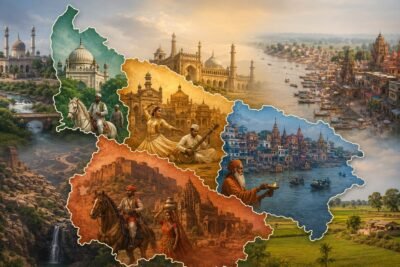 Purvanchal, Awadh, Rohilkhand, Bundelkhand: The Four Countries Inside UP
Western UP, Rohilkhand, Awadh, Purvanchal, and Bundelkhand: the five distinct regions that function as separate countries inside one…
4 Min Read
Purvanchal, Awadh, Rohilkhand, Bundelkhand: The Four Countries Inside UP
Western UP, Rohilkhand, Awadh, Purvanchal, and Bundelkhand: the five distinct regions that function as separate countries inside one…
4 Min Read
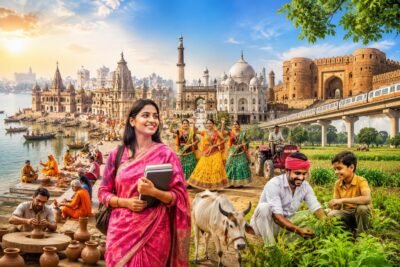 The Hindi Heartland Idea: How Uttar Pradesh Became the Default India
Language, cinema, politics, and sheer numbers: how Uttar Pradesh became the default image of India, and why the…
4 Min Read
The Hindi Heartland Idea: How Uttar Pradesh Became the Default India
Language, cinema, politics, and sheer numbers: how Uttar Pradesh became the default image of India, and why the…
4 Min Read
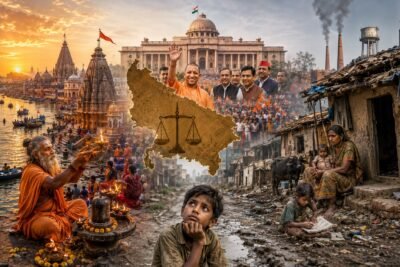 The UP Paradox: Sacred Geography, Political Power, Persistent Poverty
The holiest ground, the most powerful electorate, and one of the poorest societies on earth: the founding puzzle…
4 Min Read
The UP Paradox: Sacred Geography, Political Power, Persistent Poverty
The holiest ground, the most powerful electorate, and one of the poorest societies on earth: the founding puzzle…
4 Min Read