 In 30 Seconds




Almost from the moment Uttar Pradesh was named, people have argued that it should not exist, at least not in its present form. A state of 240 million, the argument runs, is too large to govern, too unequal to develop evenly, and too dominant for a healthy federation. The demand to divide UP is nearly as old as the republic, has been endorsed at various times by figures across the political spectrum, and has succeeded exactly once. The history of the divisions that never came is a history of why UP is so hard to change.
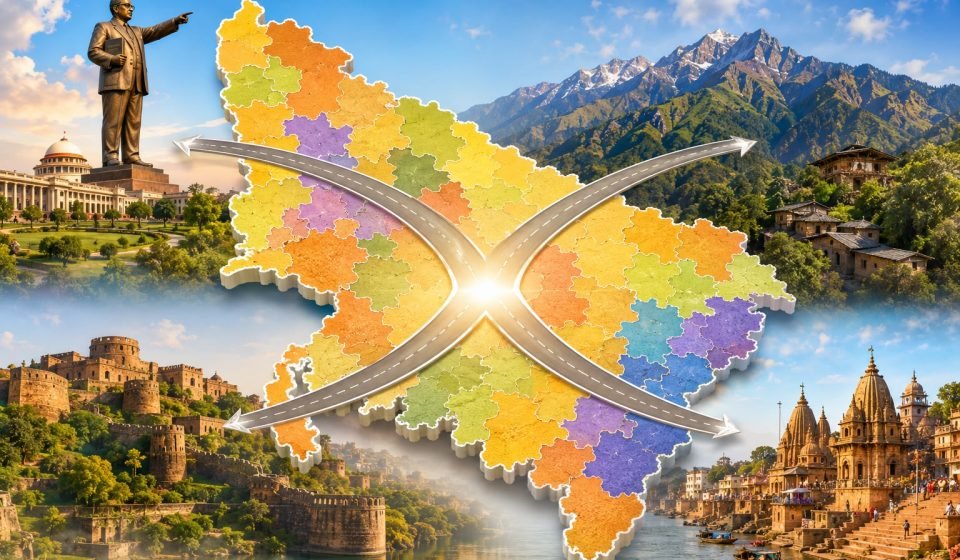
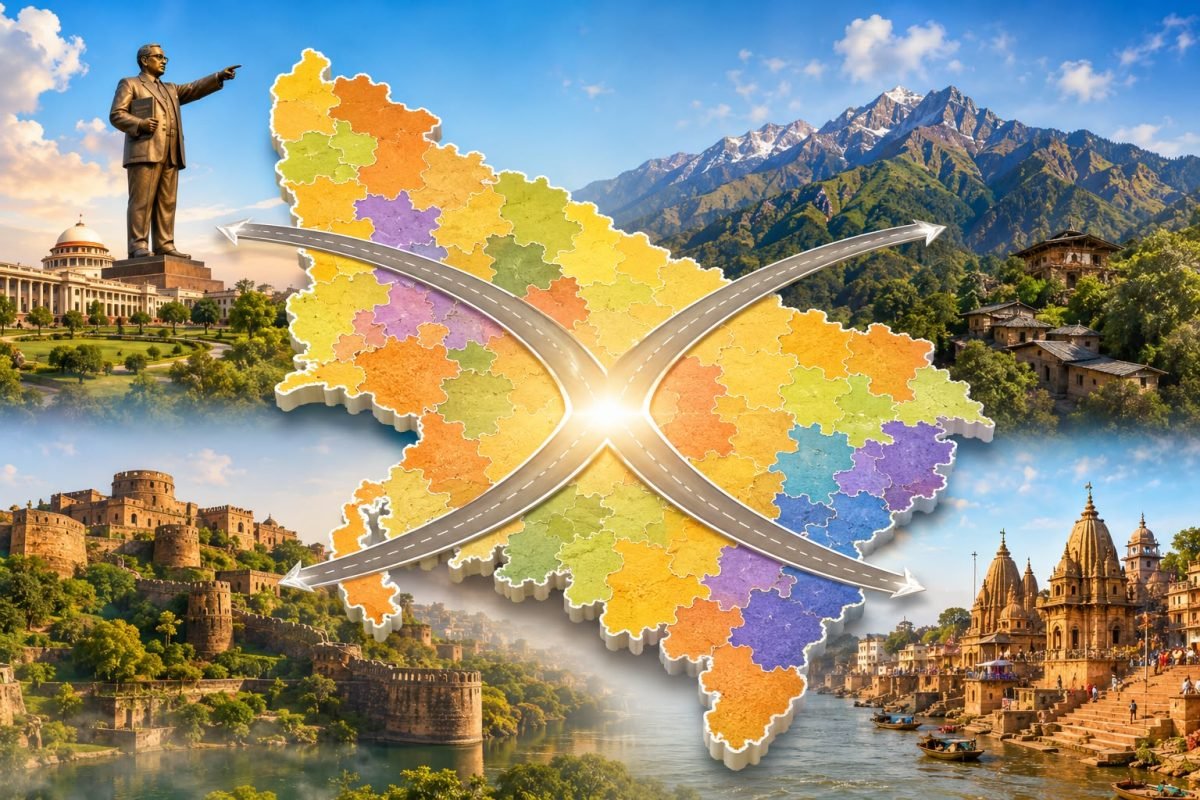
The intellectual case arrived early and from the highest quarter. BR Ambedkar, in his 1955 tract on linguistic states, argued that Uttar Pradesh was a political monstrosity, so large that it distorted the entire Union, and proposed splitting it into three states of roughly twenty million each, with capitals he suggested at Meerut, Kanpur, and Allahabad. His logic was constitutional hygiene. No single state, he believed, should be strong enough to dominate the centre. The proposal was received politely and shelved permanently, because the leaders who would have had to implement it were the very leaders whose power rested on the undivided state.
The regional cases wrote themselves. Bundelkhand, the hard dry country in the south, shared with districts across the Madhya Pradesh border, has demanded statehood for decades, arguing that its droughts and distress are invisible from Lucknow. Purvanchal, the crowded east, nursed its own claim, pointing to poverty levels that rival any region in India. In the sugarcane west, the demand took the name Harit Pradesh, championed most persistently by Ajit Singh and his Rashtriya Lok Dal, heir to Charan Singh’s peasant politics, on the grounds that the prosperous west subsidised a distant capital. Each demand had genuine grievance beneath it. None had the coalition to force the issue.
The great sorting of the 1950s passed the state by entirely. The States Reorganisation Commission, which redrew India along linguistic lines in 1956, dissolved and merged states across the map but left the Hindi north’s boundaries essentially untouched, since language, the commission’s organising principle, offered no scalpel for a region that all spoke variants of the same tongue. UP thus missed the one historical moment when redrawing was normal, when precedent was being set everywhere, and when division would have carried no stigma of failure. Every demand since has had to argue against a settled map rather than for a new one, and settled maps, in India, defend themselves.
The exception proved every rule. The hill districts of Kumaon and Garhwal, culturally distinct, geographically separate, and politically marginal within the giant state, sustained a genuine mass movement in the 1990s, paid for it at Muzaffarpur ghat and Rampur Tiraha in episodes of state violence the movement never forgot, and won their state in 2000. Uttarakhand’s creation, which the next article in this series examines in full, demonstrated what division required, a compact territory, a distinct identity, a sustained agitation, and a moment of national alignment. No other region of UP has assembled all four.
The most dramatic near miss came in November 2011, when Mayawati’s government passed a resolution in the assembly to divide Uttar Pradesh into four states, Purvanchal, Bundelkhand, Awadh Pradesh, and Paschim Pradesh, and forwarded it to the centre. Critics read it as an electoral manoeuvre on the eve of polls, supporters as the boldest administrative proposal in the state’s history. The central government returned the resolution with queries, the 2012 election swept Mayawati from office, and the four states dissolved back into paper. It remains the only time a UP government has formally endorsed its own dismemberment.
Why does division never come? Because the state’s size is precisely what its political class cannot afford to surrender. Eighty Lok Sabha seats under one command make chief ministers into national figures and make UP’s ruling party a permanent heavyweight in Delhi. Division would create better sized states and smaller thrones, and history offers few examples of thrones voting to shrink themselves. The bureaucratic and symbolic capital sunk in Lucknow, and the unresolved fights any division would trigger over water, revenue, and Noida’s riches, complete the deadlock.
So the arguments continue, revived after every governance failure and every delimitation projection. Ambedkar’s warning about a state that outweighs the federation has, if anything, grown more pointed as UP’s population has grown. The divisions never came. The reasons they were demanded never left.
UP Files - Batch 1
Part 6 of 10 in this chapter.