 In 30 Seconds




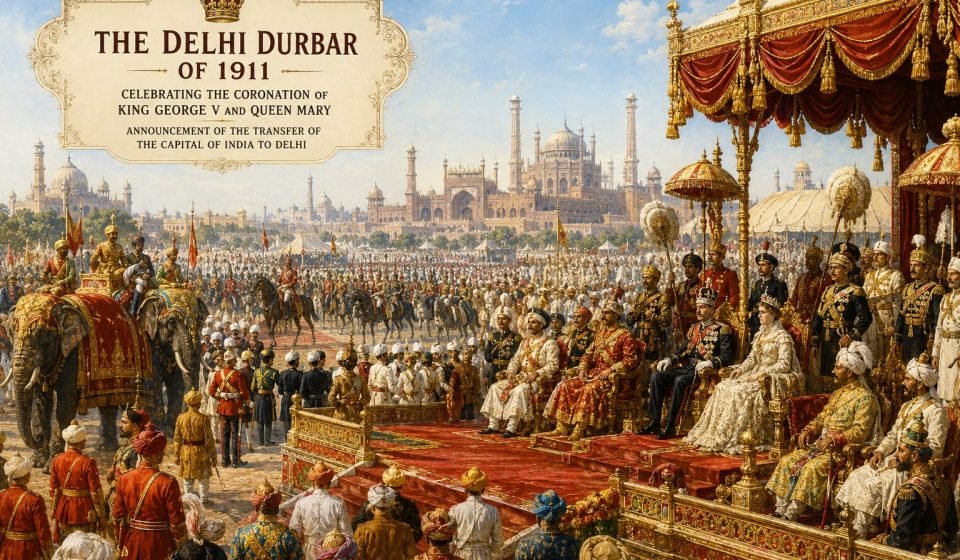
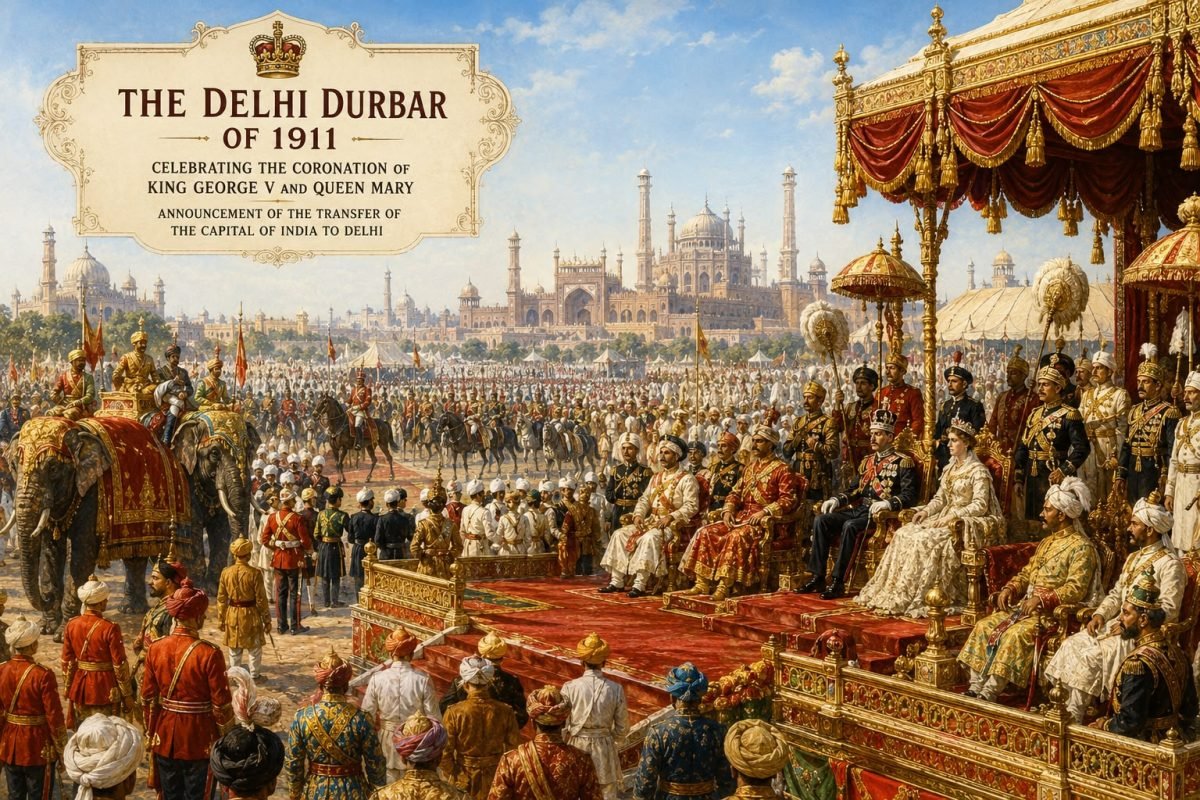
On 12 December 1911, on the plain north of Delhi where Lytton had proclaimed Victoria Empress and Curzon had staged his own pageant, King George V, the first reigning British sovereign ever to set foot in India, sat crowned before eighty thousand troops and the assembled princes of the empire and read out, in person, two announcements his own government of India had guarded like war secrets. The partition of Bengal was annulled, and the capital of India would move from Calcutta to Delhi. The Delhi Durbar of 1911, the most gorgeous spectacle the Raj ever mounted, was thus also its most consequential confession, the ceremonial burial of the policy that had convulsed India for six years.
The durbar itself strained the vocabulary of magnificence, a tent city of forty thousand canvas structures with its own railways and farms rising on the Delhi plain, weeks of reviews and investitures, the King and Queen in coronation robes under the golden domed shamiana receiving the homage of ruler after ruler. The single discord became famous, the Gaekwad of Baroda, Sayajirao, approaching the thrones without his full jewels, bowing slightly and turning his back to withdraw, a lapse of choreography the Anglo Indian press inflated into sedition and nationalist India savoured as a parable. Behind the pageantry the real business had been done in secret minutes through the preceding year. The government of Lord Hardinge had concluded what officials scarcely dared write plainly, that the partition of Bengal had failed at every level, uniting Hindu Bengal in permanent hostility, feeding a revolutionary movement the police could not extinguish, and yielding none of the administrative gains claimed for it. The King’s announcement reunited the Bengali speaking districts under a Governor in Council, carved Bihar and Orissa into a separate province along the lines language had always marked, restored Assam to a chief commissionership, and, to soften the blow to the Muslims of the east who lost their promised capital, coupled the retreat with the transfer of the imperial capital itself to Delhi, seat of the Mughals, a stroke pressed by Hardinge as killing several birds with one imperial stone, placating Muslim sentiment, escaping Calcutta’s political cauldron, and setting the Raj upon the throne cushion of every previous Indian empire.
India read the twin announcements exactly as the government feared and hoped. Bengal celebrated a victory that six years of boycott, samitis, trials and gallows had extracted, and the lesson, that sustained agitation could force the Raj to undo a settled act of state, entered the movement’s permanent capital, quoted at every later launching. The Muslim League’s loyalists absorbed a colder lesson, that assurances solemnly given, Dacca had been promised its province was a settled fact, could be revoked over their heads when the other community’s pressure told, and the disillusion of 1911, compounded by the Kanpur mosque affair of 1913 and the empire’s gathering quarrel with Ottoman Turkey, turned the League’s younger generation from loyalism toward the nationalists, the road that led to Lucknow in 1916. The revolutionary underground offered its own commentary within the year, a bomb thrown into the Viceroy’s howdah during the state entry into the new capital in December 1912, wounding Hardinge gravely, the Delhi conspiracy case and the hunt for Rash Behari Bose following.
The capital’s transfer set masons to work on the century’s grandest imperial project, Lutyens and Baker raising New Delhi through two decades, a city of imperial permanence inaugurated in 1931, sixteen years before the empire it enthroned departed, leaving the republic history’s most commodious hand me down. Calcutta, dethroned, kept its commerce and its ferment and lost its primacy, the beginning of a long relative decline Bengal still debates. And the durbar’s deepest legacy was the precedent nobody proclaimed from the golden shamiana, written between the lines of the King’s own text, that the acts of the Government of India were reversible, that the immovable could be moved. The crowd on the Delhi plain cheered an emperor. The nation beyond it had heard, for the first time from a throne, the sound of the Raj giving way.
1905 to 1911 - Swadeshi, Revolutionaries and Reform
Part 10 of 10 in this chapter.