
 In 30 Seconds




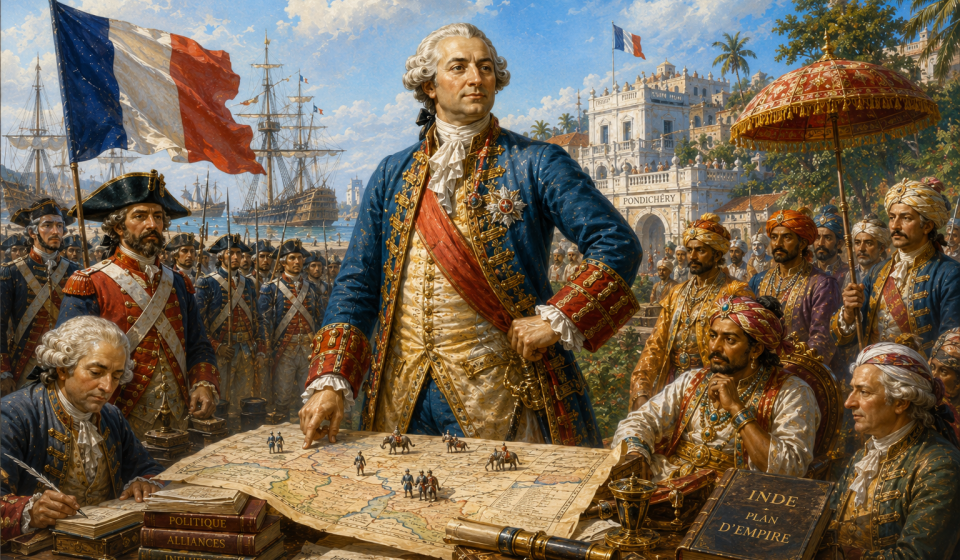
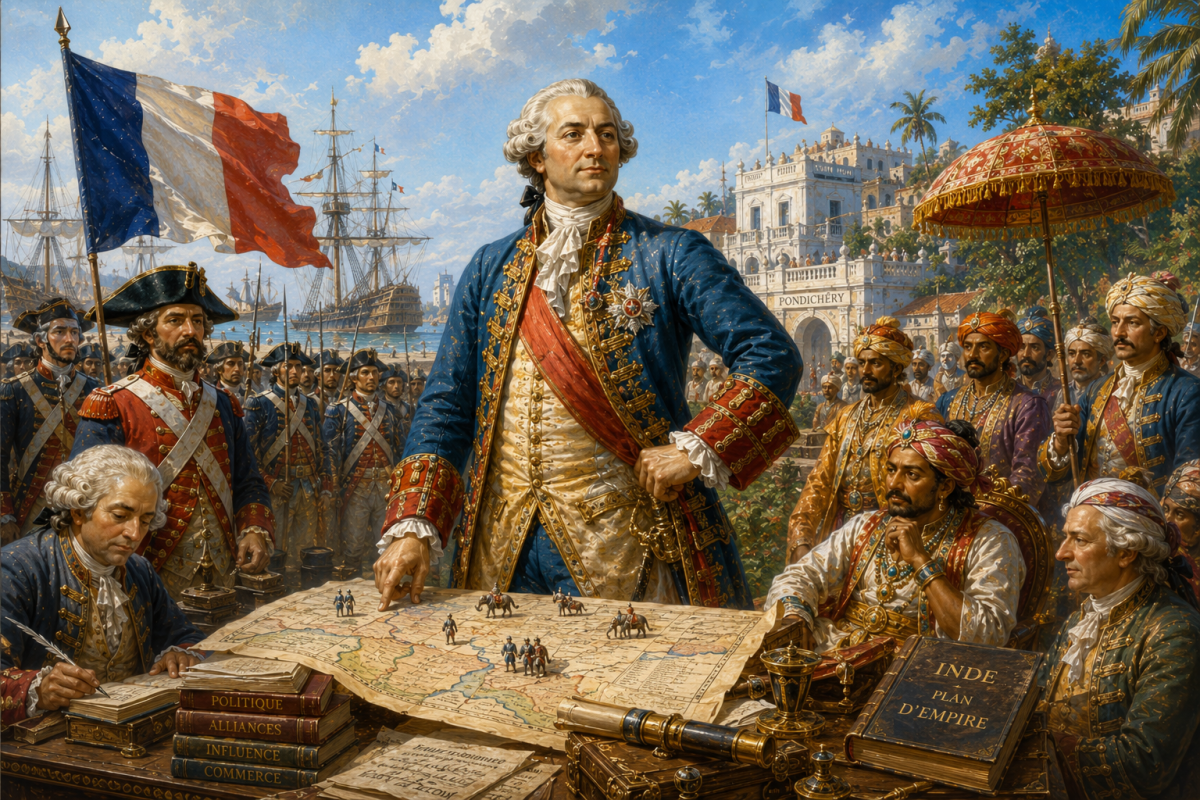
The British empire in India was invented by a Frenchman. Joseph Francois Dupleix never won the prize he pursued, died poor and embittered in Paris, and is remembered in his own country chiefly as a might have been. But every technique by which the East India Company later mastered the subcontinent, the sepoy army, the succession intervention, the puppet ruler, the assignment of territorial revenue to pay for European troops, was demonstrated first by Dupleix between 1748 and 1754. Clive and his successors did not originate the playbook. They captured it.
Dupleix had spent a lifetime in the East, first at Pondicherry, then as the transforming governor of Chandernagore in Bengal, where his private fortune and public reputation were made together, before returning to Pondicherry as Governor General of French India in 1742. He understood two things earlier and more clearly than any European contemporary. The first, proved at the Adyar in 1746, was the battlefield superiority of drilled infantry over the cavalry armies of India. The second was political, that the Mughal succession system, replicated in every successor state, generated a permanent supply of rival claimants, each willing to pay almost anything for the military edge that European troops provided. Combine the two, and a European company need never conquer India. India’s own princes would carry it to power, claimant by claimant, in exchange for protection.
The double opportunity arrived in 1748 when the old Nizam of Hyderabad died, unsettling both the Deccan and its Carnatic dependency. Dupleix backed Muzaffar Jang for the Nizamat and Chanda Sahib for the Carnatic against the incumbents. At Ambur in 1749 his sepoys and French regulars destroyed the army of the Nawab Anwaruddin, who died on the field. Within two years the French candidates held both thrones, and the price they paid made Dupleix, briefly, the most powerful European ever seen in India. He was granted the government of vast territories, honours that made him, in form, a Mughal noble of exalted rank, and when Muzaffar Jang fell, French troops under the marquis de Bussy installed and then guarded his successor at Hyderabad itself, paid by the assignment of the revenues of the Northern Circars. A French officer with a French brigade had become the arbiter of the Deccan.
The English, roused by the prospect of a French Carnatic, backed the rival claimant Muhammad Ali, penned in Trichinopoly, and the Second Carnatic War was fought by proxies while the two crowns remained formally at peace. It was in this undeclared war that Robert Clive seized Arcot in 1751 and the tide began to turn. The French cause, overextended, financially strained and unlucky in its commanders after the capture of its best troops at Trichinopoly, slid from mastery to stalemate. Chanda Sahib was captured and executed by allies of the English side. Yet Bussy still held Hyderabad, and Dupleix, negotiating and fighting simultaneously, believed to the end that persistence would prevail.
It was Paris that surrendered. The Compagnie des Indes, its dividends devoured by wars it barely understood, wanted trade, not provinces, and the French court wanted quiet before the next European storm. In 1754 Dupleix was recalled, replaced by a negotiator instructed to renounce his conquests, and sent home to ruin. He had spent his private fortune on the public cause, and the company declined to repay it. He died in 1763, his last letters a litany of proud despair, having, as he wrote, sacrificed youth, fortune and life to enrich his nation in Asia.
The English studied his fate and drew the profitable lessons. They copied the sepoy system wholesale, adopted the subsidiary alliance he had pioneered at Hyderabad, and in Bengal in 1757 executed a succession intervention more audacious than any of his. But they enjoyed two advantages Dupleix never had, a company rich enough to sustain war and a navy that could keep the sea. Where Paris recalled its visionary, London, after its fashion, rewarded its buccaneers. The playbook was French. The empire it described would be British.
1707 to 1765 - The Empire Cracks, the Company Rises
Part 6 of 10 in this chapter.