 In 30 Seconds




Five years after a merchant company became the revenue sovereign of Bengal, Bengal starved. The famine of 1770, remembered in Bengali tradition as the Chhiattarer Manvantar, the calamity of the Bengali year 1176, stands among the deadliest disasters in recorded history, and it happened on the Company’s watch, under the Company’s system, and to the Company’s profit.
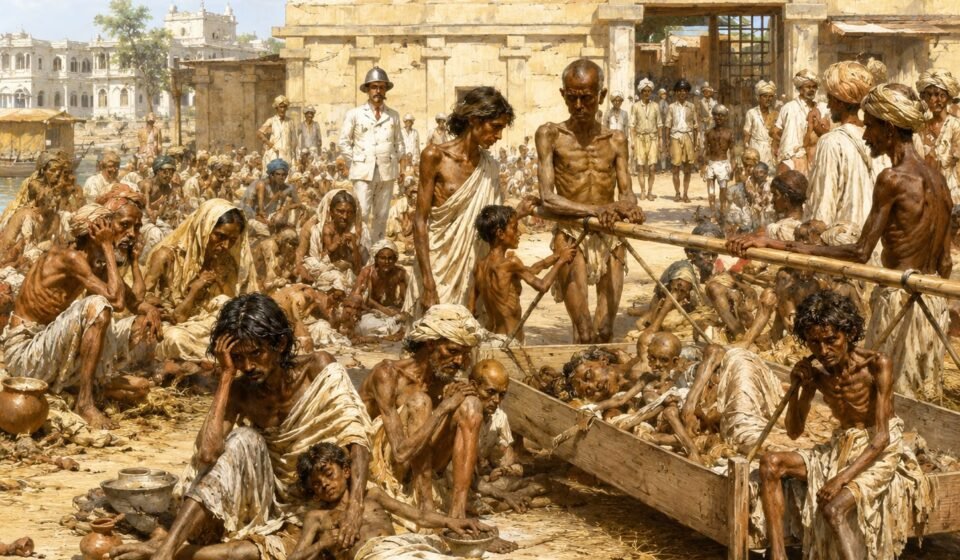
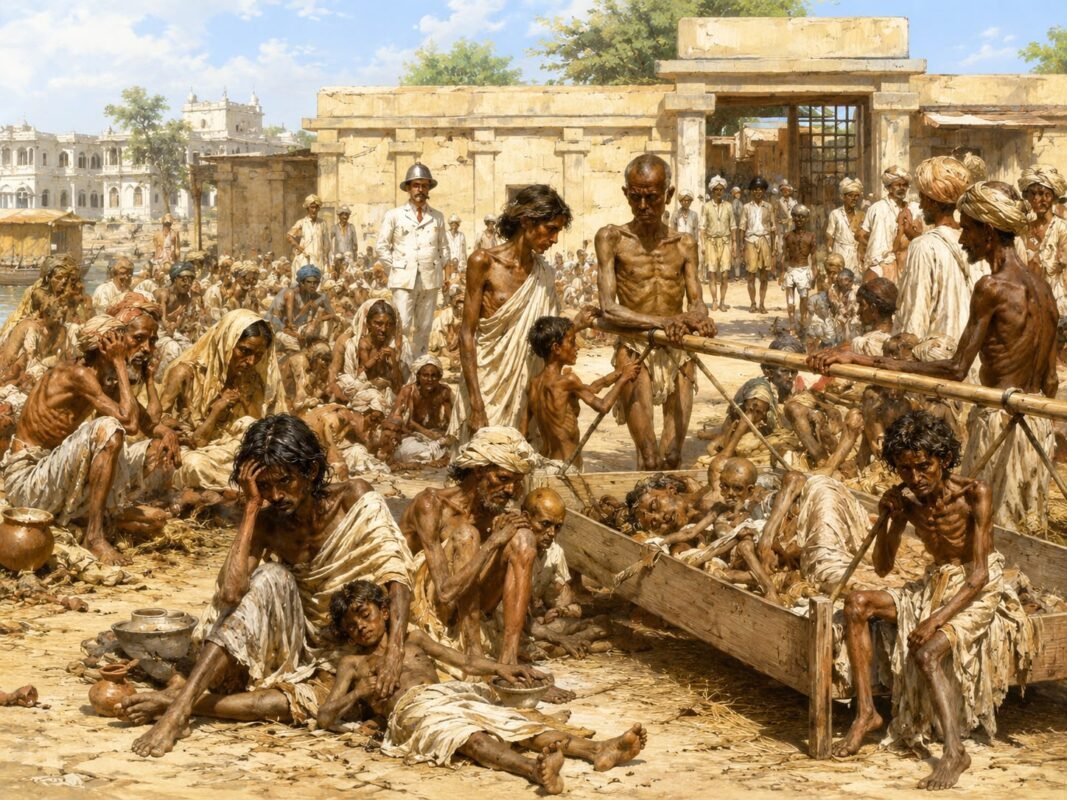
The rains faltered in 1768 and failed in 1769. By the autumn of that year grain prices were climbing beyond the reach of labourers and artisans, and officials in the districts were sending warnings down the river to Calcutta. What followed through 1770 was described by eyewitnesses in language that has lost none of its horror. The starving poured into the towns and died in the streets of Murshidabad and Calcutta faster than the bodies could be removed. Peasants sold their cattle, their tools, their children, and at the extremity, contemporary accounts record, the living fed on the dead. Smallpox rode upon the hunger and killed the Nawab himself. When the rains returned, whole districts had no one left to plough.
The mortality can never be known exactly. The famous contemporary reckoning, adopted by Warren Hastings after an inquiry in 1772, was that a third of the inhabitants of Bengal had perished, a figure conventionally rendered as ten million souls. Modern historians, working from imperfect records, generally judge that traditional figure too high and place the dead in the range of one to several millions, a revision that changes the arithmetic and not the moral. By any serious estimate it was one of the great mass deaths of the millennium.
What makes 1770 an indictment rather than merely a tragedy is the conduct of the power that held the treasury. The Company was not the government of Bengal in name, that shadow still belonged to the Nawab, but it had taken the revenues, and with them every means of relief, and it did not conceive relief to be its business. There were no famine codes, no organised works, no significant imports of grain, nothing resembling the traditional remissions and charities by which previous governments of Bengal, in their own catastrophes, had softened calamity. What the record does show is the revenue. Collections were enforced through the famine with such rigour that the net receipts of 1771 exceeded those of 1768, an achievement the Calcutta council reported to London with satisfaction, noting that the collections had been violently kept up to their former standard. Individual Englishmen and their Indian agents did worse than neglect. Contemporaries and later parliamentary critics charged that servants of the Company and their banians engrossed rice, cornering grain in a dying market, and fortunes were made in the traffic. The Company as a body never ordered such crimes. It merely built the machine in which they paid.
The famine broke more than bodies. Cultivation collapsed over vast tracts, and years later a third of the assessed land of Bengal was still returned as waste, jungle reclaiming villages whose names survived only in the rent rolls. To keep the revenue whole, surviving peasants were assessed for the lands of their dead neighbours under the device called najay, deepening the ruin. The depopulation and the fiscal chaos that followed drove the next half century of British land policy in Bengal, the experiments that ended in the Permanent Settlement of 1793, and the memory of the calamity, renewed by the famines of the nineteenth century, entered the foundations of Indian nationalism. When Bankim Chandra Chatterjee wrote Anandamath a century later, the novel that gave India the hymn Vande Mataram, he set it amid the corpses and the rebels of 1770.
In Britain the famine arrived as scandal at the precise moment the Company’s stock tottered, and the horror of Bengal dying while nabobs bought boroughs fed directly into the parliamentary storm of 1772 and 1773, the inquiries of Burgoyne’s committee, and the Regulating Act that began state control of India. Even Adam Smith, publishing in 1776, cited the conduct of the Company’s monopolists in the Bengal dearth as the example of how the mercantile spirit, armed with government, converts scarcity into famine. The lesson of 1770, that a state which takes a country’s revenue owes that country its life, was purchased at a price beyond reckoning, and it took the British in India a century and more catastrophes to begin, imperfectly, to learn it.
1765 to 1818 - Conquest
Part 2 of 10 in this chapter.