 In 30 Seconds




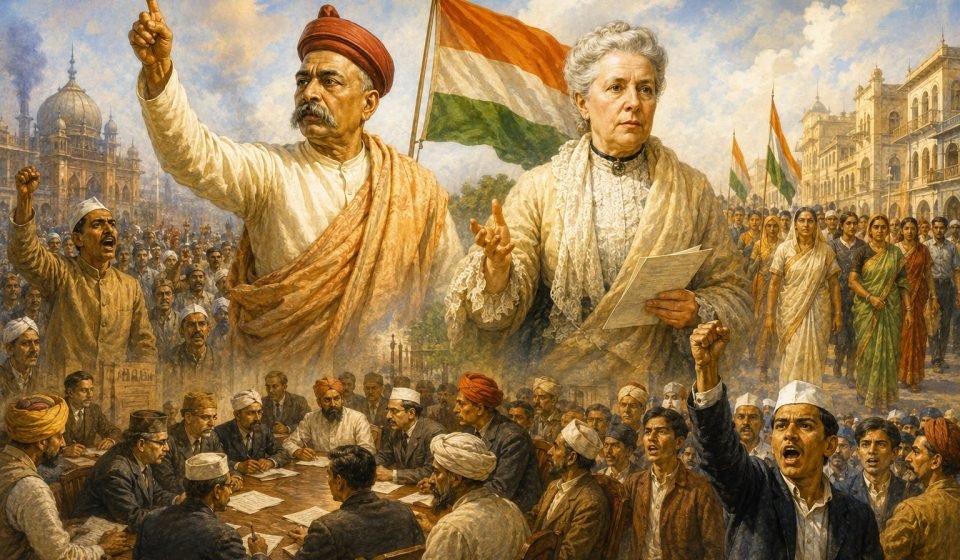
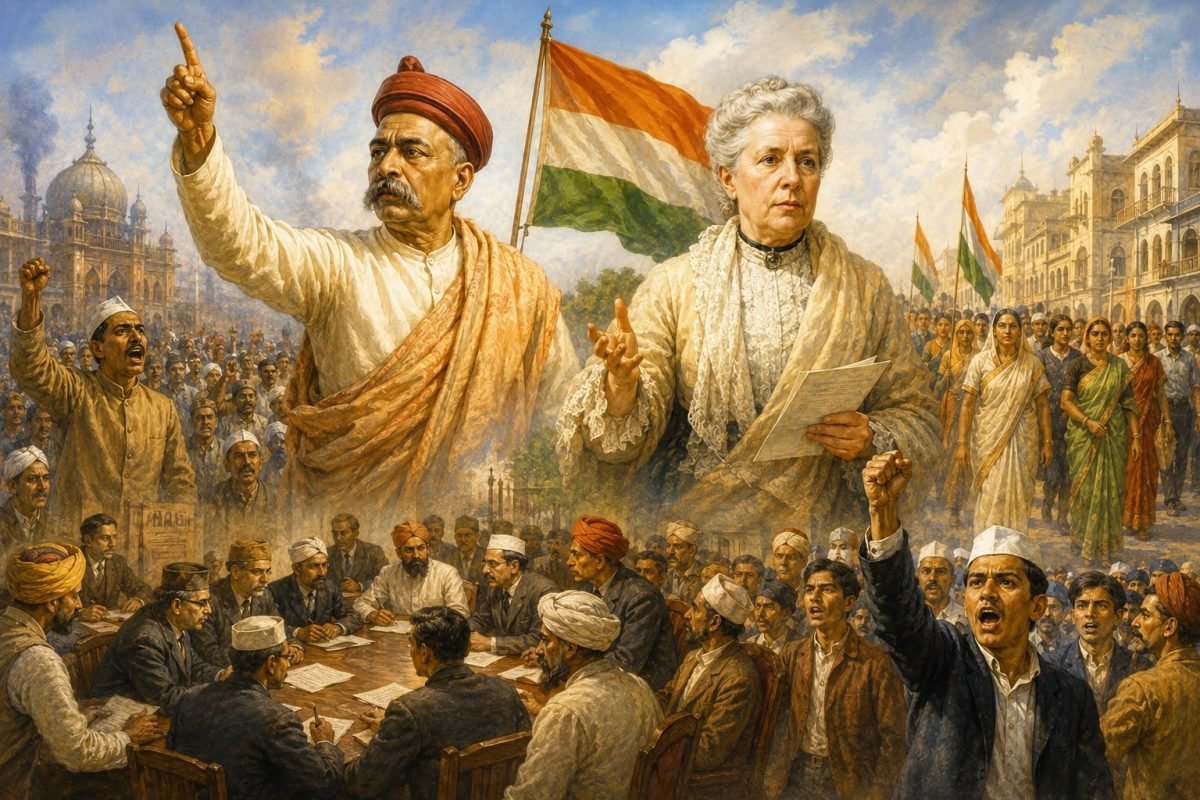
Between the trenches of the Great War and the coming of Gandhi, Indian politics was remade by two sexagenarians in a hurry. The Home Rule Leagues of 1916, Bal Gangadhar Tilak’s in the west and Annie Besant’s across the rest of India, took the demand for self government out of the annual session and into the year round agitation, built the first standing political machinery India had known, and raised the temperature of the country to the point at which the mass movements of the next decade became possible. They were the bridge between the politics of resolutions and the politics of the street, and most of those who crossed it never went back.
The founders were the era’s two most compelling agitators. Tilak, home from six years in Mandalay, had been readmitted to a Congress whose machinery moved, he complained, one week a year, and in April 1916, at Belgaum, he launched the Indian Home Rule League to work the Marathi and Kannada country and the Central Provinces, its demand self rule within the empire, framed with lawyerly care to skirt sedition, its slogan the sentence that became his epitaph, that swaraj was his birthright and he would have it. Annie Besant was the more improbable tribune, a sixty eight year old Englishwoman with a lifetime of causes behind her, atheism and birth control agitation beside Bradlaugh, Fabian socialism, the London matchgirls’ strike, and since 1893 the presidency of the Theosophical Society at Adyar, from which she had schooled a generation, founded the Central Hindu College at Banaras, and concluded that India, spiritual mother of the world, must be politically free. Her weekly Commonweal and daily New India, bought in 1914, preached Home Rule on the Irish model, and in September 1916 her All India Home Rule League spread its branches from Madras through the Hindi north, the two leagues dividing the map by friendly treaty, joint members and joint platforms everywhere.
Their method was saturation. Where the Congress met, the leagues worked, reading rooms and study classes, pamphlets by the hundred thousand in English and the vernaculars, lecture tours that put Tilak before the peasants of Maharashtra in their own idiom and sent Besant’s lieutenants, George Arundale, C P Ramaswami Iyer, the young Jawaharlal Nehru enrolling in Allahabad, through the towns of the south and north. Membership, a few tens of thousands at the peak, understates the reach, for the leagues recruited precisely the classes the Congress had never organised, students, traders, mofussil lawyers, and made politics a daily habit. The government, watching wartime India catch fire by lecture, reached for its usual instruments, barred students from meetings, prosecuted Tilak, who beat the case, banned him from the Punjab and Delhi, and in June 1917 the government of Madras interned Besant and her aides at Ootacamund. The arrest made the movement. Protest swept every province, moderates of unimpeachable respectability joined the leagues in demonstration, Sir Subramania Iyer returned his knighthood, and the question of passive resistance, argued in Congress committees with Gandhi hovering at the threshold of his Indian career, was pre empted only when the new Secretary of State, Montagu, forced Besant’s release in September. That December the Congress elected her its president, the first woman in the chair, at the very session that heard the Montagu declaration read, responsible government now the promised goal, a concession every history of the period credits in large part to the agitation the leagues had built.
The tide that carried them then turned with characteristic speed. Besant, believing the declaration a contract to be worked, counselled acceptance of the coming reforms and set her face against civil disobedience, and the movement’s young, whom she had taught impatience, left her for the newer, sterner teacher from South Africa, her league itself voting into Gandhi’s command as he assumed its presidency in 1920 and folded its machinery into the Non Cooperation whirlwind she opposed. Tilak died on the eve of that launch, his league’s cadres becoming Gandhi’s Maharashtra lieutenants or his stubbornest critics. Besant lived on at Adyar until 1933, honoured and politically stranded, the woman who had made Indian agitation respectable overtaken by the agitation she made possible. The leagues themselves lasted barely five years, and their monument is the decade that followed, which marched on roads they had cut.
1913 to 1919 - Ghadar, War and Gandhi Arrives
Part 5 of 10 in this chapter.