 In 30 Seconds




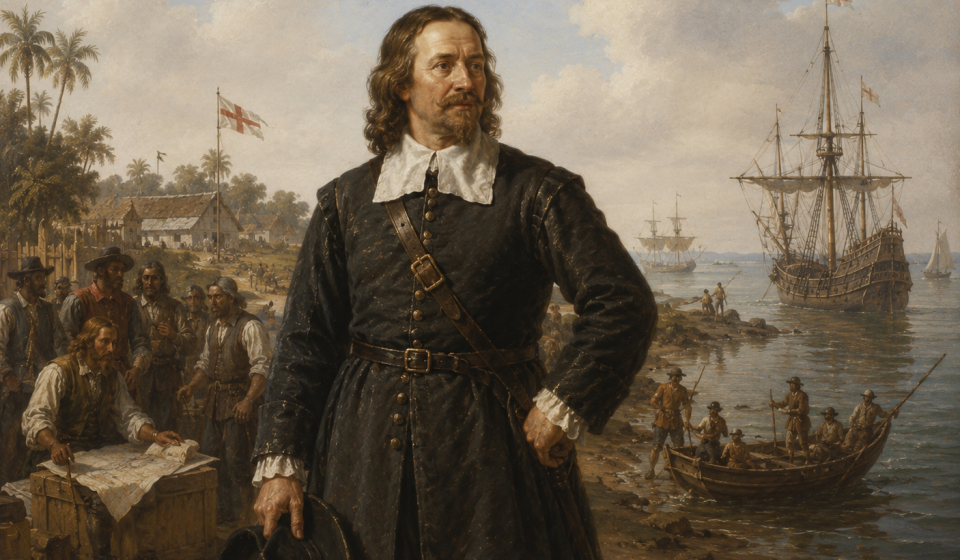
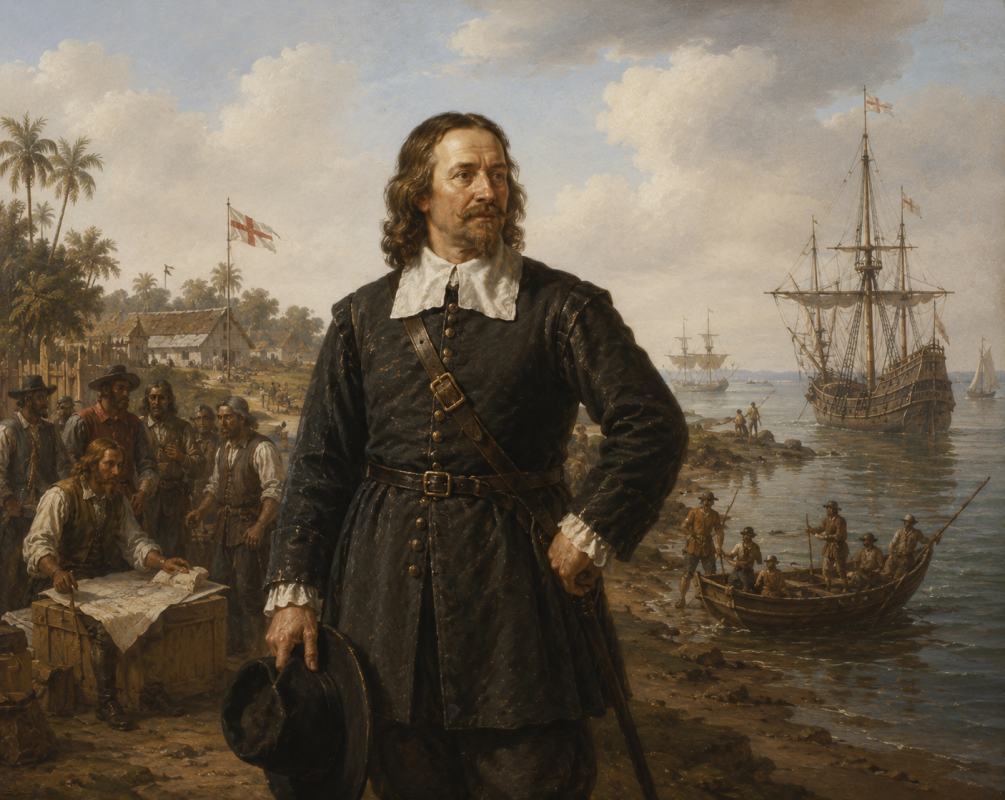
On 24 August 1690, an English factor named Job Charnock stepped ashore at the riverside village of Sutanuti on the eastern bank of the Hooghly, unpacked his goods under a shady tree, and resumed the Bengal trade of the East India Company. It was his third attempt to settle at the spot, the previous ones having ended in retreat during the Company’s disastrous war with the Mughal empire. This time the settlement held, and around it grew Calcutta, for two centuries the second city of the British Empire.
Charnock was a Company servant of the old, weathered kind, thirty five years in Bengal, fluent in its languages and thoroughly acclimatised to its world. Legend, recorded by later writers, held that he had rescued a young Hindu widow from her husband’s funeral pyre and married her, raising their children in a household that mixed customs freely. He knew the Bengal trade, saltpetre from Patna, silk from Kasimbazar, and the endless friction with Mughal officials over customs and exactions that had finally exploded into war in 1686. Driven from the Company’s upriver factory at Hooghly by that conflict, Charnock had identified the deep anchorage by Sutanuti, protected by the river on one side and marshes on the others, as the defensible point the English needed. When the emperor Aurangzeb, having chastised the Company thoroughly, permitted its return on payment of a fine, Charnock returned to precisely that spot.
The settlement he founded was an unhealthy paradise for commerce. It comprised, in time, three villages, Sutanuti, Kalikata and Gobindapur, whose zamindari rights the Company purchased in 1698 from the Sabarna Roy Choudhury family, giving the English the standing of landlords under the Mughal crown. From Kalikata came the name the world learned. In 1696, taking advantage of a rebellion in Bengal that made the provincial government grateful for armed friends, the English began building Fort William, named for the new king, and in 1700 Calcutta became the seat of a separate presidency. Charnock himself had died in 1693, before the fort rose, and lies in the churchyard of St John’s beneath a mausoleum that still stands, though the modern city has debated and litigated his title of founder, the High Court observing sensibly that great cities are founded by geography and commerce more than by any single man.
Commerce came in flood. Bengal was the richest province of the Mughal empire, its muslins and silks, saltpetre, sugar and rice feeding an export trade that made all previous Company business look small. Around the fort gathered Bengali merchant princes, weavers and brokers, Armenians and Portuguese, and the mixed society of a boom town. By the 1750s the population approached two hundred thousand, and the private fortunes made by Company servants in the inland trade were already corrupting the discipline of Leadenhall Street. The Mughal farman of 1717, granting the Company duty free trade in Bengal, poured fuel on this fire, for its privileges were stretched by private traders in ways that enraged the Nawabs of Bengal and set the quarrels that would end at Plassey.
Calcutta’s early history carried the marks of its future greatness and its future tragedies. The city was born of an act of defiance and reconciliation with Mughal power, prospered as a sanctuary of property in a turbulent century, and armed itself behind Fort William with a confidence that grew faster than its walls. In 1756, when the young Nawab Siraj ud Daulah demanded that those walls stop rising and was ignored, he took the city by storm, an event, with its aftermath in the crowded prison room remembered as the Black Hole, that gave the Company its pretext for the revolution of 1757.
From Charnock’s tree to the capital of British India was a journey of barely a century. No one who watched a fever ridden factor unpack his bales at Sutanuti in the rain of August 1690 could have imagined that the swamp behind him would become the city of palaces, the seat of Governors General, and the birthplace, in time, of the very nationalism that would end the empire it served.
1600 to 1720 - The Arrival
Part 6 of 10 in this chapter.