 In 30 Seconds




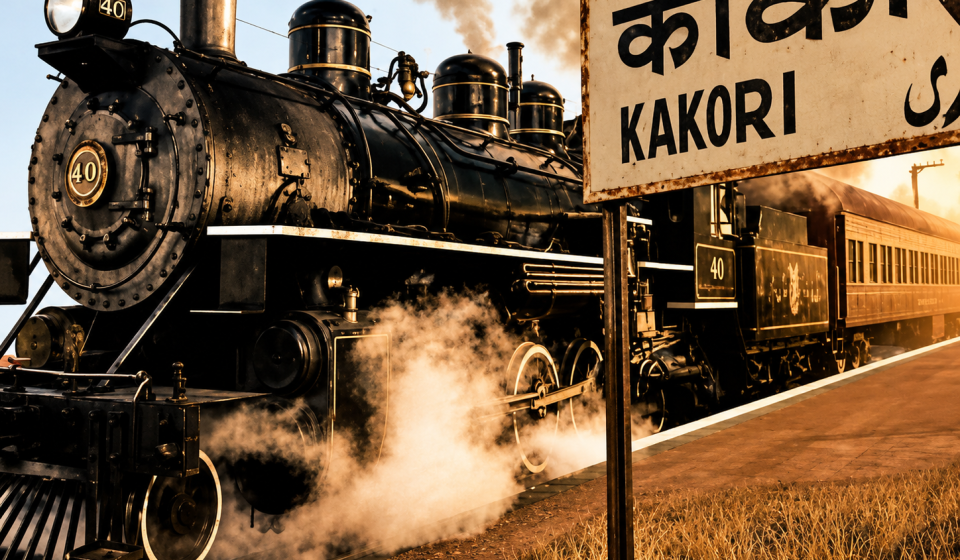
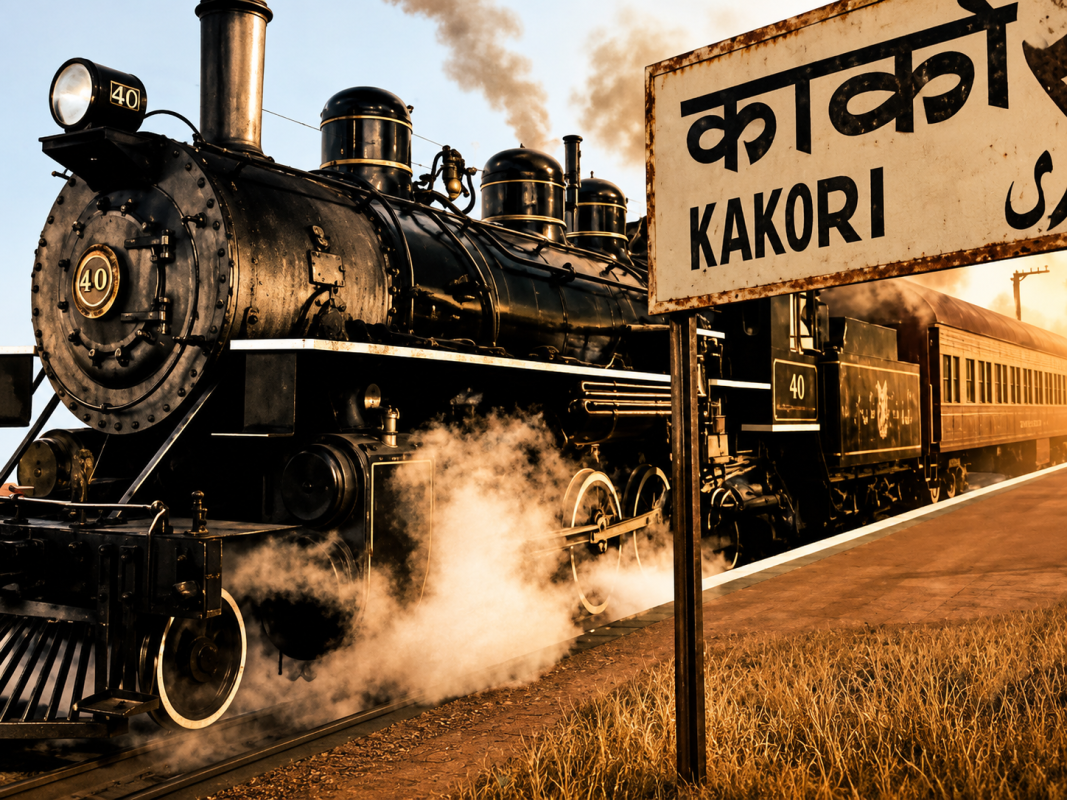
On the evening of 9 August 1925, the number eight down train from Shahjahanpur to Lucknow was stopped by the chain a little past the station of Kakori, and ten young men of the Hindustan Republican Association overpowered the guard, broke open the safe of government treasury money in the second class carriage, and vanished into the dusk with a little over four and a half thousand rupees. As robbery it was modest, one accidental death in crossfire its casualty. As politics it was an announcement, revolution’s return after the Non Cooperation ebb, and the trial and hangings that answered it gave the movement four of its most beloved martyrs and the gallows songs a nation still sings.
The HRA was the ebb tide’s child. Founded in 1924 by veterans and heirs of the older undergrounds, Ram Prasad Bismil of Shahjahanpur, poet and Arya Samajist, Sachindra Nath Sanyal of Benares, whose Bandi Jivan was the movement’s testament, Jogesh Chandra Chatterji and their circle, it gathered the young men whom Gandhi’s suspension at Chauri Chaura had left, in their own accounts, politically orphaned, among them a teenaged absconder of the 1921 movement calling himself Azad. The association’s manifesto, The Revolutionary, proposed an organised armed struggle for a federal republic of the United States of India, with universal suffrage and, the socialist accent already audible, an order in which man’s exploitation of man would end. Action needed funds, funds taken from individuals bred odium, and the Kakori plan followed, to rob the state itself of its own treasury remittance, both financing and proclamation.
The government’s answer treated the robbery as the insurrection it symbolically was. The CID’s sweep took over forty men across the United Provinces, and the Kakori conspiracy case, running eighteen months in the Lucknow court with its approvers, its special magistracy and the defence committee that Motilal Nehru’s Congress circle organised, ended in April 1927 with sentences that measured the state’s alarm, transportations for life and, for four, death, Bismil the leader, Ashfaqullah Khan his closest comrade, Roshan Singh, and Rajendra Lahiri. The appeals and the mercy campaign that followed united political India, legislators’ memorials and public meetings pleading commutation of sentences for a robbery, and their failure taught the era’s lesson about the limits of such pleading. In December 1927 the four were hanged in four separate jails, Lahiri at Gonda on the seventeenth, Bismil at Gorakhpur, Ashfaqullah at Faizabad and Roshan Singh at Allahabad on the nineteenth, each leaving the gallows literature its texts, Bismil walking to the rope with verses on his lips, Ashfaqullah kissing it with the Quran’s words, both men’s prison writings sealing the friendship of the Hindu poet and the Muslim revolutionary into the movement’s parable against the riot decade around them, and the ghazal Bismil had made his own, Sarfaroshi ki tamanna, the longing for sacrifice, passing from his file into the anthem book of every later revolutionary.
The organisation died and rose in the same season. Chandrashekhar Azad, the one leader never taken, gathered the remnant, and at the Ferozeshah Kotla meeting of September 1928 the HRA added the word that Kakori’s prison years had ripened, becoming the Hindustan Socialist Republican Association, Bhagat Singh and the Punjab group joining the northern veterans, the lineage running straight from the Kakori dock to the Assembly bomb and the Lahore case, whose story the next chapter tells. The martyrs themselves entered the national liturgy at once, Kakori day observed annually with Congress blessing, the families honoured, the names given to streets, schools and, in time, to the very trains of the line their action stopped.
Kakori’s meaning in the movement’s ledger is the double one its martyrs intended. It restated, against both the government’s law and the dominant nonviolence, the claim of the armed path, and it did so in a style, disciplined, sacrificial, scrupulous of innocent life, that made the revolutionaries not the mass movement’s rivals but its reserve, loved across the method’s divide, mourned by the Congress that could not adopt them. The empire hanged four men over four thousand rupees, and purchased with the rope, as it did in that decade with every such economy, another generation of the resolve it meant to end.
1919 to 1929 - The Gandhian Storm
Part 10 of 10 in this chapter.