
 In 30 Seconds



While the national movement fought the empire through the 1920s, another struggle opened inside the nation itself, and two place names carry its beginning, Vaikom in Travancore and Mahad in the Konkan, the first great satyagrahas not against British rule but against untouchability, the campaigns in which the oppressed castes claimed the road and the water, and in whose course the movement met both its allies and the limits of their alliance.
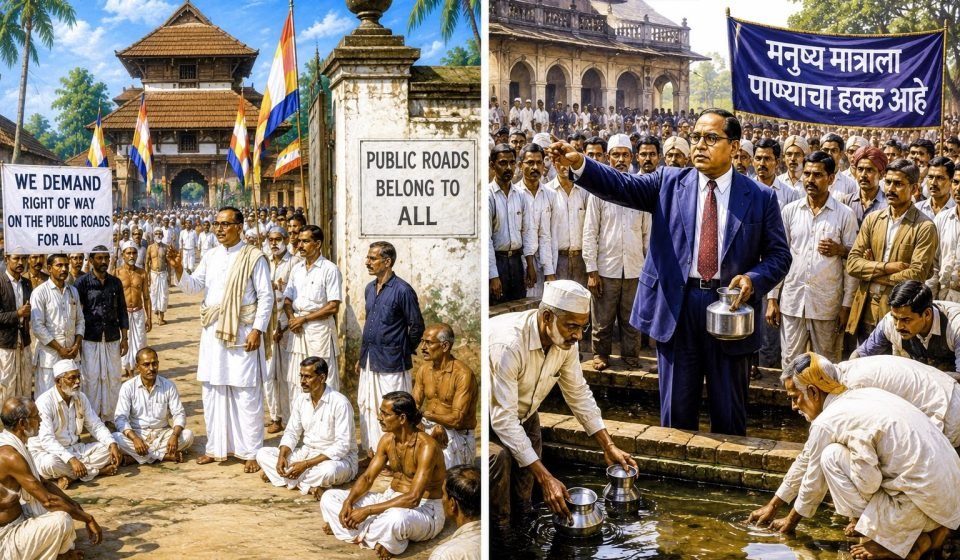
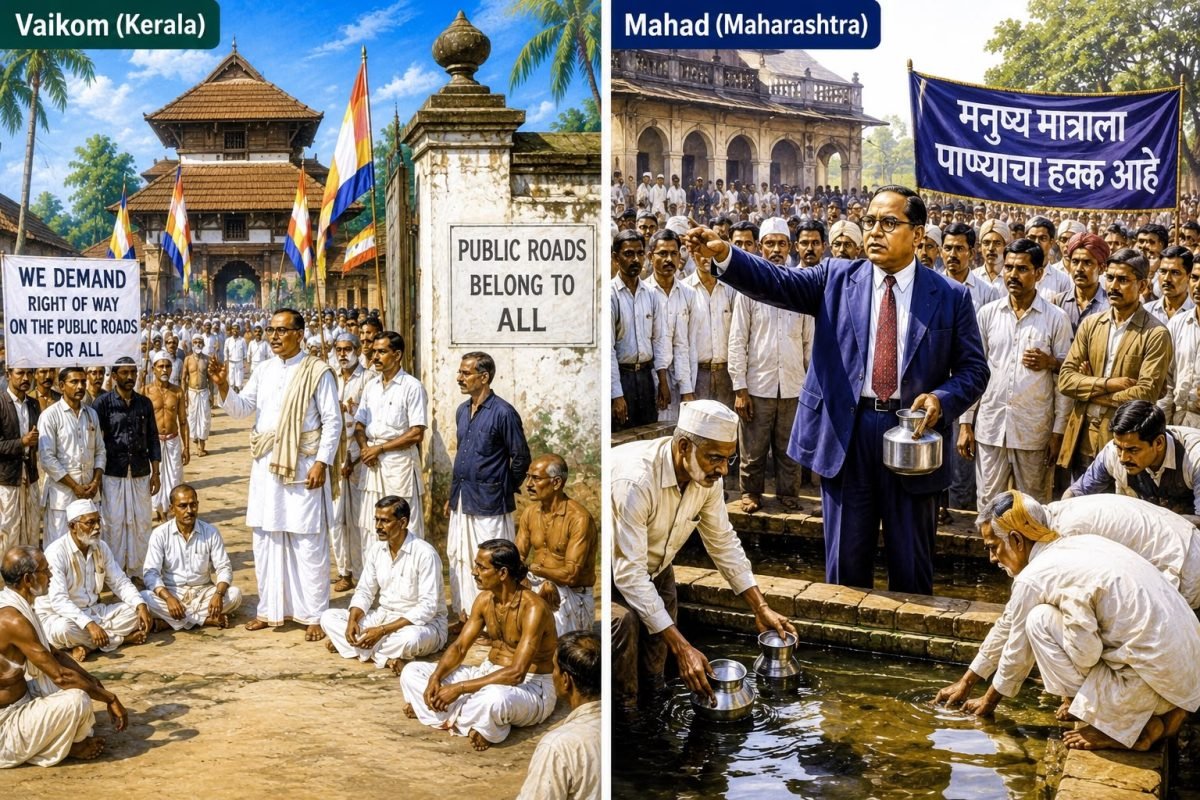
Vaikom’s question was a road. Around the great Shiva temple of Vaikom in the princely state of Travancore, the approach streets themselves were barred to the avarna castes, Ezhavas and Pulayas forbidden not entry alone but passage, distance pollution enforced by board and custom in a state whose social order Vivekananda had called a madhouse of caste. The challenge was prepared by the Ezhava leader T K Madhavan, carried into the Congress’s program at Kakinada in 1923, and launched on 30 March 1924, when savarna and avarna volunteers together walked toward the prohibited street and were arrested, then, when arrests were stopped, stood before police barricades in shifts, month upon month, through the great flood of that monsoon in which the satyagrahis kept their stations waist deep in water, the barricade manned by boat. The struggle drew the age’s whole cast, George Joseph the Syrian Christian Congressman leading until Gandhi counselled that Hindus alone should bear a Hindu reform, the Akalis sending a kitchen the movement gratefully ate from and Gandhi controversially asked to withdraw, savarna sympathy marching in procession to the Regent’s palace, and from neighbouring Tamil country the Congress president of the province, E V Ramasamy, who threw himself into the picketing, went twice to prison, and earned there the title Vaikom Virar, the hero of Vaikom, before his disillusion with what he judged the campaign’s compromises helped carry him out of the Congress toward the Self Respect movement, the parting of ways that shaped Dravidian politics. Gandhi came in 1925, negotiated with the police commissioner and the caste authorities, and the settlement of that year opened three sides’ approaches, the fourth and the temple itself remaining closed, a half victory the radicals never let the moderates forget, redeemed in full only by the Temple Entry Proclamation of Travancore in 1936, the maharaja’s edict that opened every state temple to all Hindus and which the Vaikom struggle had made thinkable.
Mahad’s question was water, and its leader announced a different politics. On 20 March 1927, Dr B R Ambedkar, London and Columbia trained economist and lawyer, and by then the acknowledged voice of Bombay’s depressed classes, led some three thousand delegates of the Mahad conference to the Chavadar tank, whose water the municipality had years earlier resolved to open to all and whose use custom still forbade, and drank from it, a sip of municipal water performed as constitutional revolution. The town’s answer, a riot upon the delegates and the tank’s ritual purification with curds and cow dung, and the courts’ answer, a suit and injunction to keep the untouchables from the water, taught the movement its adversary’s depth, and Ambedkar’s answer, at the second Mahad conference that December, gave the struggle its Bastille day. On 25 December 1927 the conference resolved that the ancient law book’s authority stood behind the town’s curds and the court’s injunction, and burned the Manusmriti in a pit before the assembly, a gesture Ambedkar defended in the idiom of the age as the bonfire of foreign cloth had been defended, the repudiation of a sovereignty. The tank case ground through the courts for a decade until the Bombay High Court found for the right of access, by which time Mahad had done its historical work, announcing that the depressed classes would henceforth claim rights as rights, by their own leadership, with scripture itself answerable to justice.
The two campaigns’ common lesson and their divergence made the next decades’ agenda. Both proved that caste’s citadels, the road, the tank, the temple, could be besieged by satyagraha’s methods, and both entered the national movement’s conscience, Gandhi’s campaigns against untouchability owing them their urgency. But Vaikom’s reform from within and Mahad’s revolt from below were already different politics, the difference that Ambedkar and Gandhi would argue at the Round Table and in the Poona Pact’s shadow, whether the untouchables were Hinduism’s wound to be healed or a people to be empowered, and the republic’s Constitution, drafted by Mahad’s leader with the tank and the fire behind him, is where the argument came to its provisional rest.
1919 to 1929 - The Gandhian Storm
Part 9 of 10 in this chapter.