 In 30 Seconds




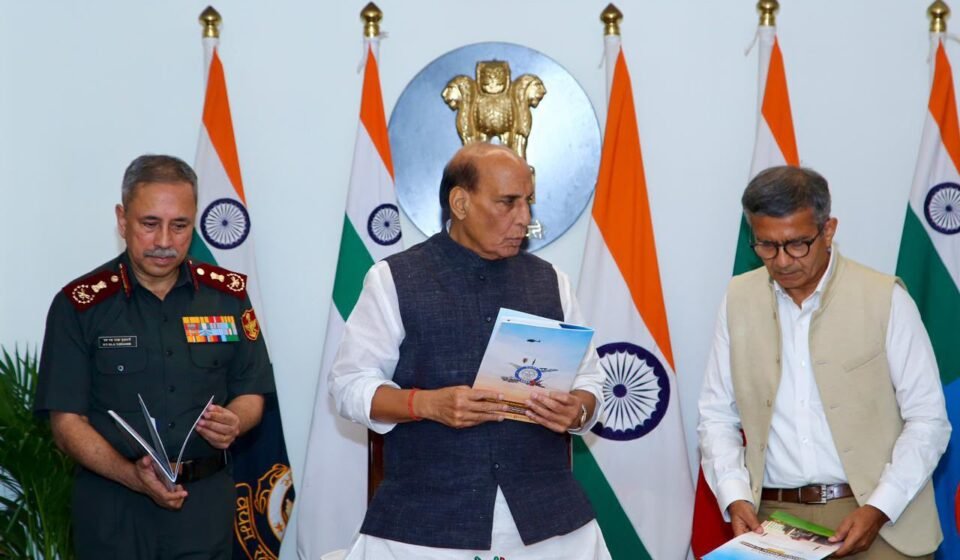
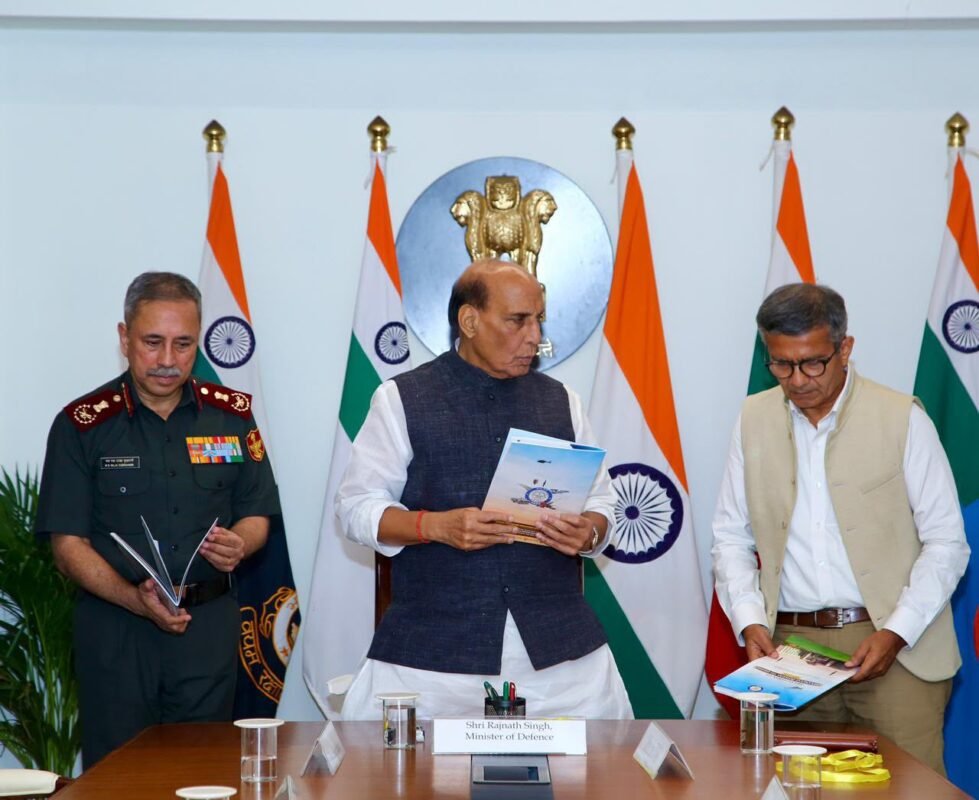
Defence Minister Rajnath Singh used a ceremony in New Delhi on Monday to release the Delegation of Financial Powers to DRDO, known as DFP 2026, a reform intended to cut through the layers of approval that have historically slowed India’s defence research projects from concept to deployment. The new framework expands the financial and administrative authority available at multiple levels within the Department of Defence Research and Development, allowing officials closer to individual projects to approve spending decisions that previously required clearance from higher up the chain.
Singh described the reform as one that would directly accelerate the production and induction of systems, platforms and technologies emerging from India’s defence research ecosystem into the armed forces. He framed the announcement explicitly within the government’s Aatmanirbhar Bharat push, arguing that faster internal decision making at DRDO would translate into stronger collaboration with private industry and academic institutions working on defence technology.
What DFP 2026 Actually Changes
The substance of the DRDO DFP 2026 reform centres on several specific gaps that officials say had been slowing project execution. The framework introduces dedicated financial provisions for trial campaigns and testing and evaluation activities, a category of spending that previously often required separate, time consuming approval even after a research project itself had been sanctioned. It also grants authorisation for sanctioning pre project research and development initiatives, allowing exploratory work to begin without waiting for the full bureaucratic sign off that a formal project typically demands.
A further element of the reform involves a clearer segregation of financial powers for grants in aid connected to three specific channels through which DRDO funds external research, Extra Mural Research Projects, the Defence Innovation Accelerator Centres of Excellence programme, and the Technology Development Fund. By separating and clarifying financial authority across these schedules, the government says it expects faster disbursal of funding to the startups, MSMEs and academic institutions that increasingly form part of India’s defence innovation pipeline rather than leaving that funding dependent on a single, centralised approval process.
The release ceremony was attended by senior figures across India’s defence establishment, including the Chief of Defence Staff, the Defence Secretary who also serves as Secretary of the Department of Defence Research and Development and Chairman of DRDO, Rajesh Kumar Singh, along with the Secretary for Defence Production, the Secretary for Ex Servicemen Welfare, and senior DRDO scientists from across its various directorates.
A Companion Reform for the Armed Forces
Alongside DFP 2026, the Defence Ministry simultaneously released a related framework, the Delegation of Financial Powers to Defence Services, abbreviated as DFPDS 2026, aimed at accelerating financial approvals and procurement decisions across the armed forces more broadly rather than within DRDO specifically. Releasing both frameworks together signals an attempt to address financial bottlenecks at two different stages of India’s defence pipeline simultaneously, the research and development stage governed by DFP 2026, and the procurement and operational deployment stage governed by DFPDS 2026.
This pairing matters because a research breakthrough that takes years to translate into an actual fielded weapons system or platform represents a recurring criticism of India’s defence establishment, one that successive governments have tried to address through various procurement reforms with mixed results. Whether DFP 2026 and DFPDS 2026 together meaningfully shorten that translation time will likely only become clear once specific projects move through the pipeline under the new rules over the coming years.
Why Financial Delegation Reform Matters for Defence R&D
India’s defence research apparatus has long faced criticism, including from within government itself, for delays between initial research success and eventual deployment, delays often attributed less to scientific or engineering shortcomings and more to the layers of financial and administrative approval required at each stage of a project’s life. DRDO in particular has periodically faced public criticism over projects that took years longer than initially projected to move from prototype to operational induction.
Reforms of this kind, expanding the financial powers delegated to officials closer to the actual research work, represent one of the more direct levers available to address that criticism without requiring fresh budgetary allocation. By empowering project level decision makers to approve spending on trials, testing and pre project exploratory work without escalating every such decision to the top of the organisational hierarchy, the government is betting that bureaucratic friction, rather than funding shortfall alone, has been a meaningful contributor to delays in India’s defence innovation timeline.
The Aatmanirbhar Bharat Framing
Singh’s repeated invocation of Aatmanirbhar Bharat during the announcement reflects the broader political and strategic context in which DFP 2026 sits. India’s defence establishment has spent the past several years pushing to reduce dependence on imported weapons systems and technologies, with DRDO positioned as the central institution responsible for developing indigenous alternatives across categories ranging from missile systems to naval platforms to aerospace technology.
DRDO has continued to play a role in the broader Make in India push as well, regularly transferring indigenous technologies developed in house to public and private sector manufacturers through formal technology transfer licensing agreements, while its Technology Development Fund has specifically targeted MSMEs and startups working on advanced aerospace and defence equipment. The expanded financial autonomy under DFP 2026 is intended to deepen that ecosystem further by making it administratively easier for DRDO to fund and collaborate with exactly these smaller, more agile private sector partners.
What Comes Next
The real test of DFP 2026 will not be visible immediately, since the value of streamlined financial delegation tends to show up gradually, in project timelines that shorten over subsequent years rather than through any single dramatic announcement. Defence analysts tracking India’s R&D pipeline will likely watch upcoming DRDO programmes, particularly those involving collaboration with private industry and startups under the Technology Development Fund and Defence Innovation Accelerator schemes, for early signs of whether the new financial framework translates into measurably faster execution on the ground.
Related Reading
- What Is Ballistic Missile Defence? How Missile Shields Work
- What Is Theatre Command? India’s Military Reform Explained
Official context: Readers can compare this story with public information from Ministry of Defence.