 In 30 Seconds




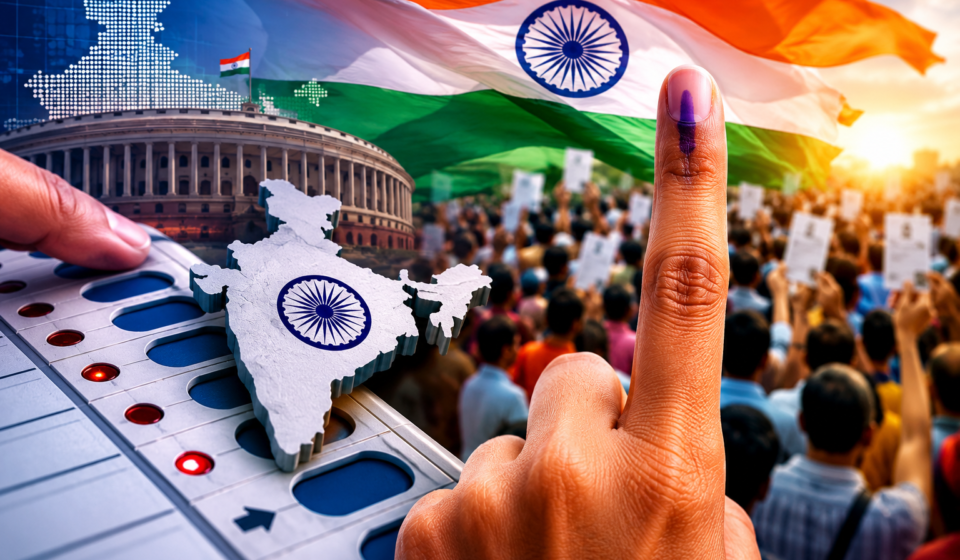
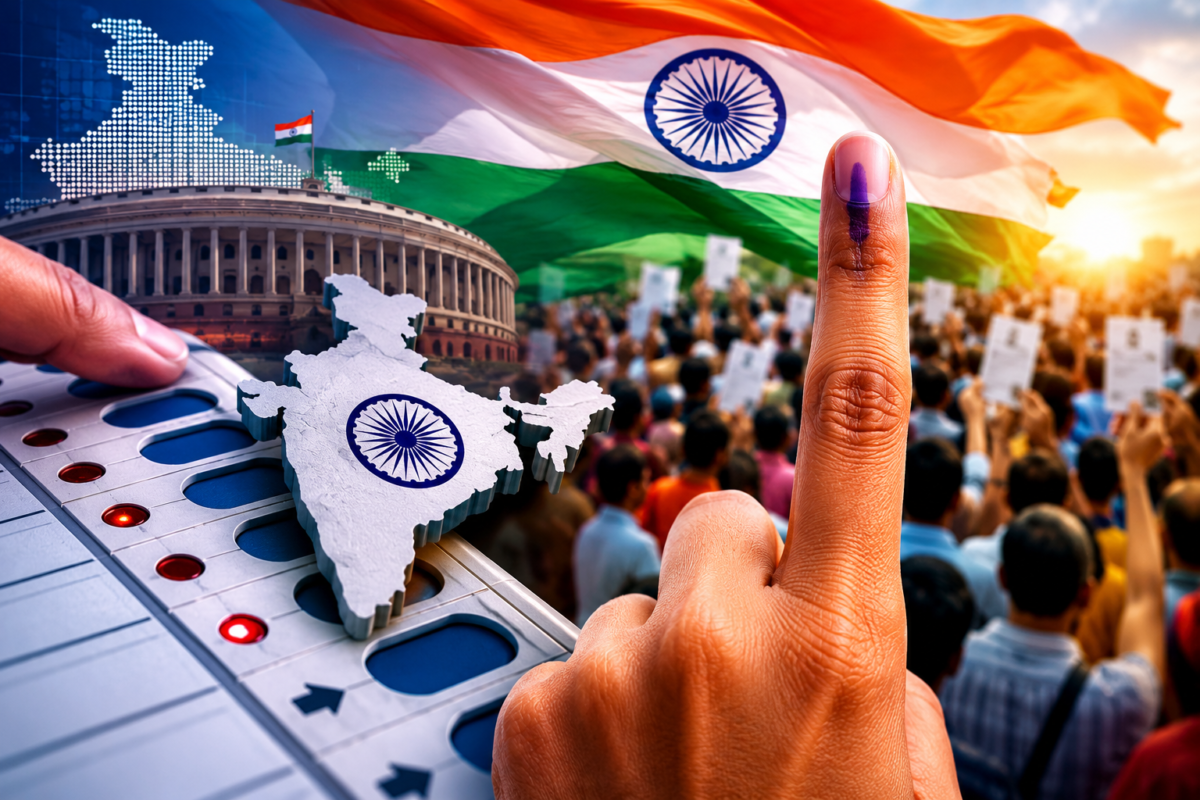
General Elections in India determine the composition of the Lok Sabha and, by extension, which party or coalition gets to form the national government and select the Prime Minister. Given that India is the largest democracy in the world by population, the mechanics of how this election actually happens, spread across weeks and involving hundreds of millions of voters, are considerably more complex than a single national polling day.
Why Indian Elections Happen in Phases
Unlike many democracies that hold national elections on a single day, India’s general elections are conducted in multiple phases over several weeks, a structure driven primarily by logistics and security rather than political design. The 2024 general election, which formed the current eighteenth Lok Sabha, was conducted across seven phases between the nineteenth of April and the first of June, with voting in India’s largest states, including Uttar Pradesh, Bihar and West Bengal, spread across all seven phases to allow security forces and election officials to be deployed efficiently across different regions at different times.
This staggered approach allows the same central security personnel, election officials and even electronic voting machines to be redeployed from one phase to the next, since holding genuinely simultaneous nationwide polling would require resources far beyond what even a country of India’s administrative capacity could mobilise on a single day.
How Voting Actually Works
Indian general elections rely on Electronic Voting Machines, commonly known as EVMs, which have been used in national elections since 2004. Each EVM is paired with a Voter Verifiable Paper Audit Trail, or VVPAT, a system that prints a paper slip confirming the voter’s choice, visible to the voter for a few seconds before it drops into a sealed box, providing an auditable backup to the electronic record.
The Election Commission caps each polling booth at a maximum of 1,500 registered voters, and ahead of major elections, hundreds of thousands of polling stations are set up nationwide, staffed by election officials, security personnel and party appointed polling agents who monitor the process to ensure fairness. EVMs themselves are designed without any external connectivity, meaning they cannot be connected to the internet or any other device, a design choice specifically intended to prevent remote tampering, and the machines include a built in mechanism that disables them automatically if unauthorised access is attempted.
Counting Day and How Results Are Determined
Vote counting begins on a single designated day, with all phases of voting having concluded beforehand. Counting starts with postal ballots, used primarily by security personnel, election officials on duty elsewhere, and certain categories of voters such as those above eighty five years of age or persons with disabilities, who in recent elections gained the option to vote from home. EVM counting begins roughly thirty minutes after postal ballot counting starts, with the control units of each machine, which store the final vote tally, brought to designated counting centres and unsealed in the presence of representatives from all contesting political parties.
Counting takes place simultaneously across multiple tables for each assembly segment within a parliamentary constituency, allowing results to be processed relatively quickly despite the enormous number of votes involved. Final results for most constituencies are typically declared within a single day of counting, with the overall national outcome, and therefore which party or coalition will form the government, usually clear by the evening of counting day.
What Happens After Results Are Declared
Once results are declared, the Election Commission formally notifies the newly elected members of the Lok Sabha to the President of India. The leader of whichever party or coalition has secured a majority, or can demonstrate the support of a majority through post election alliances, is then invited by the President to form the government and take the oath of office as Prime Minister. If no single party or coalition has a clear majority, the President exercises discretion in determining which leader to invite first to attempt to demonstrate majority support, typically through a floor test in the newly constituted Lok Sabha.
The newly elected Lok Sabha then begins its five year term, subject to the possibility of earlier dissolution, with its composition determining everything from the legislative agenda to the choice of Speaker to the overall balance of power between the government and opposition for the years that follow.
The Scale That Makes Indian Elections Unique
What ultimately distinguishes Indian general elections from those held elsewhere is sheer scale. The 2024 election involved an electorate of nearly 970 million registered voters, more than 5.5 million EVMs, over a million polling stations, and around 15 million poll workers and security personnel, making it consistently described as the largest electoral exercise conducted anywhere in the world. Understanding the phased structure, the EVM and VVPAT system, and the counting day process is essential not just for following any single election cycle but for understanding the basic operating mechanics of Indian democracy itself. For full schedules, results archives and official notifications, the Election Commission of India’s website remains the definitive public source.