 In 30 Seconds



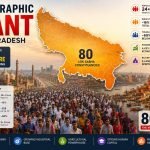
Every Indian general election is really several elections stacked on top of each other, and the largest of them, the one that most often settles the matter, is fought across the 80 Lok Sabha constituencies of Uttar Pradesh. No other state comes close. Maharashtra sends 48 members, West Bengal 42, Bihar 40. UP’s delegation alone is larger than the combined strength of the entire south below Maharashtra’s line in most reckonings of the electoral map. When strategists in Delhi speak of the path to a majority, they are speaking, first and last, of Uttar Pradesh.
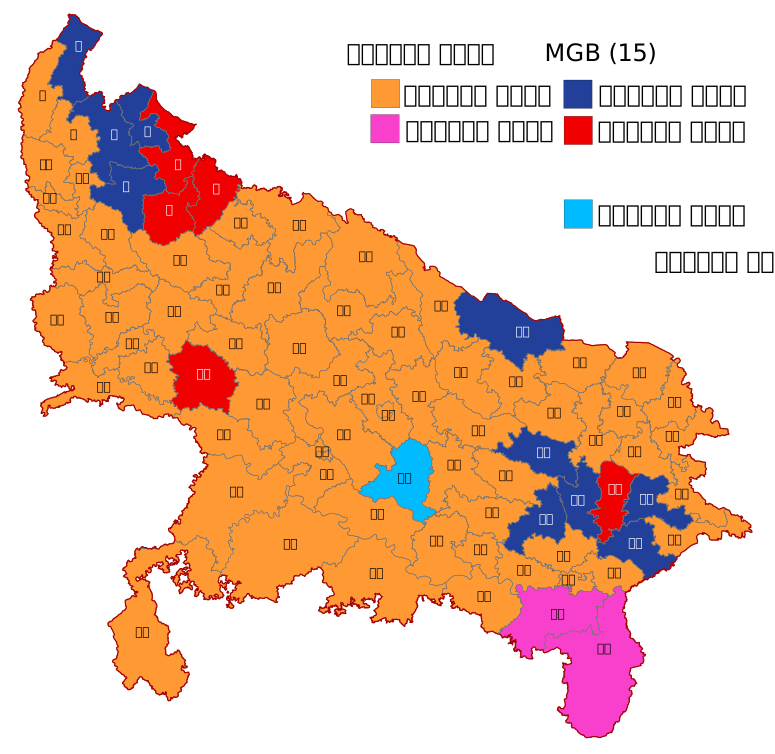
The historical record makes the point with brutal consistency. The Congress ruled India for as long as it swept UP, and its national decline tracked its collapse in the state almost year for year. The Janata wave of 1977 that removed Indira Gandhi took all 85 of the state’s then seats. Her comeback in 1980 ran through the same districts. The BJP’s rise from the late 1980s was built on UP, and its majorities of 2014 and 2019, with 71 and 62 seats from the state, were the arithmetic core of the Modi era. In 2024, when the Samajwadi Party and Congress alliance cut deeply into the BJP’s UP tally, the ruling party lost its single party majority in Delhi. The lesson repeated itself for the tenth time in as many decades. As UP goes, so goes the government.
The state’s weight is not only in the seats it holds but in the leaders it elects. Nine prime ministers have entered the Lok Sabha from UP constituencies. Nehru sat for Phulpur, Lal Bahadur Shastri for Allahabad, Indira Gandhi for Rae Bareli, Charan Singh for Baghpat, Rajiv Gandhi for Amethi, VP Singh for Fatehpur, Chandra Shekhar for Ballia, Atal Bihari Vajpayee for Lucknow, and Narendra Modi for Varanasi. A politician who wishes to signal national ambition still, in the twenty first century, looks for a seat on the Gangetic plain.
Why does the state punch even above its formidable numbers? Part of the answer is that UP is not one electorate but a federation of electorates, and it contains within itself nearly every cleavage that matters in Indian politics. Upper caste and backward caste, Jatav and non Jatav Dalit, Muslim mohalla and Kanwar route, sugarcane west and migrant east, urban Noida and the deep rural districts of Bundelkhand. A message that works in UP has, almost by definition, been stress tested against the whole Indian social fabric. Parties treat the state as the laboratory where national strategies are proven or destroyed.
Part of the answer is also psychological. Because everyone believes UP decides India, everyone campaigns as if it does, and the belief fulfils itself. Prime ministerial candidates spend more days in the state than anywhere else. National narratives, from Mandal to Mandir to the labharthi welfare politics of the present, were either born in UP or fought their decisive battles there. The state’s own assembly election, held midway between general elections, has become a recognised national semifinal, watched in every capital newsroom as a referendum on the government of India.
The 80 seats are only the visible summit of the state’s institutional weight. UP elects the largest bloc in the Rajya Sabha as well, 31 members, and its 403 member assembly plus legislative council give it the biggest slice of the electoral college that chooses India’s president. A party that holds Lucknow therefore holds leverage in every chamber and every constitutional election in Delhi. This is why national parties treat the UP chief ministership as something close to a second prime ministership, and why the state’s assembly polls attract campaign resources that dwarf what entire regions of the country receive.
There is a darker side to the arithmetic. The very size of the prize has made UP’s politics the most intensely contested and, at times, the most ruthlessly fought in the country. The fusion of muscle and money with electoral machinery, which later articles in this series will examine in detail, grew partly from the stakes involved. When 80 seats hang on the outcome, the temptation to win by any means available has never lacked takers.
Delimitation, frozen since the 1970s, looms over all of it. When constituency boundaries are eventually redrawn to reflect population, UP’s delegation is projected to grow substantially, deepening the north’s parliamentary weight and sharpening the federal argument with the south. The state that already decides who rules Delhi may soon decide it by a wider margin still. The eighty seats, in other words, are not the ceiling of Uttar Pradesh’s power. They may only be the floor.
UP Files - Batch 1
Part 3 of 10 in this chapter.