 In 30 Seconds




Champaran had proved that satyagraha could work in India. The twin campaigns of 1918 in Gandhi’s own Gujarat, the mill strike in Ahmedabad and the revenue refusal in Kheda, proved that it could be adapted, to labour against capital and peasant against state, and they recruited to the method the two constituencies, the industrial worker and the Patidar peasant, and the one lieutenant, Vallabhbhai Patel, on which the mass movements of the next thirty years would run.
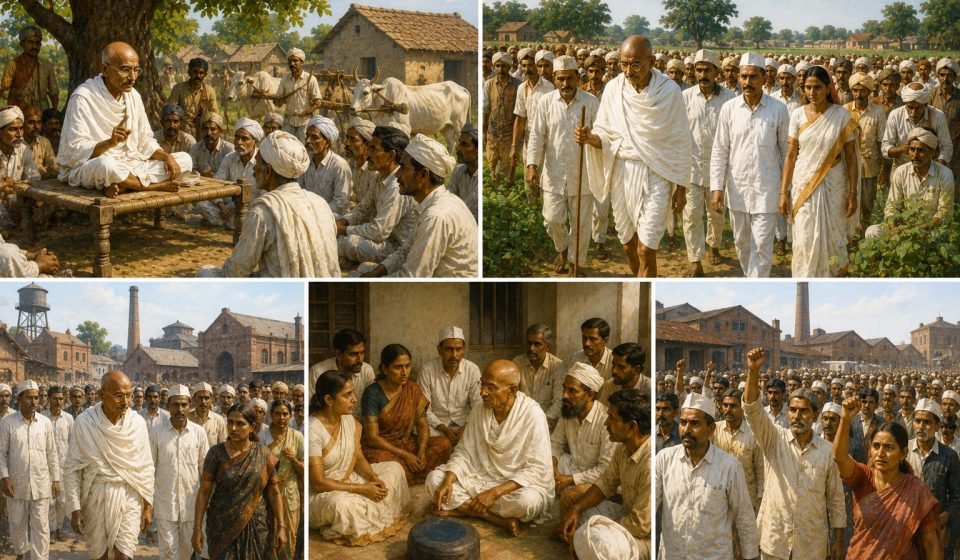
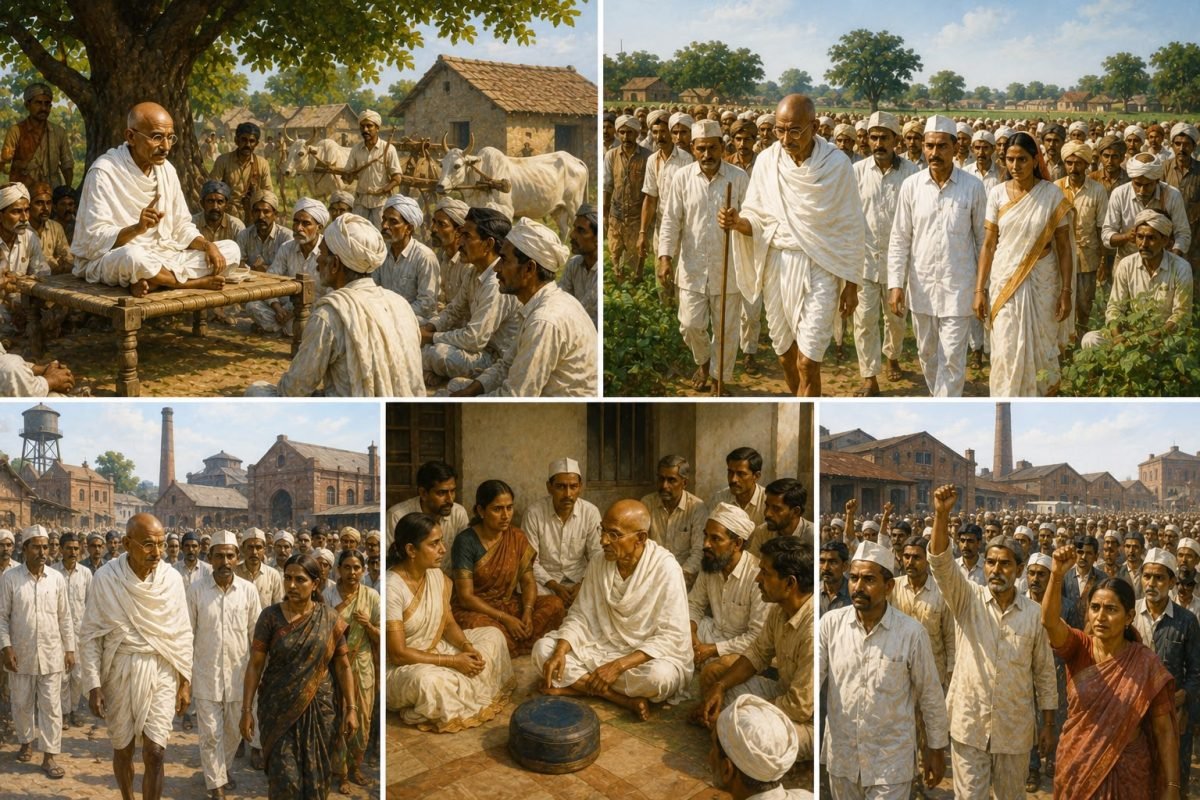
The Ahmedabad dispute of February and March 1918 was a quarrel inside Gandhi’s own circle of allies. The city’s mill owners, led by Ambalal Sarabhai, a personal friend and the ashram’s quiet benefactor, moved to withdraw the plague bonus that had kept workers in the stricken city, while wartime prices had doubled the cost of the workers’ grain, and the hands demanded a rise of half their wage. The workers’ cause was organised by Anasuya Sarabhai, the millowner’s own sister, a Fabian trained social worker who had made the labourers’ welfare her life, and the spectacle of brother and sister leading capital and labour gave the strike its peculiar Gujarati intimacy. Called to arbitrate and then to lead when arbitration broke down, Gandhi fixed the demand at a thirty five percent rise, bound the workers by daily pledge under a babul tree by the Sabarmati to seek neither more nor less and to keep perfect peace, and issued the strike’s daily leaflets as a course in the ethics of struggle. When, in the third week, hunger began to break the men and the pledge with them, Gandhi announced, to his own surprise as much as anyone’s, that he would take no food until the strikers rallied to their vow. It was the first of his seventeen public fasts, and he recorded its ethical flaw himself, that a fast by the workers’ beloved leader was coercion of the millowners who loved him too. It worked in three days. The settlement’s face saving formula ran through an arbitrator to the workers’ figure, thirty five percent, and out of the strike’s discipline grew, in 1920, the Majoor Mahajan, the Textile Labour Association, Anasuya’s monument, whose arbitration first model of unionism became Gandhi’s answer to class war and the training school, decades later, of Gujarat’s labour politics.
Kheda, running simultaneously through the spring, took the method into the state’s own revenue office. The district’s crops had failed in the excessive rains of 1917, and the law itself provided that where yields fell below a quarter of normal, the land revenue must be suspended. The government’s assessors found the crops adequate, the peasants’ own inquiries, checked by Gandhi’s volunteers village by village, found them ruined, and upon the government’s refusal of suspension or impartial inquiry, the campaign was joined, the Patidars of Kheda signing a solemn pledge not to pay, the well to do binding themselves for the poor, through a season of confiscations, attached cattle and standing crops seized, that tested the vow hard. Gandhi’s commissariat in the campaign was a forty two year old Ahmedabad barrister of formidable practice and dry wit named Vallabhbhai Patel, who set aside his briefs, put on the dhoti, and revealed in the villages of his own community the talent for command that made him, from that season, the movement’s organiser in chief. The settlement in June was a half victory of the kind Gandhi taught his followers to bank, the government privately ordering that revenue be collected only from those who could pay and the poor be spared, the peasants’ pledge thereby honoured, though Gandhi noted the absence of the graceful public concession that would have made it complete.
The year’s two campaigns completed the method’s Indian toolkit, the pledge, the daily bulletin, the fast, the disciplined vow of nonviolence maintained under confiscation and hunger, and the strict limitation of demands that made settlement always possible. They also drew the method’s social map, labour organised but bound to arbitration, the peasantry mobilised on grievances the law itself acknowledged, capital opposed but never expropriated, the pattern that made Gandhi’s movement irresistible in breadth and, to its radical critics ever after, questionable in depth. And they staffed the future, for when Gandhi called the nation in 1919 and 1920, Ahmedabad’s workers, Kheda’s Patidars and Vallabhbhai Patel answered first, the home base of everything that followed, mobilised in the trial seasons of 1918.
1913 to 1919 - Ghadar, War and Gandhi Arrives
Part 7 of 10 in this chapter.