 In 30 Seconds




The strangest alliance of the freedom struggle was built around a throne in Constantinople. The Khilafat movement, the campaign of India’s Muslims between 1919 and 1924 to save the Ottoman Sultan’s Caliphate from dismemberment by the victorious Allies, became, through Gandhi’s embrace, one wing of the first mass movement against British rule, carried Hindu Muslim unity to its historical high tide, and collapsed when the Turks themselves abolished the institution India was defending, leaving behind a legacy over which historians still argue.
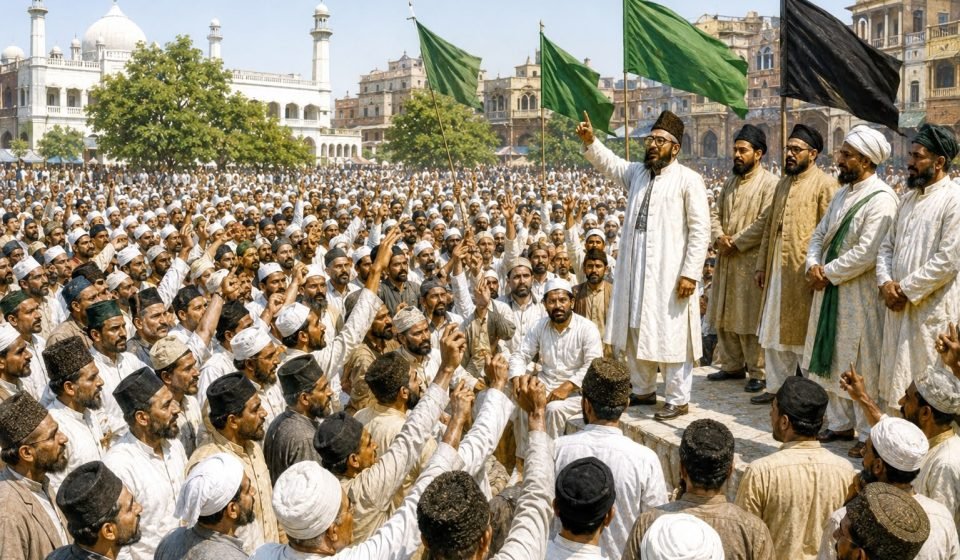
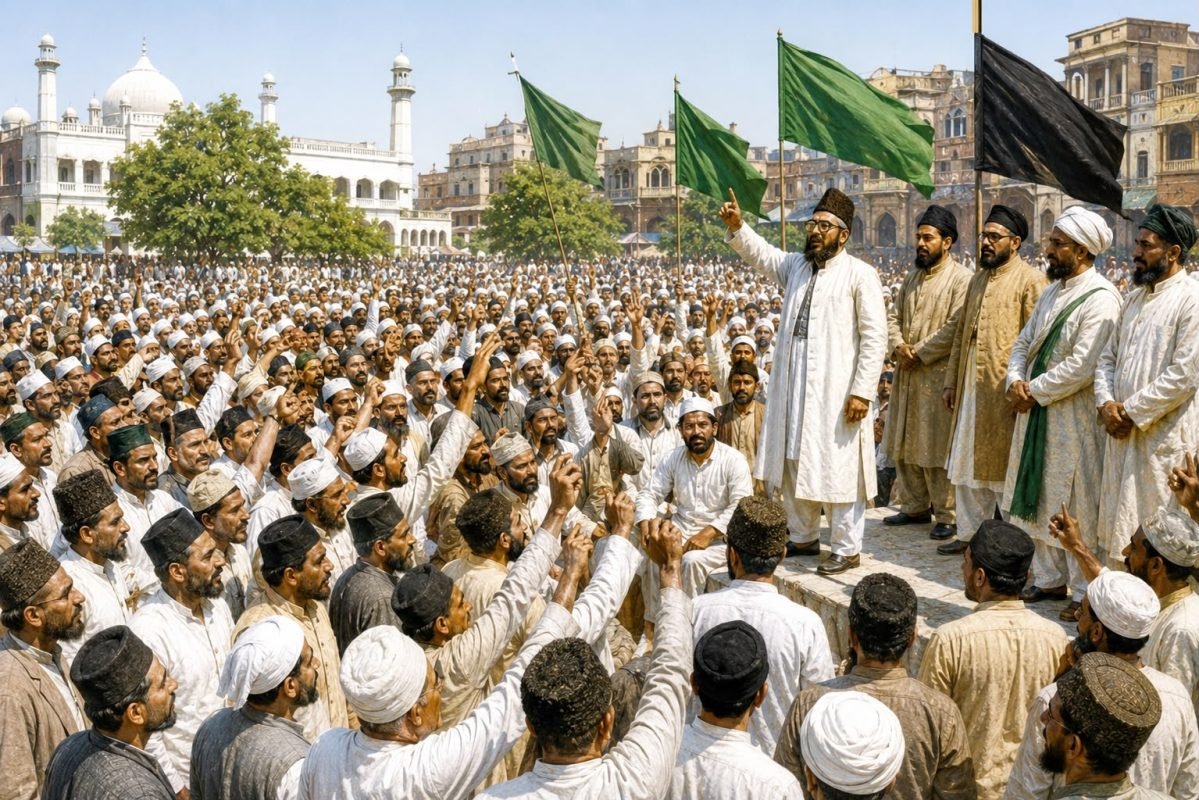
The grievance was imperial double dealing at the expense of the faith. The Ottoman Sultan was recognised by most of the world’s Sunni Muslims as Khalifa, successor of the Prophet and guardian of the holy places, and Indian Muslims had been assured during the war, by no less than Lloyd George, that Turkey would not be stripped of its homelands or the Islamic world’s sacred sites. The armistice revealed the assurances’ worth. The Allies occupied Constantinople, sponsored the Greek landing at Smyrna, and prepared in the Treaty of Sevres a partition of the Ottoman lands, with the Khilafat’s guardianship of the Hijaz and Jerusalem passing to European mandates and their Arab clients. To Indian Islam, already sore from the war against fellow believers, the peace was sacrilege, and the movement to resist it gathered every stream of the community, the ulema of Deoband and Firangi Mahal organised as the Jamiat Ulema e Hind, the Aligarh modernists, and as its tribunes the Ali brothers, Muhammad Ali and Shaukat Ali, journalists of enormous popular gift newly released from wartime internment, with their mother Bi Amman, who addressed vast meetings from behind the veil, among the first women on the nationalist stage.
Gandhi’s decision to make the Khilafat the nation’s cause remains the movement’s pivot and its controversy. He saw in Muslim anguish both a wrong done by the same government that had given India Rowlatt and the Punjab, and the once in a century chance, as he told colleagues, to weld the two communities in a common struggle, and he moved the Khilafat conference at Delhi in November 1919 to adopt his method, and his leadership, for a campaign of non cooperation, the word entering national politics through the Khilafat door. The Central Khilafat Committee launched the program on 1 August 1920, the day Tilak died, a month before the Congress itself at Calcutta voted to join, and for two years the movements marched as one, the Ali brothers at Gandhi’s side across the country, khilafat and swaraj cried from the same platforms, funds and volunteers pooled, the spectacle, unimaginable a decade before, of the ulema campaigning for a Hindu leader’s program. The years carried their own excesses and tragedies, the hijrat of 1920, when perhaps twenty thousand believers, taught that India under such a government was no land for the faithful, sold their goods and trekked to Afghanistan, to be turned back at last destitute, and the movement’s fringes, and the Moplah rising’s horrors, showed how combustible sacralised politics could be.
The end came from two directions at once. Gandhi’s suspension of non cooperation after Chauri Chaura in February 1922 struck the allied movements simultaneously, the Ali brothers and much Muslim opinion never quite forgiving a unilateral halt in a campaign jointly begun. And then the cause itself evaporated. The Turkish national movement under Mustafa Kemal, having driven out the Greeks and torn up Sevres at Lausanne, deposed the Sultan in 1922 and in March 1924 abolished the Caliphate altogether, the Turks discarding what India’s Muslims had bled to preserve. The movement’s machinery collapsed into recrimination, and the unity it had built unravelled with terrible speed, the middle 1920s bringing shuddhi and tanzeem, riot upon riot, and the parting of allies, Muhammad Ali’s journey from Gandhi’s fellow prisoner to his bitter critic tracing the decade’s arc.
The audit remains open a century on. The movement gave the freedom struggle its first mass Muslim participation and its most complete communal unity, proved the political power of the ulema and the street, and trained a generation of Muslim nationalists, the Jamiat’s strand staying with the Congress to oppose partition itself. Its critics, from contemporaries like Jinnah, who warned against yoking politics to a religious cause the community could not control, to later historians, read in it the legitimation of religious mobilisation whose techniques others inherited to darker ends. Both verdicts describe the same event, the freedom struggle’s greatest embrace, contracted over a distant throne, and the cold morning after it.
1919 to 1929 - The Gandhian Storm
Part 1 of 10 in this chapter.