 In 30 Seconds




Story
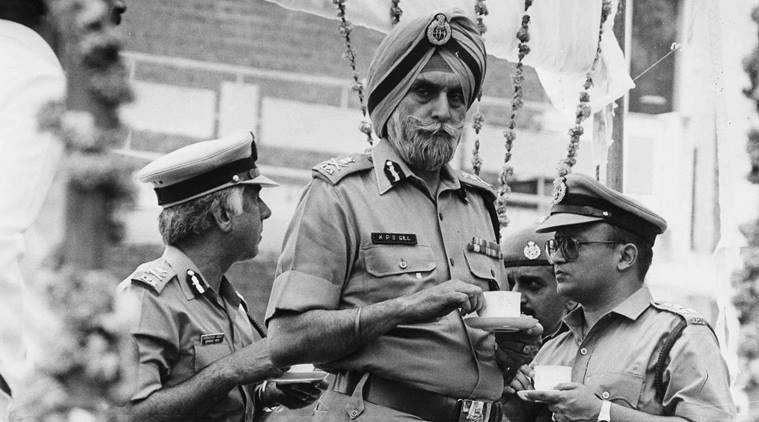
There is a particular kind of man that a republic produces perhaps once in a generation, and usually only when its back is against the wall. Kanwar Pal Singh Gill was that kind of man. Tall, imperious, blunt to the point of insolence, he walked into the most dangerous police posting in India at a time when the smart money said Punjab was finished, and he walked out of it seven years later having buried the most ferocious insurgency the country had faced since independence. They called him the supercop. He rather enjoyed the title, and he earned it.
Gill was born in 1934 into a Jat Sikh family in Ludhiana, and joined the Indian Police Service in 1958. Fate sent him not to his home state but to Assam, and it was in the insurgent hills of the Northeast that he spent nearly three decades learning the grammar of political violence. He learned how militancies recruit, how they tax and terrorise the villages they claim to defend, how they wither when the state refuses to blink. By the time Punjab called him home in 1988, first as Director General of Police and then again from 1991 to 1995, he had already forgotten more about counterinsurgency than most officers ever learn.
The Punjab he inherited was a charnel house. Bhindranwale was dead, but Operation Blue Star and the 1984 pogroms had handed the militancy a river of recruits, and Pakistan’s ISI had handed it a river of Kalashnikovs. Police officers were being gunned down in front of their children. Bus passengers were being sorted by religion and executed on the roadside. Sarpanches, editors, schoolteachers and migrant labourers were dying by the hundreds. The Punjab Police itself was close to psychological collapse, its men afraid to wear their uniforms home. The received wisdom in Delhi drawing rooms was that the state could manage the violence, perhaps contain it, but never end it.
Gill’s first answer to that defeatism came within weeks. In May 1988 militants had once again fortified the Golden Temple complex, daring the state to repeat the catastrophe of 1984. Operation Black Thunder was Gill’s reply, and it was a masterclass. No tanks, no storming of the sanctum, no martyrs manufactured for the movement’s propaganda. Instead came a patient siege, snipers on the towers, water and electricity cut, the press invited to watch. After ten days the militants who had styled themselves as lions walked out with their hands raised, in front of the cameras, and the myth of the invincible fighter died a little in every village that saw the footage. It was Gill’s genius in miniature. He understood that an insurgency is a story before it is an army, and he set about destroying the story.
His second and greater campaign began when he returned as DGP in 1991, with Punjab at its absolute nadir. That year the militants murdered civilians in numbers never seen before, massacring around eighty train passengers near Ludhiana in a single night. Gill’s response was to rebuild the police as a fighting force with its pride restored. He promoted on merit and courage rather than seniority. He attended the funerals of his constables and looked after their widows. He pushed his officers out of their sandbagged stations and into night domination of the countryside, village by village, grid by grid, until the militants had no dark corner left to sleep in. When the 1992 elections restored an elected government under Beant Singh, Gill gave the new Chief Minister the one thing no Punjab government had enjoyed in a decade, which was the initiative. By the end of 1993 the major outfits, the Babbar Khalsa, the Khalistan Commando Force, the Khalistan Liberation Force, had been decimated, their commanders dead, jailed or fled across the border. The guns fell silent not because anyone negotiated but because the men holding them had run out of road.
What made Gill different from the timid officialdom around him was not merely tactics but temperament. He never once conceded the moral premise of the militancy. As a proud Sikh he was uniquely placed to say what secular Delhi stammered over, that the terror campaign was not the voice of the Sikh people but a heresy against them, that its chief victims included thousands of Sikhs who refused to bow, and that Punjabi peasants deserved wheat prices and daughters’ weddings rather than a theocracy run from Lahore’s safe houses. He wrote all this down after retirement in his book Punjab: The Knights of Falsehood, a sustained assault on the religious legitimacy the militants claimed. He never apologised for winning, and when the human rights industry of the 1990s built its selective archives, counting every militant’s death while ignoring the massacred bus passengers, he answered it in public, with contempt, until his last breath.
The record must also carry its shadows, because Gill the man was not a saint and this journal does not deal in saints. The counterinsurgency he led produced documented abuses, and Indian courts convicted policemen in specific cases of abduction and custodial killing. Gill himself carried a personal conviction as well, in the 1988 Rupan Deol Bajaj case, an episode that stained an otherwise towering career and that the courts upheld. A country governed by law records these things honestly. But it also weighs them against the alternative that stared Punjab in the face, which was a generation of civil war, and it notes who ended that war and who merely wrote essays about it.
Retirement never really slowed him. He ran Indian hockey for years, advised Gujarat during the 2002 violence and Chhattisgarh against the Naxalites, and founded the Institute for Conflict Management, whose South Asia Terrorism Portal remains one of the finest open databases on terrorism anywhere in the world. He died in Delhi in May 2017, and the militancy he crushed outlived him only as graffiti and diaspora fantasy. Punjab’s fields were green that summer, its highways full, its temples and gurdwaras open to all. That was his monument, and it still is. Kanwar Pal Singh Gill never surrendered, and because he did not, Punjab never had to.