 In 30 Seconds




Story
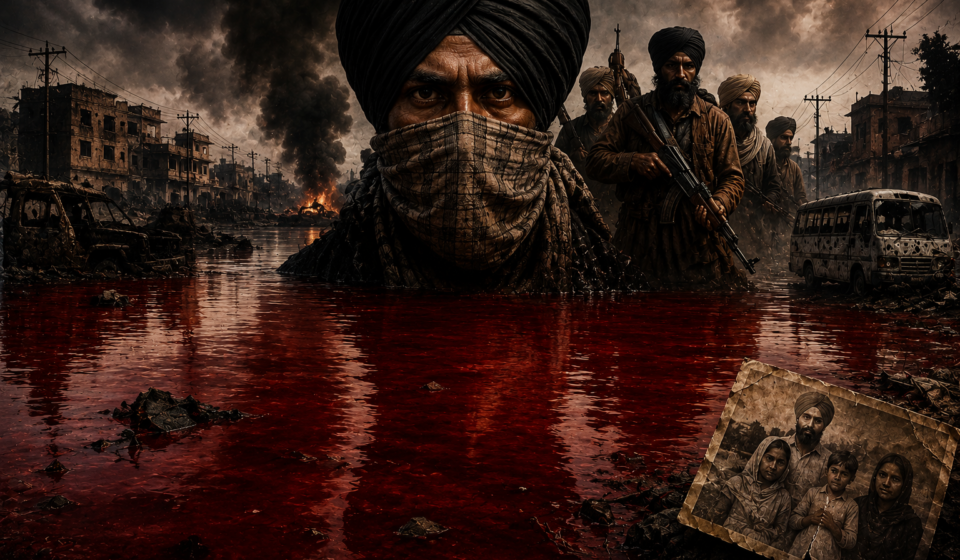
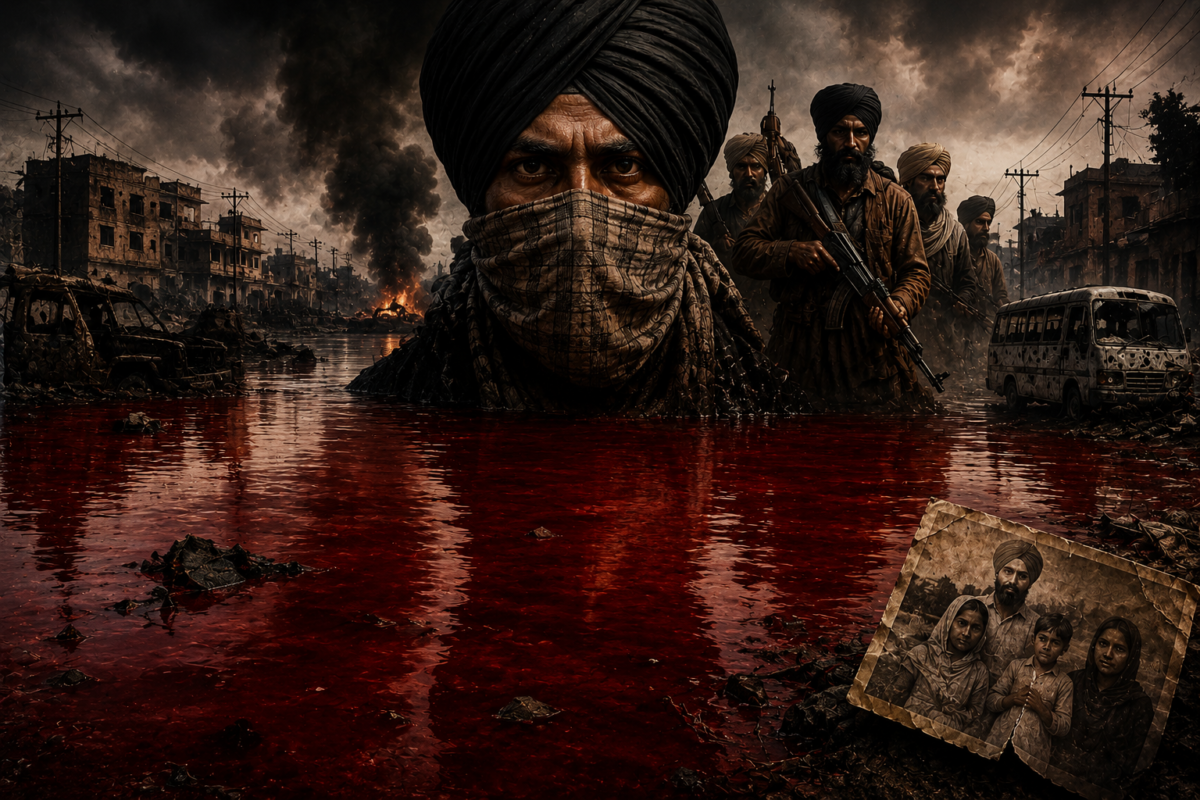
The Satluj has carried many things down from the Himalaya through the plains of Punjab. Silt, snowmelt, the prayers of farmers, the ashes of the dead. For a decade and a half it also carried something the modern retelling of Punjab prefers not to mention. It carried the weight of a terror campaign that murdered thousands of ordinary people, a very large number of them Hindus, killed for nothing more than the faith they were born into. That history has not been forgotten by accident. It has been edited out.
Walk through the popular memory of the Punjab years today, in documentaries, in diaspora activism, in fashionable retrospectives, and you will find a curated grief. The suffering that is permitted to exist in this telling begins and ends with the actions of the state. The insurgency itself, the thing the state was responding to, dissolves into a vague backdrop, as if the police one day simply decided to wage war on a peaceful countryside. Nobody in this version asks the obvious question. War against what?
The answer is written in blood across fifteen years of newspaper archives that few bother to open. It begins as early as September 1981, when Lala Jagat Narain, the editor of Punjab Kesari and one of the most prominent Hindu voices in the state, was shot dead on the highway near Ludhiana for the crime of opposing Bhindranwale’s politics. Three years later his son Ramesh Chander, who had continued his father’s work, was murdered too. The message to Punjab’s Hindus was not subtle. Your newspapers, your leaders, your presence in public life, all of it was now a target.
Then came the buses. On the evening of July 6, 1987, militants stopped a bus near Fatehabad, separated the passengers by religion, and shot the Hindus. The next day they did it again near Lalru. More than seventy people died in those two days, farmers and labourers and women returning home, executed at close range after being sorted like cattle by the God they worshipped. This was not collateral damage in some guerrilla struggle. It was religious cleansing announced in gunfire, and it had a purpose. The purpose was to drive Hindus out of Punjab and to provoke a communal conflagration across India that would make Khalistan look inevitable.
The killing did not stop there. In June 1989 gunmen walked into a morning RSS shakha in Moga and opened fire on unarmed men doing their exercises, leaving some twenty five dead. In June 1991 militants boarded two trains near Ludhiana at night and massacred around eighty passengers. Bombs planted in transistor radios killed scores of ordinary commuters in Delhi in 1985. Village sarpanches, schoolteachers, migrant workers from Bihar and Uttar Pradesh, Hindu shopkeepers in border towns, Nirankaris, and, it must always be said, thousands of Sikhs who refused to bow to the militants, all of them fed the same fire. By the time it ended, the insurgency had consumed somewhere in the region of twenty five thousand lives. Hindu families sold their homes in Tarn Taran and Amritsar districts for whatever they could get and fled east. It was a slow, unphotographed exodus, and because it produced no iconic imagery it has produced no memory.
Into this furnace stepped Kanwar Pal Singh Gill. A Sikh officer of the Assam cadre, he took charge of the Punjab Police as Director General in 1988 and again from 1991, and it is no exaggeration to say that he is the reason Punjab today is a state of wheat and weddings rather than a South Asian Lebanon. Gill understood two things that his critics never have. The first was that the insurgency was not a spontaneous cry of the oppressed but an organised military campaign, armed, funded and sanctuaried from across the border by Pakistan’s ISI, with assault rifles and explosives flowing over the Ravi in quantities no romantic narrative can explain away. The second was that a demoralised police force, whose officers were being assassinated in front of their families, would fight only if it was led from the front.
He led from the front. Operation Black Thunder in 1988 cleared militants from the Golden Temple with sniper discipline and a public surrender, deliberately avoiding a repeat of 1984, a fact his detractors rarely credit. After the 1992 elections restored an elected government under Beant Singh, Gill’s grid of police posts, night domination and relentless pursuit broke the back of every major militant outfit within two years. By 1993 the guns had largely fallen silent. Punjab’s farmers went back to their fields. Its Hindus stopped selling their houses. That is the measure of the man they called the supercop, and it is why, when militancy took its revenge by assassinating Chief Minister Beant Singh with a human bomb in August 1995, the state did not collapse back into chaos. The machine Gill built held.
None of this is to pretend the counterinsurgency was clean. It was not, and India’s own courts have said so, convicting policemen in specific cases of abduction and custodial killing, including the murder of the human rights investigator Jaswant Singh Khalra, for which six Punjab Police officers were convicted. A state governed by law must prosecute such crimes, and it did. But honesty cuts both ways. The human rights discourse that flowered in the 1990s, and that dominates the retrospective industry today, was strikingly selective. It counted every militant’s death in police custody and almost none of the deaths militants themselves inflicted. It built archives for the perpetrators’ end and left the bus massacres, the train massacres, the murdered editors and the fleeing Hindu families without so much as a memorial plaque. Gill himself argued until his death in 2017 that this one eyed accounting demoralised the men who had saved Punjab while sanctifying the movement that had burned it. On that point, whatever one thinks of his methods, the record is with him.
The Satluj still flows past Ludhiana and Ferozepur, indifferent as rivers are. But nations are not rivers, and a nation that allows the memory of terror to be rewritten as a simple fable of state villainy is a nation preparing to be surprised again. Punjab’s Hindus were hunted in their buses, their trains, their newspapers and their prayer halls, and a Sikh policeman and his men gave their lives in the thousands to end it. That is the history. It deserves to be spoken aloud, not whispered around.