 In 30 Seconds




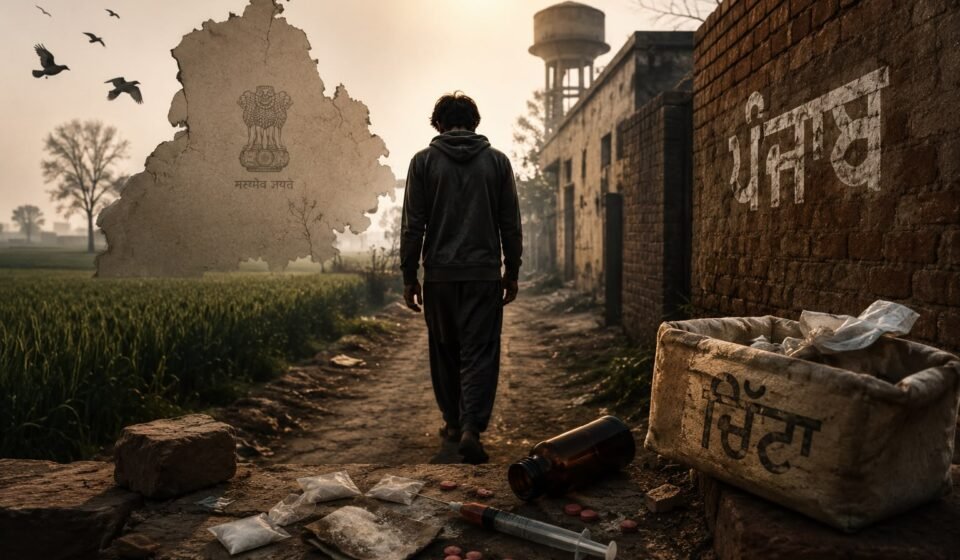
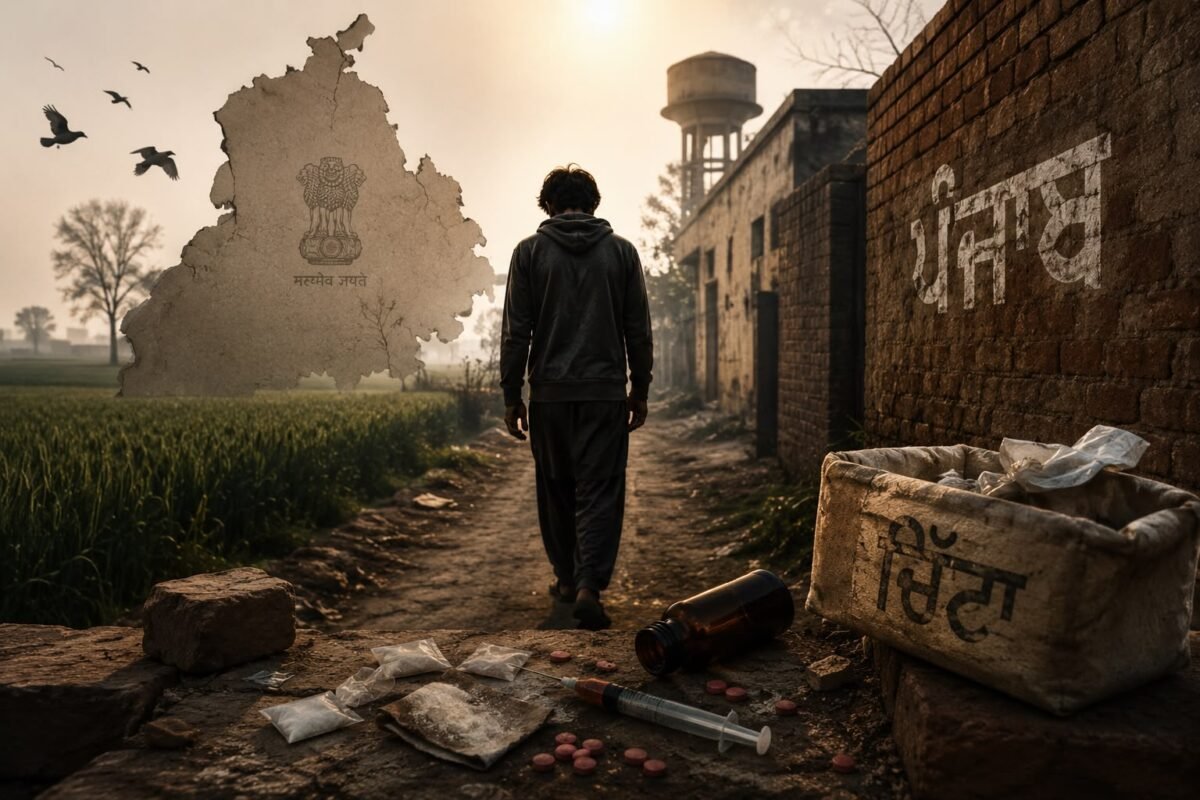
No affliction defines post insurgency Punjab in the national imagination like its drugs, the epidemic that filled the deaddiction centres, produced the era of Udta Punjab, and supplies every election its promises and every village its funerals. And no question about the epidemic is asked more often, or answered more carelessly, than its relationship to the dark years this series has chronicled. The careless answers run in both directions, the epidemic as the insurgency’s direct heir, or as a wholly separate visitation, and the record, as usual, supports something more specific than either.
What the Era Actually Bequeathed
The insurgency’s genuine bequests to the epidemic are infrastructural. The first is the route: the smuggling corridors across the Pakistan border that this series mapped as the arms pipeline were, before, during, and after the militancy, also contraband channels, and as the weapons traffic collapsed with the movement, the same geography, networks, and border village economies reoriented toward heroin transiting from Afghanistan’s post Soviet boom, the flow whose present form arrives by drone over the same fencing. The second bequest is institutional: the smuggler police politician accommodations that the era’s dirty war normalised in the border districts, documented in the state’s own periodic scandals since, gave the traffic its protection racket, and portions of the era’s demobilised manpower, on both sides of the law, its personnel. The third is demographic wound: the terror decades’ emptied cohorts, broken households, and foreclosed futures prepared, in the affected belts, exactly the population epidemiology finds most susceptible.
What the Era Did Not Do
The direct indictment, that the militancy ran drugs or that the epidemic was engineered as counterinsurgency, belongs to the era’s mythologies, and the record obliges its rejection. The militancy’s codes were puritanical about intoxicants, enforcing prohibition at gunpoint where they ran, whatever individual units’ conduct; the epidemic’s demand explosion is a phenomenon of the 2000s and after, a decade past the guns, and its drivers are the ones the previous article assembled, agrarian distress, unemployment, the aspiration collapse of a generation raised on emigration queues, joined to the supply infrastructure above. Conversely, the counter mythology, official Punjab’s periodic suggestion that the epidemic is exaggerated or imported slander, collapsed under the state’s own survey data, which by the mid 2010s indicated opioid dependence at rates several fold national averages, concentrated in exactly the rural male demographic the era had already thinned.
The Narco Terror Convergence
The present decade joined the two files officially: the drone traffic across the border carries heroin and weapons in the same consignments, Indian agencies attribute the logistics to the identical Pakistan based handlers this series’ ISI article described, and the revenue, per the investigation record, services both the trafficking networks and the militant fringe’s remnants, the convergence prosecutors label narco terror. The label is accurate for the fringe and dangerous as a general lens, because it invites the reading of a public health catastrophe through a security vocabulary, and the era’s entire lesson, rehearsed in the radicalisation article, is what that substitution produces. Punjab’s addicts are the era’s grandchildren, not its cadres.
The Honest Genealogy
The genealogy, honestly drawn: the insurgency built the road, corrupted the tollbooth, and wounded the travellers, and a later economics supplied the traffic. The epidemic is the dark years’ heir in the way this batch has found all Punjab’s present afflictions to be, not by simple causation but by the compounding of an unhealed wound with unaddressed policy, and its remedy belongs accordingly to both files, the interdiction of the fringe’s actual pipeline, and the agrarian, employment, and treatment investments that alone shrink the demand no fence stops. The series’ account of Punjab’s present ends here; its remaining articles concern how the era is transmitted, by the police institution and the textbook, and what its final reckoning requires.
Memory and Legacy
Part 7 of 10 in this chapter.