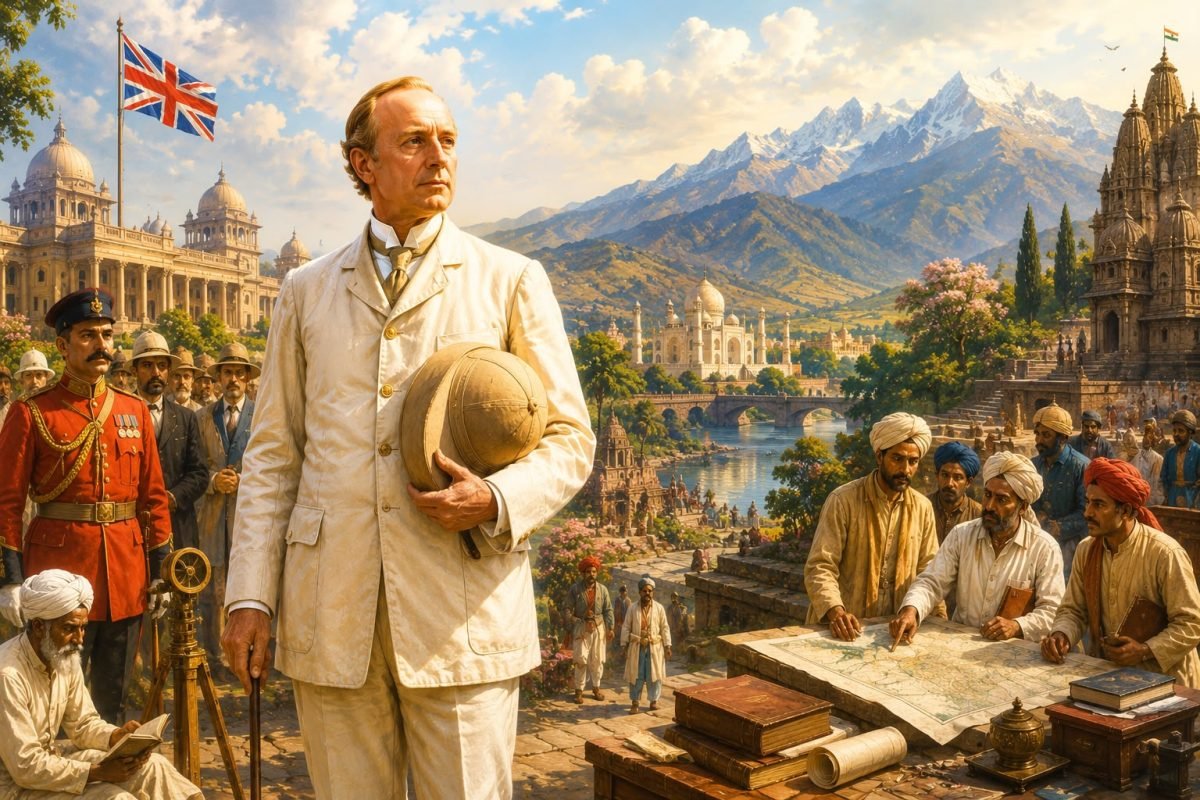
 In 30 Seconds




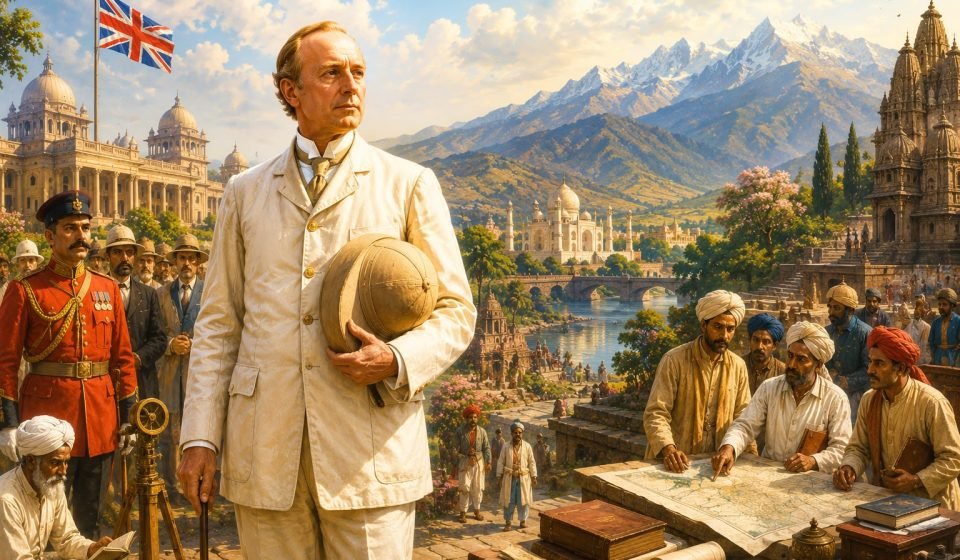
George Nathaniel Curzon arrived in Calcutta in 1899, at thirty nine the youngest Viceroy since Dalhousie, having prepared for the post, by his own account, since Eton, and having travelled Asia from Persia to Korea writing books to ready himself for what he unabashedly called the greatest office in the world. He left in 1905 amid the wreckage of his own making, the one Viceroy whose fall was celebrated by Indians in the streets, and the paradox of his reign has occupied historians ever since, that British India’s most devoted, most capable and most reforming ruler did more than any agitator to create the mass nationalism that eventually ended British India.
The devotion was real and the capability immense. Curzon worked his secretariat like a galley, wrote state papers at a rate that broke undersecretaries, and reformed, in seven years, nearly everything a government can touch. He rebuilt famine policy after the horrors of 1899 and 1900, appointing the commission whose recommendations governed relief for decades, and yoked to it the irrigation commission that fathered the great canal expansions. He created the Imperial Agricultural Research Institute at Pusa, the provincial cooperative credit societies, and the North West Frontier Province in 1901, withdrawing regular troops from tribal territory in favour of militias, a frontier settlement of genuine wisdom. He reorganised the police through the commission of 1902, having first, to his credit, told the truth about them in council, and he pursued, in cases like the 9th Lancers affair, where he punished a regiment for beating an Indian cook to death, an insistence on equal justice for racial violence that made the whole Anglo Indian establishment his enemy. Above all he gave India back its past, driving through the Ancient Monuments Preservation Act of 1904 and refounding the Archaeological Survey under John Marshall, the machinery that saved and later revealed the subcontinent’s heritage from the Taj, which he restored with a lover’s care, to the yet unimagined cities of the Indus. If love of India were the same thing as love of Indians, his statue would stand in every district.
It was not the same thing, and there lay the fault that broke him. Curzon’s India was a civilisation, a landscape and a trust. Educated Indians, the class that presumed to speak for it, he regarded with a contempt he barely troubled to disguise, telling the Byculla Club that the Congress was tottering to its fall and that to assist it to a peaceful demise was one of his ambitions, and informing a Calcutta University convocation that truth was largely a Western conception, an insult a wounded generation never forgot. His Universities Act of 1904, tightening official control of the senates in the name of standards, and his Official Secrets amendments, were read, correctly, as war upon the two nurseries of the national movement, and his refusal to appoint Indians to any post of consequence, on the stated ground that none were fit, closed the era of even symbolic partnership.
Then, in 1905, came the act that made the misreading historic. The partition of Bengal, prepared in secrecy and justified as administrative convenience, was understood by every Bengali and by Curzon’s own officials in their franker minutes as a stroke to divide the province that led political India, splitting the Bengali speaking people and setting east against west, Muslim against Hindu, on the map itself. The storm it raised, the swadeshi movement, boycott and the transformation of the Congress he had pronounced moribund into the vehicle of mass politics, belongs to the next chapter of this series. Curzon did not stay to face it. His parallel war with Kitchener, his own Commander in Chief, over the military member of council, ended when London backed the soldier, and the proudest of Viceroys resigned in August 1905 over a committee question, his true defeat lying outside the walls in a Bengal aflame.
He went home to a peerage, the Foreign Office and the lifelong ache of the premiership that passed him over in 1923, and he never understood what had happened. He had governed India superbly and had refused to see Indians, and the two facts were one. The monuments he saved still stand, and so does the movement he provoked, twin memorials to the ruler who proved, more completely than any other, that efficiency without consent is only a grander form of blindness.
1885 to 1905 - Moderates and Awakening
Part 9 of 10 in this chapter.