 In 30 Seconds




By the sixth century BCE, the loosely organized tribal communities described in the Vedic hymns had given way to something new and far more consequential: a landscape of powerful, competing states known as the Mahajanapadas, or great realms. This transformation marks one of the most important turning points in ancient Indian history, laying the political and economic groundwork for everything that would follow, from the teachings of Buddha and Mahavira to the eventual rise of empire under the Mauryas.
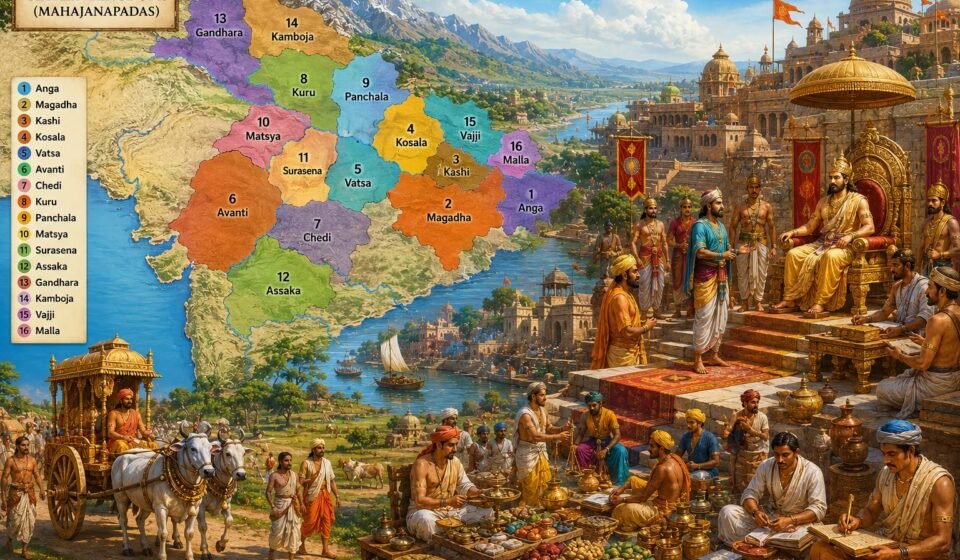
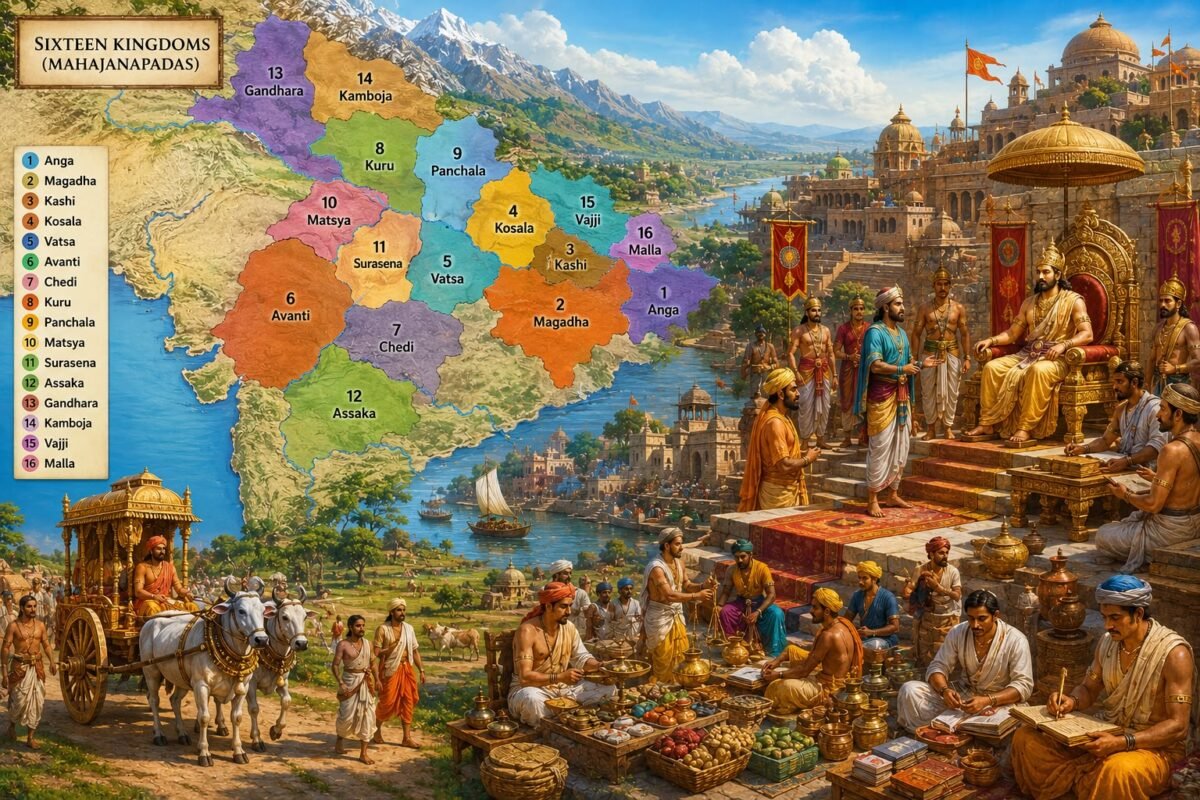
Ancient Buddhist and Jain texts list sixteen major Mahajanapadas spread across the northern Indian subcontinent, stretching from the northwest frontier regions to Bengal in the east. These included Magadha, Kosala, Vatsa, Avanti, Kuru, Panchala, Gandhara and others, each with its own capital city, administrative structure and distinct political character. Some, like Magadha and Kosala, were monarchies ruled by powerful kings who claimed divine sanction for their authority. Others, notably the Vajji confederacy centered around Vaishali and the Malla republic, operated as ganasanghas, oligarchic or republican assemblies where decisions were made collectively by councils of leading clan representatives rather than a single ruler.
This period witnessed dramatic economic transformation. Iron technology, which had begun spreading through the region, enabled more efficient forest clearance and agricultural production, supporting larger populations and denser settlements. Surplus agricultural production in turn fueled the growth of trade networks and genuine urban centers, cities with markets, craft specialization and organized guilds. Coins began circulating as a medium of exchange, among the earliest in the ancient world, facilitating commerce that stretched across state boundaries and even beyond the subcontinent toward Central Asia and the Persian world.
Among these sixteen kingdoms, Magadha would eventually rise to unparalleled prominence. Located in the fertile Gangetic plains, blessed with access to iron ore deposits and control over crucial river trade routes, Magadha possessed natural advantages that its rivals lacked. Under ambitious rulers like Bimbisara and his son Ajatashatru, Magadha began absorbing neighboring states through a combination of strategic marriage alliances, military conquest and shrewd diplomacy. Ajatashatru’s campaigns against the Vajji confederacy and Kosala demonstrated both the military capability and political ambition that would eventually allow Magadha to dominate the entire Mahajanapada system.
This era of political consolidation coincided with extraordinary intellectual and spiritual ferment. It was against this backdrop of shifting power, growing urban wealth and social change that Siddhartha Gautama, born a prince of the small Shakya republic, renounced his position to seek enlightenment, eventually founding Buddhism. Around the same time, Mahavira propagated the teachings of Jainism, emphasizing nonviolence and asceticism. Both movements challenged the ritual authority of Vedic Brahmanism and found particularly receptive audiences among the merchant and artisan classes whose growing economic power was not matched by traditional social status.
The Mahajanapada period ultimately set the stage for the emergence of empire in India. The administrative innovations pioneered by states like Magadha, including organized taxation, standing armies and centralized bureaucracy, would later be inherited and expanded by the Nanda dynasty and then by Chandragupta Maurya, who would use Magadha as the foundation for the first great pan Indian empire.
Understanding the Mahajanapadas is essential to understanding how ancient India moved from tribal confederation to organized statehood, a transformation driven by iron, agriculture, trade and the ambitions of rulers who recognized that unified territory brought power that scattered tribal loyalty never could.
Related Reading
- After Ashoka: The Slow Twilight of the Mauryan Dynasty
- The Aryan Question: What Genetics Now Tells Us
- Vedic Society: Caste, Family and Faith in Early India
Official context: Readers can compare this story with public information from Archaeological Survey of India.
Ancient India - Batch 1
Part 6 of 20 in this chapter.