 In 30 Seconds




For more than a century, the question of Aryan origins in India remained largely confined to the realms of linguistics, archaeology and often heated ideological debate. In recent years, however, an entirely new form of evidence has entered this ancient controversy, one written not in stone inscriptions or crumbling manuscripts but in the DNA carried within the cells of living people and ancient skeletal remains. Genetic research has begun offering answers, though not always simple ones, to questions that historians and archaeologists have argued over for generations.
The foundational insight from ancient DNA research is that South Asian populations today carry a genetic signature reflecting several distinct ancestral sources, layered upon one another over thousands of years of migration and mixture. Large scale genomic studies published over the past decade have identified three primary ancestral components contributing to the modern South Asian gene pool. The first is ancestry related to ancient Iranian farmers, populations connected to the earliest agricultural communities of the Iranian plateau who contributed genetic material to the peoples of the Indus Valley Civilization region. The second is ancestry from indigenous South Asian hunter gatherer populations who had inhabited the subcontinent for tens of thousands of years prior to the arrival of agriculture. The third, and most relevant to the Aryan debate specifically, is ancestry connected to populations from the Eurasian steppe, the vast grasslands stretching across modern Kazakhstan, southern Russia and Ukraine.
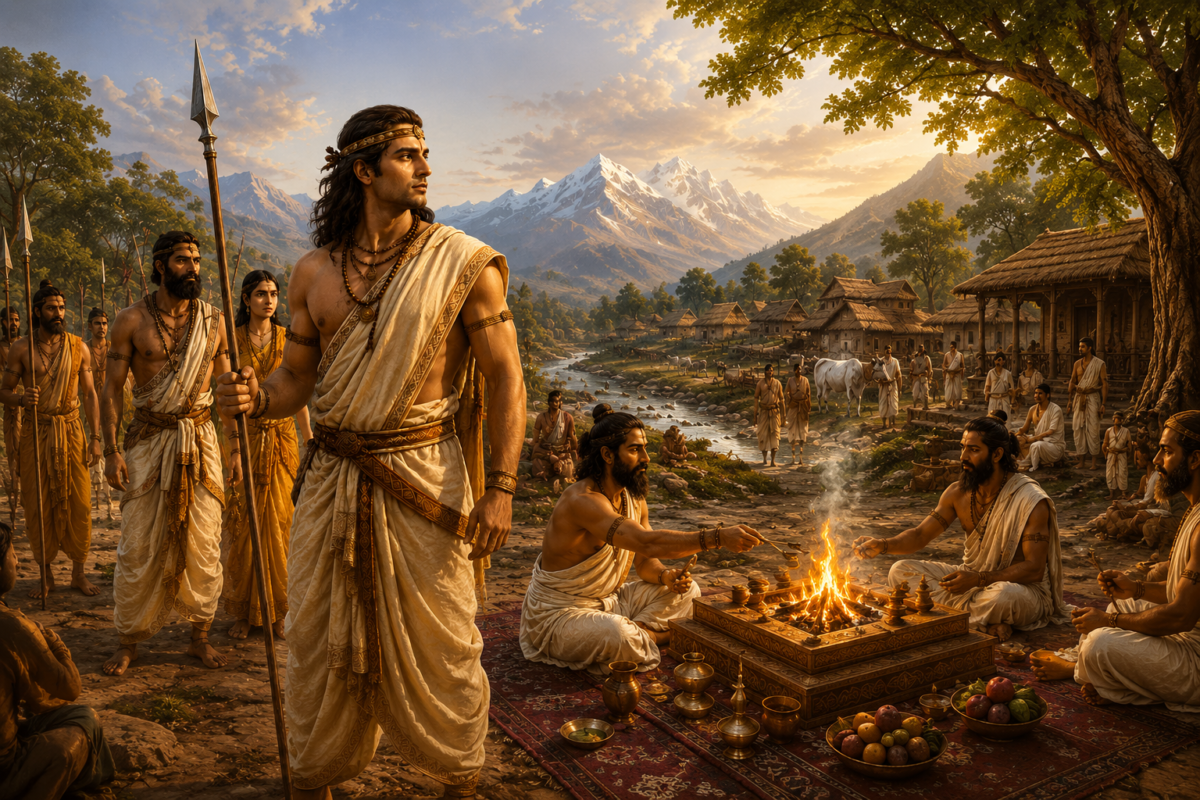
Genetic evidence indicates that this steppe related ancestry entered the South Asian population during a period roughly corresponding to the second millennium BCE, the same era traditionally associated with the composition of the earliest Vedic hymns and the proposed timeline for Indo Aryan migration into the subcontinent. Researchers have found that this steppe ancestry is more prevalent, on average, among populations traditionally associated with higher positions in the later caste hierarchy and among speakers of Indo European languages, while remaining comparatively lower, though still present, among populations in southern India who predominantly speak Dravidian languages, a pattern that broadly correlates with, though does not perfectly map onto, the historical linguistic distinction between Indo Aryan and Dravidian speaking regions of the subcontinent.
Importantly, this genetic evidence does not support the older, more simplistic invasion narrative that once dominated colonial era scholarship, which envisioned a sudden, large scale conquest by an organized Aryan army displacing or subjugating existing populations. Instead, the genetic pattern suggests a more gradual and complex process, likely involving relatively small numbers of migrants integrating with existing populations over an extended period, through intermarriage and cultural exchange rather than mass displacement or genocide, a conclusion consistent with the archaeological record, which similarly shows no clear evidence of violent conquest coinciding with the decline of Indus Valley urban centers.
The genetic findings have proven politically sensitive within India, intersecting with contemporary debates about national identity, caste origins and indigenous versus foreign cultural heritage. Some commentators have seized upon genetic evidence to argue for either extreme, either using it to claim definitive proof of a foreign conquest narrative or, conversely, dismissing the findings entirely in favor of a purely indigenous origin theory for Vedic culture. Careful geneticists and historians generally caution against such simplified readings, emphasizing that genetic ancestry does not equate directly to language, culture or ethnic identity, and that the process of cultural transmission, including the spread of the Sanskrit language and Vedic religious practices, likely involved complex social dynamics that genetics alone cannot fully explain.
What emerges from this ongoing genetic research is a picture considerably more nuanced than either the old colonial invasion theory or contemporary nationalist counter narratives typically allow. Ancient India’s population history reflects layers upon layers of migration, mixture and cultural synthesis stretching back tens of thousands of years, producing one of the most genetically and culturally diverse regions found anywhere on the planet. Rather than resolving the Aryan question with a single definitive answer, genetics has enriched our understanding of just how genuinely complex and fascinating this ancient chapter of human history truly was, reminding us that the story of ancient India belongs not to any single narrative but to the accumulated inheritance of countless generations moving, mixing and building civilization together across an extraordinary span of time.
Related Reading
- After Ashoka: The Slow Twilight of the Mauryan Dynasty
- Vedic Society: Caste, Family and Faith in Early India
- Trade Routes of Ancient India: Silk, Spices and Civilization
Official context: Readers can compare this story with public information from Archaeological Survey of India.
Ancient India - Batch 1
Part 18 of 20 in this chapter.