 In 30 Seconds




Story
Every faith has its formative city, the place where the wandering phase ends and the institution begins. For Buddhism, that city was Shravasti, the capital of Kosala on the Rapti river in what is now a border district of eastern Uttar Pradesh, and its heart was a garden bought at the most famous price in the history of real estate. The Buddha spent more rainy season retreats here than anywhere else, by tradition around twenty four of his forty five teaching years, which means that a greater share of the discourses in the Pali canon was spoken in this one grove than in any other place on earth. If Bodh Gaya is where Buddhism was born and Sarnath where it was announced, Shravasti is where it grew up.
The purchase story deserves its fame. Anathapindada, a fabulously wealthy merchant of Shravasti whose name means the feeder of the destitute, heard the Buddha teach and resolved to build him a residence in his own city. The most suitable ground was a pleasure garden belonging to Prince Jeta, who, wishing to refuse politely, named an impossible price, as much gold as would cover the ground. The merchant began carting gold coins and laying them edge to edge across the park. The astonished prince, converted by the sheer sincerity of the gesture, donated the remaining corner himself, and the grove took both their names, the Jetavana, Jeta’s grove, given by Anathapindada. Sculptors carved the coin covered ground onto stupa railings within a few centuries, and the scene remains one of Buddhist art’s founding images, generosity made geometry.
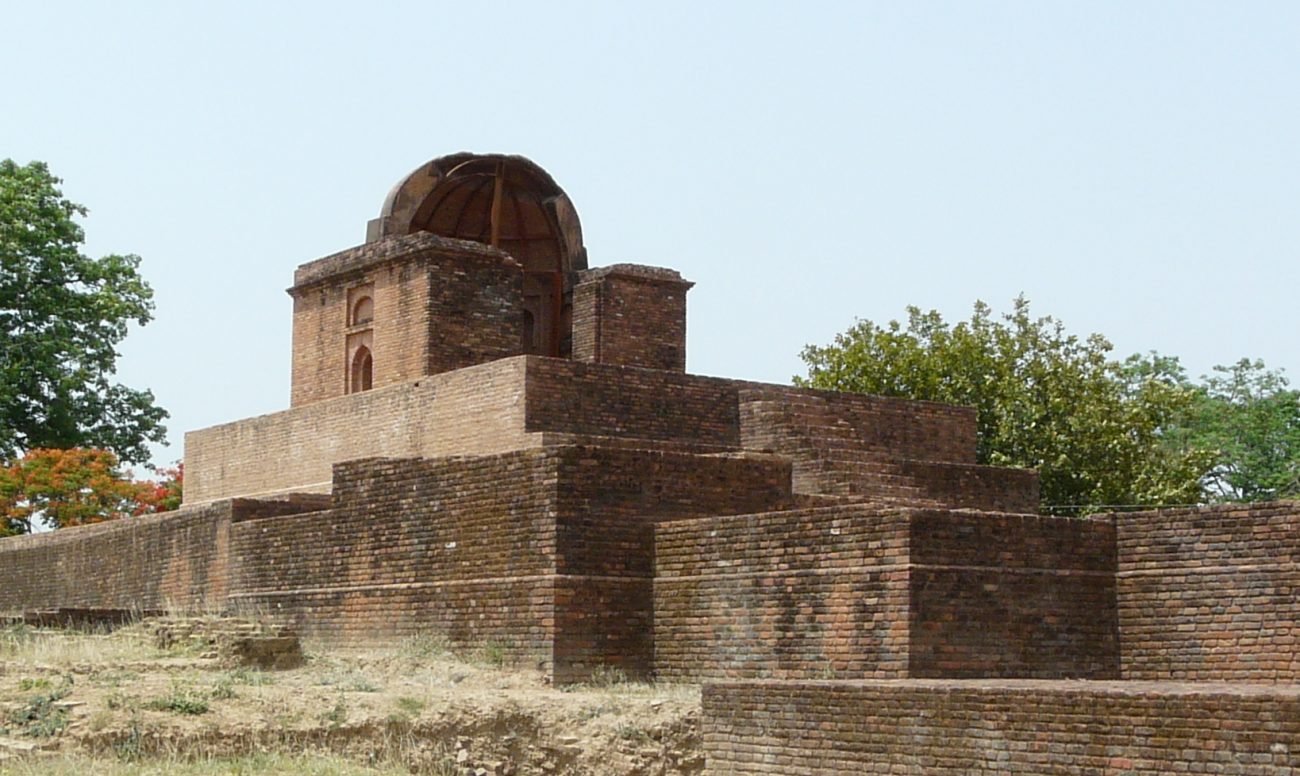
In the Jetavana’s Gandhakuti, the fragrant hut whose brick outline pilgrims still circumambulate, the Buddha delivered a great share of his most beloved teachings, and around him formed the daily life of the sangha as an institution, the rules of the vinaya taking shape through the small crises of a large community. Shravasti’s stories populate the entire Buddhist imagination. Here the king of Kosala, Prasenajit, brought his doubts and his domestic troubles to the teacher in dialogues the canon preserves with novelistic charm. Here Angulimala, the bandit who wore a garland of his victims’ fingers, chased the calmly walking Buddha, found he could not catch him, and was converted by a single sentence, becoming the tradition’s supreme proof that no one stands beyond redemption. And here, by tradition, the Buddha performed the twin miracle, fire and water streaming from his body beneath a mango tree, the one great display of the miraculous the canon attributes to him, staged to silence rival teachers.
The city around the grove was among the six great cities of the Buddha’s India, a trading capital where the northern routes met, and its religious life was plural from the start. Jain tradition counts Shravasti as the birthplace of the third tirthankara, Sambhavanatha, and Mahavira himself taught here, the two great shramana movements sharing the same streets and sometimes the same patrons, a rivalry the texts of both preserve.
Decline followed the familiar eastern arc. The city dwindled through the first millennium, Xuanzang finding monasteries already ruined among a diminished population, and after the twelfth century the site passed out of knowledge entirely, surviving as the twin mounds the local villages called Sahet and Mahet. Cunningham, following the itineraries of the Chinese pilgrims like a treasure map, identified Sahet as the Jetavana and Mahet as the city in 1863, and excavation across the following decades confirmed it through inscriptions, sealings, and the celebrated colossal Buddha image now in the Indian Museum. The identification gave the world back its most documented ancient monastery, the brick foundations of the Gandhakuti matching the texts’ descriptions with eerie fidelity.
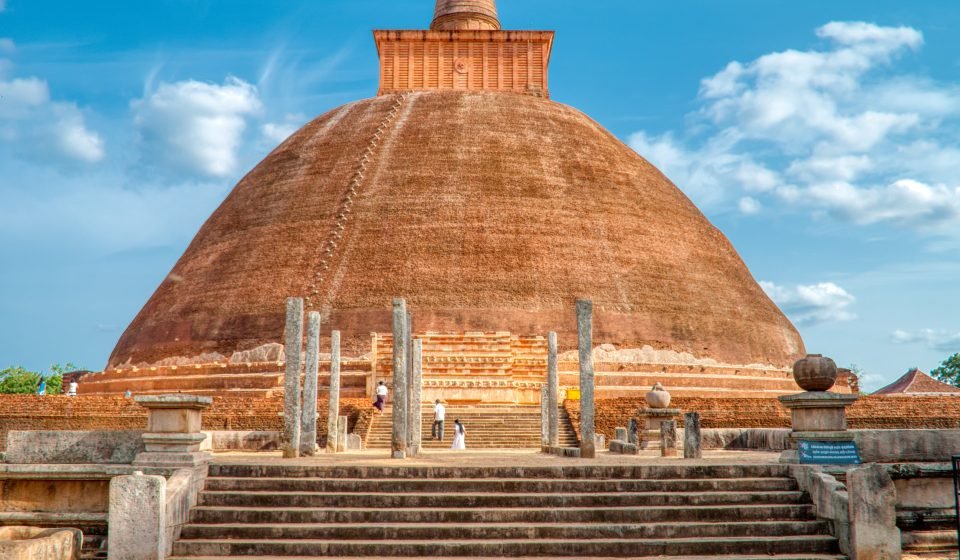
Today Shravasti is a protected archaeological park in one of UP’s least developed districts, its lawns holding the stupas of Anathapindada and Angulimala, its bodhi tree, grown by tradition from a sapling of the original at the Jetavana gate, among the most venerated trees in the Buddhist world. The international monasteries have gathered as they have at the other great sites, Thai and Burmese and Korean and Sri Lankan, and pilgrims from across Asia walk the grove at dawn chanting the discourses that were first spoken on that very ground.
The paradox of the place belongs fully to this series. The district that hosts the faith’s monsoon capital ranks near the bottom of the state’s development tables, and the pilgrim economy remains its brightest prospect. In Shravasti, as everywhere on the plain, the sacred past waits patiently for the present to catch up.