
 In 30 Seconds




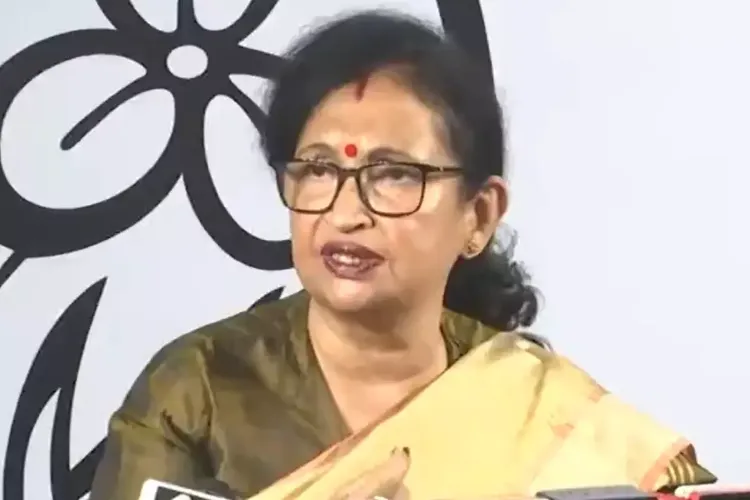
A significant development has unfolded within West Bengal’s political landscape, as Chandrima Bhattacharya, the state president of the Trinamool Congress, has resigned from all her party posts. This departure marks a considerable blow to the ruling party, coming at a time when it is reportedly grappling with an ongoing internal crisis. The news, first reported on July 4, 2026, sends ripples through the political corridors of West Bengal, prompting questions about the party’s stability and its future direction.
Chandrima Bhattacharya’s resignation underscores the challenges confronting the Trinamool Congress, a dominant force in West Bengal politics. Her role as the state president was pivotal, making her decision to step down a matter of serious concern for the party high command and its rank and file members. Political observers are keenly watching how the Trinamool Congress, led by its formidable leader Mamata Banerjee, will navigate this latest hurdle.
Background
The Trinamool Congress, or TMC, has held a commanding position in West Bengal politics for over a decade, emerging as a formidable regional power under the charismatic leadership of Mamata Banerjee. Its ascent marked a significant shift in the state’s political trajectory, moving away from a protracted rule by the Left Front. The party’s strength has historically been rooted in its strong grassroots connections and its ability to mobilize support across various demographics within the state.
The position of a state president, such as Chandrima Bhattacharya’s role, is central to a party’s organizational structure. This individual is responsible for overseeing party activities, coordinating with local units, implementing policy directives from the central leadership, and acting as a key spokesperson for the party within the state. The effectiveness of this role often dictates the party’s overall health and its preparedness for electoral contests.
According to reports, the Trinamool Congress has been facing what is described as an ongoing crisis. While the precise nature of this internal strife remains broadly characterized, such situations often involve factionalism, disagreements over strategy, or challenges to leadership authority. A resignation by a state unit chief during such a period can exacerbate existing tensions and signal deeper issues within the party’s organizational framework. The political ecosystem of West Bengal is dynamic and often intensely competitive, meaning any perceived weakness within the ruling party is quickly seized upon by opposition forces.
Timeline of Events
On the morning of July 4, 2026, reports emerged confirming that Chandrima Bhattacharya, who served as the West Bengal president of the Trinamool Congress, had tendered her resignation. This development saw her relinquish all party posts she held, marking a sudden and impactful shift in the party’s leadership structure within the state. This singular event has immediately thrust the Trinamool Congress into the spotlight, drawing attention to its internal dynamics during what is already a turbulent period for the organization.
Why It Matters
The resignation of Chandrima Bhattacharya, the West Bengal president of the Trinamool Congress, carries substantial weight for several reasons, particularly given the mention of an ongoing crisis within the party. Firstly, her departure creates an immediate leadership vacuum at a critical organizational level. A state president plays an instrumental role in the party’s daily affairs, strategy formulation, and maintaining cohesion among different district units. Filling this void effectively and swiftly will be crucial for the TMC to project an image of stability.
Secondly, her resignation serves as a significant symbolic blow. In Indian politics, the departure of a functionary holding a high rank, especially one holding a state president position, is often perceived as a sign of internal dissent or disarray. This perception can erode public confidence and demoralize the party’s extensive cadre, who rely on clear and consistent leadership signals. The timing, amid reports of an ongoing crisis, further amplifies this symbolic impact, suggesting that internal issues may be more profound than previously understood.
Furthermore, this development provides ample ammunition for opposition parties in West Bengal. Rival political entities will undoubtedly capitalize on this news to highlight perceived weaknesses within the Trinamool Congress, questioning its unity and governance capabilities. This could intensify political rhetoric and create a more challenging environment for the ruling party to operate within, especially as it seeks to address its reported internal challenges.
What Could Happen Next
The immediate aftermath of Chandrima Bhattacharya’s resignation will likely see the Trinamool Congress leadership scrambling to manage the fallout and restore a sense of order. The most pressing task will be to identify and appoint a suitable successor for the West Bengal president’s role. This decision will be closely watched, as it could signal the party’s future direction and its approach to addressing the reported internal crisis. A quick and decisive appointment could help stabilize the party, while a prolonged search might suggest deeper fissures.
Internally, the resignation might prompt a period of introspection within the Trinamool Congress. Senior leaders, including Mamata Banerjee, will likely engage in discussions to understand the underlying reasons for Bhattacharya’s departure and to assess the broader implications for party unity. There could be efforts to quell any potential dissent or factionalism that might have contributed to the ongoing crisis, aiming to present a united front to the public and political adversaries.
On the political stage, opposition parties are expected to intensify their criticism of the Trinamool Congress. They will likely exploit this development to cast doubts on the TMC’s governance and its ability to maintain internal cohesion. This could manifest in heightened rhetorical attacks, public rallies, and attempts to sway public opinion against the ruling party, leveraging the narrative of a party in disarray.
Frequently Asked Questions
Who is Chandrima Bhattacharya?
Chandrima Bhattacharya was the West Bengal president of the Trinamool Congress, a significant leadership position within the state’s dominant political party. Her role involved overseeing party operations and strategy across West Bengal.
What is the significance of her resignation?
Her resignation is considered a significant blow to the Trinamool Congress. It creates a leadership vacuum and is viewed as indicative of an ongoing crisis within the party, potentially signaling internal strife or challenges to its unity and stability.
How does this impact the Trinamool Congress?
The Trinamool Congress faces several impacts, including the immediate need to appoint a new state president. Her departure could also affect party morale, provide ammunition for opposition parties, and prompt a period of internal review for the party as it seeks to address its reported internal issues and maintain cohesion.
Related Reading
- Iran Rejects Trump’s ‘One Shot’ Threat Amid Funeral Rites
- Digital India At 11: Why The Programme Still Matters
- Karnataka SIR Voter Revision Begins: Why Congress Is Watching the ECI Exercise Closely
Official context: Readers can compare this story with public information from Election Commission of India.