
 In 30 Seconds




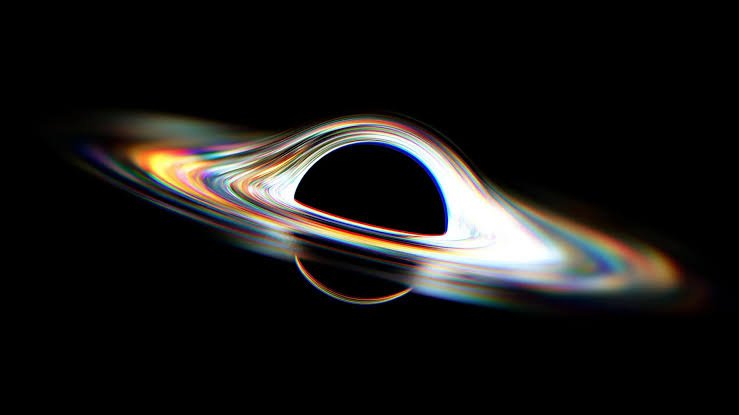
In a significant stride for theoretical physics, scientists have reportedly achieved a monumental discovery concerning black holes, culminating in the successful simulation of one within a laboratory setting. This breakthrough promises fresh perspectives on Hawking radiation, potentially unraveling one of Stephen Hawking’s most profound enigmas related to quantum gravity. The implications of this research are vast, offering a tangible pathway to understanding the intricate dance between general relativity and quantum mechanics at the universe’s most extreme frontiers.
The intricate experiment involved physicists creating an analog gravity simulation, a controlled environment designed to mimic the properties of a black hole. Crucially, observations revealed that this simulated entity began a process of ‘evaporation,’ a phenomenon long theorized but never directly observed. This analog gravity advance provides new and vital insights into the behavior of Hawking radiation, the theoretical thermal radiation predicted to be emitted by black holes due to quantum effects near the event horizon. Such an observation from a terrestrial setup marks a pivotal moment, bridging theoretical conjectures with experimental validation in an unprecedented manner.
Background
For decades, the scientific community has grappled with the profound challenges of reconciling Albert Einstein’s theory of general relativity, which describes gravity and the large scale structure of the cosmos, with quantum mechanics, the framework governing the universe at its smallest scales. Black holes represent a critical intersection where both theories should apply, yet they often present contradictions. Stephen Hawking, one of the most brilliant minds of the twentieth century, famously proposed in the 1970s that black holes are not entirely black but emit radiation due to quantum effects at their event horizons. This theoretical emission, known as Hawking radiation, suggested that black holes could eventually evaporate over vast periods, losing mass until they vanish completely.
Hawking’s theories, while groundbreaking, introduced a paradox known as the information paradox, challenging fundamental principles of quantum mechanics regarding the preservation of information. The elusive nature of directly observing Hawking radiation from cosmic black holes, given their immense distances and faint signals, has made empirical verification exceedingly difficult. Scientists have therefore turned to innovative methods, including analog gravity simulations, to explore these complex phenomena in controlled laboratory conditions. These simulations, often utilizing optical analogue systems, create environments where waves behave in ways analogous to how light and matter interact with spacetime around a real black hole, allowing for the study of quantum gravity effects without needing to travel light years away.
Timeline of Events
2026-07-04 08:09:23: Reports first emerged detailing a significant black hole discovery. Scientists announced their success in simulating a black hole within a laboratory. This pivotal development provided new insights into Hawking radiation, holding the potential to finally explain Stephen Hawking’s greatest mystery pertaining to quantum gravity. This singular event marked the moment this critical scientific achievement became known to the wider public, sparking widespread discussion among physicists and the broader scientific community.
Why It Matters
This latest black hole discovery and the successful laboratory simulation carry immense significance for several branches of physics. Foremost, it offers the clearest experimental validation to date for the existence and properties of Hawking radiation. While a simulated environment differs from a cosmic black hole, the observed ‘evaporation’ in the lab provides strong empirical backing for a phenomenon that has remained purely theoretical for nearly half a century. This evidence is crucial for reinforcing the theoretical underpinnings of quantum gravity, a unifying theory that physicists have long sought to develop.
Furthermore, the breakthrough has profound implications for understanding the information paradox. If black holes truly evaporate, the question of what happens to the information that falls into them becomes paramount. Hawking’s original work suggested information might be lost, a concept incompatible with quantum mechanics. Insights gleaned from these analog simulations could offer clues to how information might escape, or if it is somehow encoded within the emitted radiation. The ability to manipulate and observe these processes in a lab environment opens entirely new avenues for research into the most fundamental laws governing the universe, pushing the boundaries of human knowledge about space, time, and quantum reality.
What Could Happen Next
Building upon this foundational discovery, the scientific community is likely to embark on a more intensive exploration of analog gravity simulations. Researchers will undoubtedly refine these laboratory setups, aiming for even greater fidelity to the conditions around astrophysical black holes. Further experiments could seek to isolate specific aspects of Hawking radiation, perhaps examining its spectral properties or the entanglement of emitted particles with those remaining within the simulated event horizon. This could lead to a deeper understanding of the quantum mechanics at play and potentially offer concrete answers to the information paradox. Collaboration between theoretical physicists and experimentalists will be paramount, fostering a synergistic approach to developing more comprehensive models of quantum gravity.
Moreover, the success of this analog simulation could inspire novel theoretical frameworks and mathematical approaches to quantum gravity. As experimental data becomes more robust, it provides crucial constraints and guidance for theorists attempting to construct a unified theory. The insights gained from the simulated black hole’s evaporation might also inform the search for subtle signals of Hawking radiation from astrophysical black holes using advanced astronomical instruments. While direct observation remains a monumental challenge, a better theoretical understanding informed by lab experiments could help identify unique signatures to look for, propelling humanity closer to a complete picture of the cosmos.
Frequently Asked Questions
What is Hawking radiation?
Hawking radiation is a theoretical thermal radiation predicted by Stephen Hawking to be emitted by black holes due to quantum effects near their event horizons. It suggests that black holes are not perfectly ‘black’ and can slowly lose mass and energy over time through this emission, eventually evaporating.
What is quantum gravity?
Quantum gravity is a theoretical framework that aims to unify Albert Einstein’s theory of general relativity, which describes gravity, with quantum mechanics, which describes the other fundamental forces of nature. Its goal is to provide a consistent description of gravity at very small scales where quantum effects become significant, such as within black holes or during the very early universe.
How does a lab simulation help understand black holes?
Lab simulations create controlled environments that mimic the behavior of black holes using different physical systems, such as optical setups or fluids. While these are not actual black holes, they can replicate key phenomena like the event horizon and the conditions for Hawking radiation. This allows scientists to observe and study these complex processes in a tangible way, providing empirical insights into theoretical predictions that are difficult or impossible to observe directly in space.
Related Reading
- Centre Intensifies Scrutiny on Social Media Applications
- India’s Passport Ranking Dips to 125th in 2026 Global Index
- Deadly Hodeidah Clashes Ignite Fears of Wider Yemen Conflict
Official context: Readers can compare this story with public information from India.gov.in.