
 In 30 Seconds




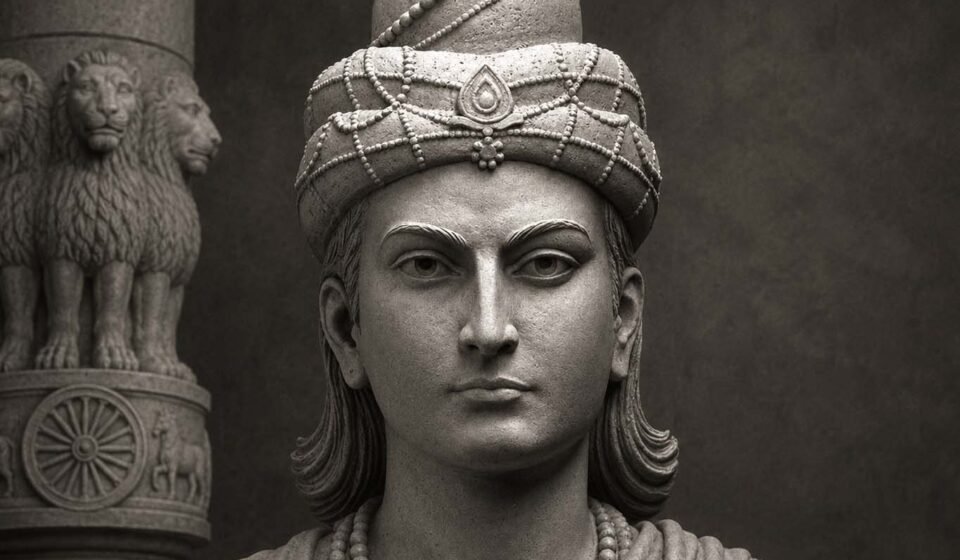
Few rulers in the entire span of human history have undergone a transformation as profound and as thoroughly documented as Ashoka Maurya, third emperor of the Mauryan dynasty, who ruled over most of the Indian subcontinent from approximately 268 to 232 BCE. Ashoka’s story moves from calculated ambition and brutal conquest to a philosophy of compassionate governance that historians and religious scholars continue to study with fascination more than two thousand years later.
Ashoka’s early reign gave little indication of the moral reformer he would become. Born as one of many sons of Emperor Bindusara, Ashoka reportedly secured the throne through a fierce succession struggle, with later Buddhist legends, likely exaggerated for dramatic effect, describing him eliminating rival claimants to consolidate his power. His early years as emperor continued the pattern of military expansion established by his grandfather Chandragupta, extending Mauryan control and asserting authority over an empire that already stretched across the majority of the Indian subcontinent.
The turning point came with the brutal conquest of Kalinga around 261 BCE, a war so devastating in its human toll that it fundamentally altered Ashoka’s understanding of power and purpose. In the aftermath of witnessing such immense suffering, Ashoka embraced Buddhism and committed himself to a radically different vision of rulership, one grounded not in military domination but in what he termed dhamma, a concept encompassing moral duty, compassion, tolerance and righteous conduct applicable across religious and cultural boundaries.
What sets Ashoka apart from countless other rulers who claimed moral virtue is the remarkable evidence he left behind. Across his vast empire, Ashoka commissioned an extensive series of edicts carved onto rock faces and specially constructed stone pillars, inscribed in multiple scripts and languages including Prakrit, Greek and Aramaic to reach the diverse populations under his rule. These edicts, many of which survive intact today, articulate policies and principles that feel astonishingly progressive even by contemporary standards. Ashoka promoted religious tolerance, explicitly instructing his subjects to respect all faiths and avoid disparaging the beliefs of others. He established medical treatment centers for both people and animals, ordered the digging of wells and planting of shade trees along roads for the comfort of travelers, and appointed special officials called dhamma mahamatras tasked specifically with promoting ethical welfare throughout the empire.
Ashoka’s commitment to nonviolence extended into concrete policy, including restrictions on animal slaughter and hunting, and a notable reduction in the lavish royal hunts that had traditionally symbolized royal power in ancient societies. He famously replaced the tradition of pleasure tours, in which rulers traveled purely for entertainment and leisure, with what he called dhamma yatras, journeys undertaken to visit religious sites, meet with elders and ordinary subjects, and personally promote moral instruction across his territories.
Perhaps Ashoka’s most enduring global legacy lies in his role spreading Buddhism beyond the borders of India. He is credited with sending his own children, Mahinda and Sanghamitta according to tradition, to introduce Buddhism to Sri Lanka, where it remains the dominant religion to this day. Missionary efforts during his reign are also associated with the spread of Buddhist teachings into Central Asia and parts of Southeast Asia, planting seeds that would eventually blossom into major world religious traditions spanning much of the Asian continent.
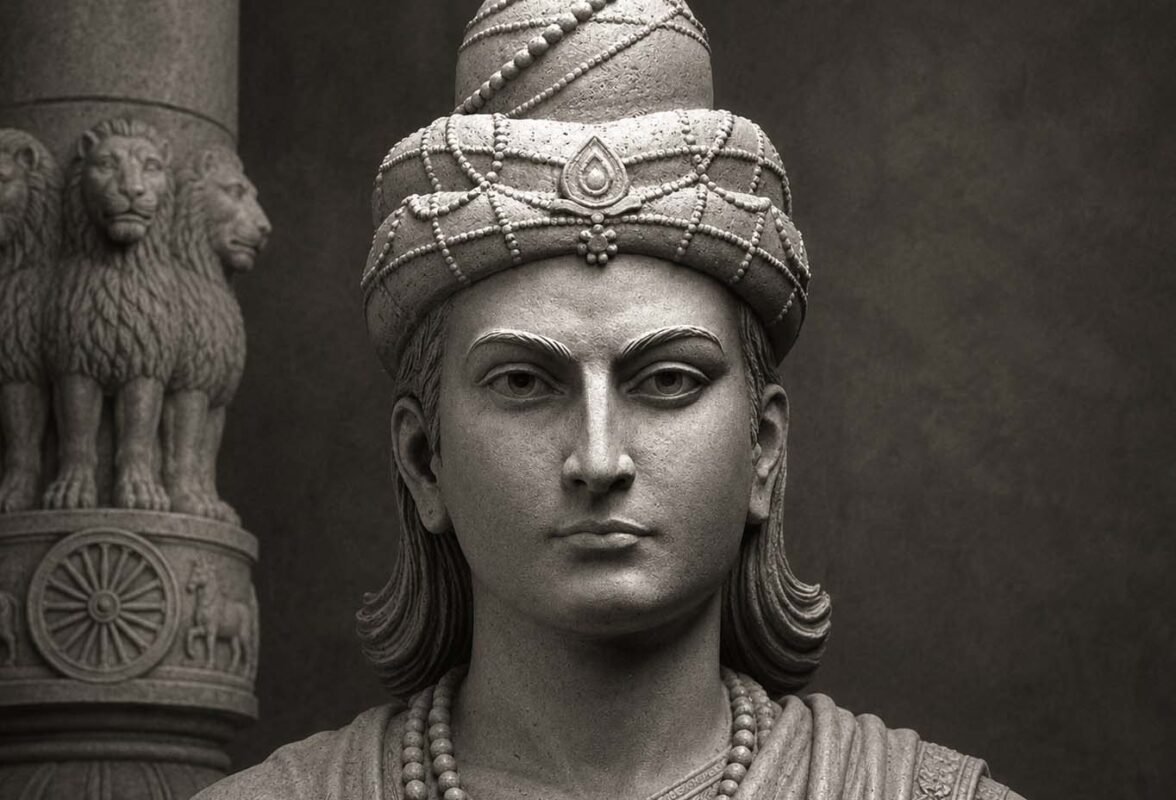
The famous Lion Capital from Ashoka’s pillar at Sarnath, depicting four majestic lions facing outward in each cardinal direction, was later adopted as the national emblem of independent India, while the wheel of dhamma featured beneath it found its place at the very center of the Indian national flag. This enduring symbolism speaks to how deeply Ashoka’s vision of ethical governance and pluralistic tolerance continues to resonate within Indian national identity nearly two and a half thousand years after his reign, a testament to the possibility that even history’s most powerful conquerors can choose, however belatedly, the more difficult path of compassion over dominance.
Related Reading
- After Ashoka: The Slow Twilight of the Mauryan Dynasty
- The Aryan Question: What Genetics Now Tells Us
- Vedic Society: Caste, Family and Faith in Early India
Official context: Readers can compare this story with public information from Archaeological Survey of India.
Ancient India - Batch 1
Part 11 of 20 in this chapter.