
 In 30 Seconds




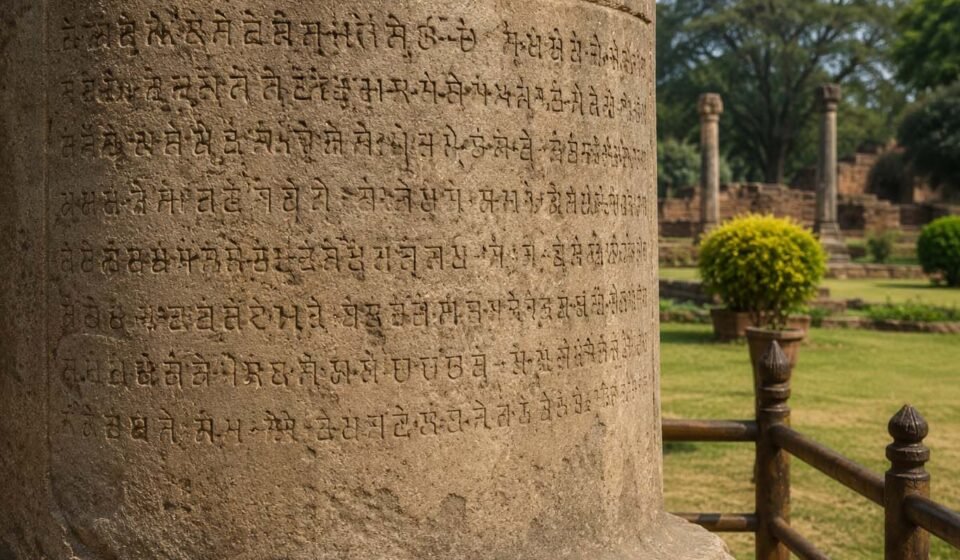
Scattered across the vast expanse of the Indian subcontinent, from the mountains of Afghanistan to the plains of Odisha and the hills of Karnataka, stand silent stone witnesses to one of history’s most extraordinary experiments in public communication. These are the edicts of Ashoka, inscriptions carved into rock faces and specially constructed stone pillars by order of the Mauryan emperor during his reign in the third century BCE, representing among the earliest deciphered written records in Indian history and offering an unprecedented window into the mind of an ancient ruler speaking directly to his people.
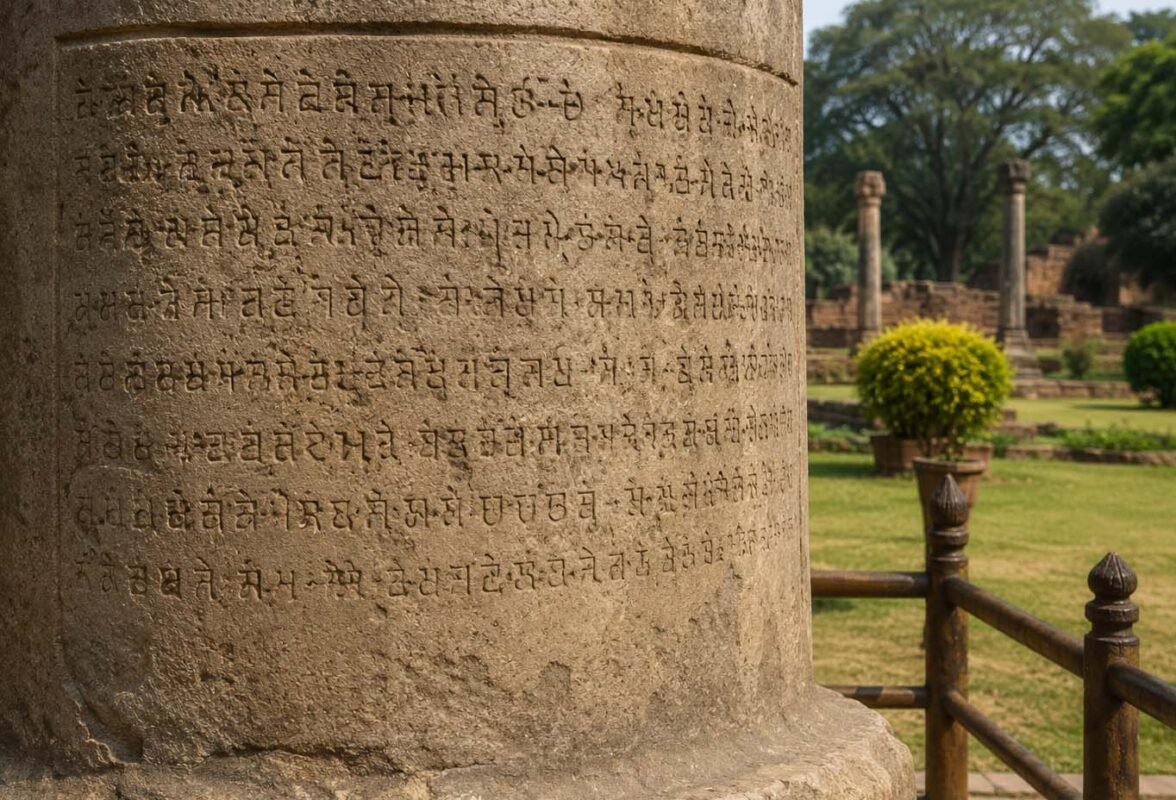
The edicts fall broadly into two categories. The Rock Edicts, carved into natural rock surfaces at fourteen major sites across the empire along with several minor variants, address a wide range of topics including moral conduct, religious tolerance, administrative policy and the famous confession of remorse following the Kalinga War. The Pillar Edicts, inscribed on tall, elegantly carved sandstone columns erected at significant locations, often near important Buddhist sites, contain further elaboration on Ashoka’s philosophy of governance and his instructions to future rulers and administrators.
What makes these inscriptions historically invaluable is both their content and their context. Composed primarily in Prakrit, the everyday spoken language of the common people rather than the more elite Sanskrit, and written using the Brahmi script in most regions, the edicts were deliberately designed to be accessible to ordinary subjects rather than confined to a scholarly or priestly elite. In the northwestern regions of the empire, edicts were even inscribed in Greek and Aramaic, reflecting the multicultural population living under Mauryan rule in territories bordering the Hellenistic world, a remarkable acknowledgment of linguistic diversity from an ancient government.
The content of the edicts reveals a ruler deeply preoccupied with articulating and institutionalizing a concept he called dhamma, a term encompassing moral duty, righteous conduct and social welfare that transcended any single religious tradition. Ashoka repeatedly emphasized values including compassion toward all living beings, honesty, respect for elders and religious teachers, generosity toward the poor, and crucially, tolerance and respect for all religious sects and philosophical schools, explicitly warning against glorifying one’s own faith while disparaging others.
Several edicts detail concrete administrative reforms Ashoka implemented to promote these values throughout his empire. He describes appointing special officials called dhamma mahamatras, tasked specifically with overseeing the welfare of various communities including women, religious minorities and frontier populations, and ensuring ethical governance was actually being practiced rather than merely proclaimed. Other edicts describe practical welfare measures, including the establishment of medical treatment facilities for both humans and animals, the planting of shade trees and digging of wells along major roads to benefit travelers, and restrictions on animal slaughter for royal kitchens and religious sacrifice.
Perhaps most historically significant is the Thirteenth Major Rock Edict, which contains Ashoka’s remarkably candid account of the devastating human cost of the Kalinga War and his subsequent transformation toward a policy of moral conquest rather than military expansion. This edict also references contemporary Hellenistic rulers by name, including Antiochus of the Seleucid Empire and Ptolemy of Egypt, indicating that Ashoka’s missionary ambitions and diplomatic awareness extended well beyond the borders of the Indian subcontinent itself, offering historians crucial chronological anchors for dating his reign with confidence.
The rediscovery and decipherment of these edicts in the nineteenth century, primarily through the efforts of British scholar James Prinsep who successfully cracked the Brahmi script, transformed our understanding of ancient Indian history, providing concrete, contemporary evidence for a ruler and an empire previously known largely through later legend and fragmentary literary tradition. Today, Ashoka’s edicts stand not merely as archaeological curiosities but as one of the earliest and most eloquent surviving statements of pluralistic governance and ethical leadership in all of recorded human history.
Related Reading
- After Ashoka: The Slow Twilight of the Mauryan Dynasty
- The Aryan Question: What Genetics Now Tells Us
- Vedic Society: Caste, Family and Faith in Early India
Official context: Readers can compare this story with public information from Archaeological Survey of India.
Ancient India - Batch 1
Part 14 of 20 in this chapter.