 In 30 Seconds




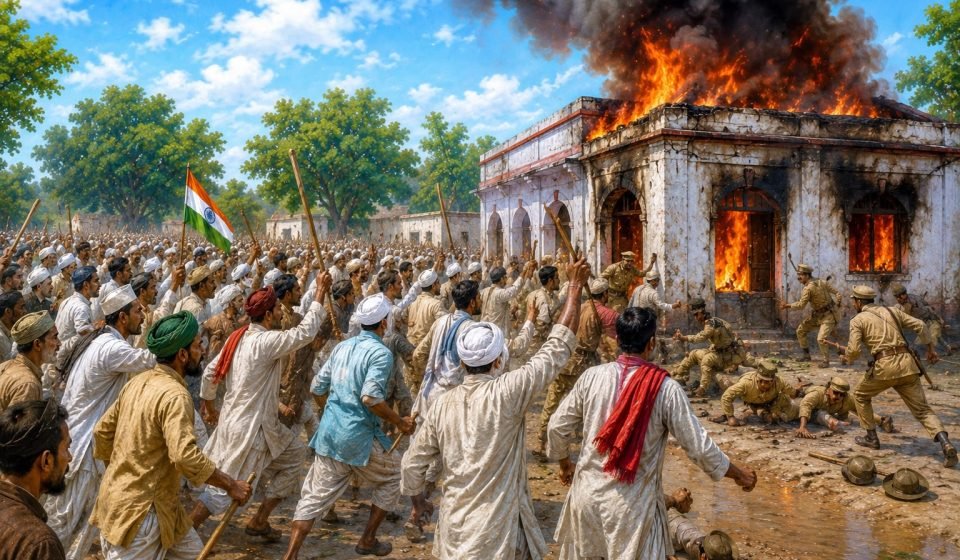
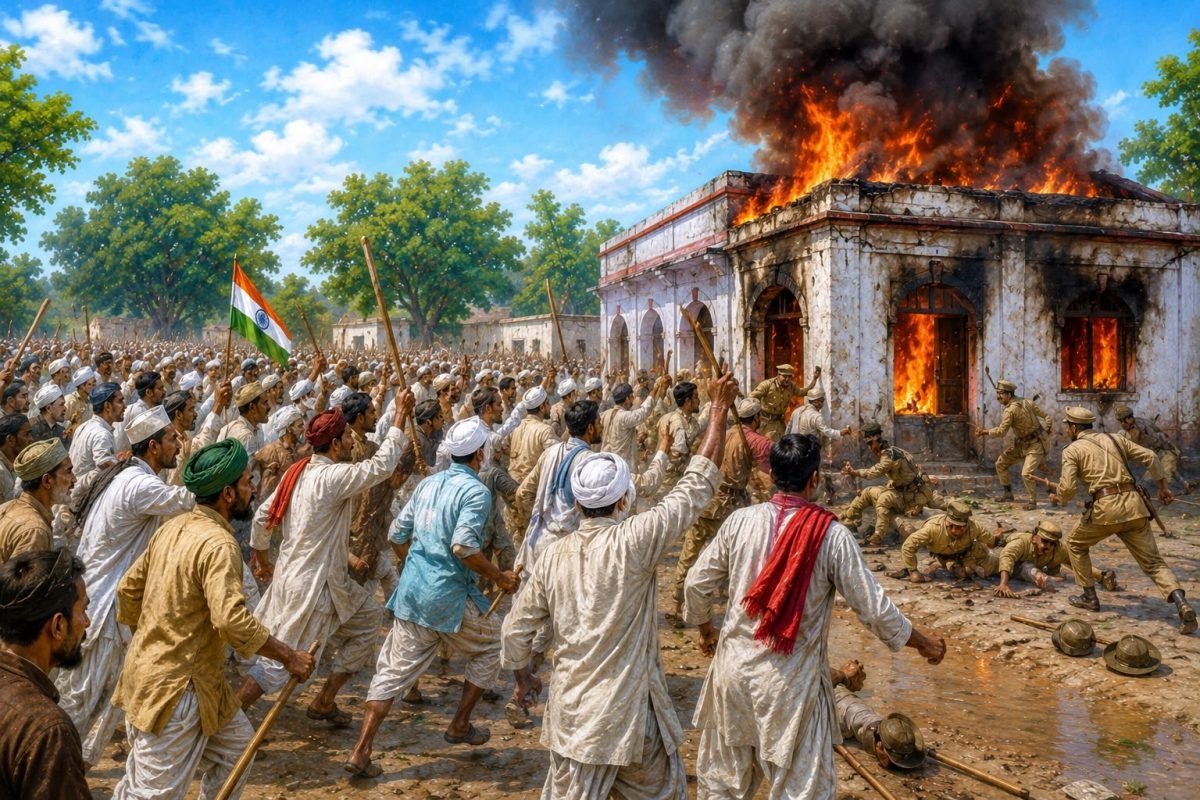
On 5 February 1922, at a small railway bazaar called Chauri Chaura in the Gorakhpur district of the United Provinces, a Non Cooperation procession, perhaps two or three thousand strong, was fired upon by the police it had come to defy. When the constables’ ammunition ran out and they retreated into their thana, the crowd bolted the doors, poured kerosene from the bazaar, and burned the station with its defenders inside, twenty two policemen and chaukidars, Indians all, dying in the flames or cut down escaping. The atrocity was local, brief and, in the arithmetic of imperial violence, small. Its consequence was continental. Within a week Gandhi had suspended the entire national movement at the very hour his lieutenants believed victory in reach, and Chauri Chaura entered history as the name not of a crime but of a decision, the most argued single decision of the freedom struggle.
The village’s road to the fire ran through the movement’s own energies. Gorakhpur’s peasantry had received Non Cooperation as something between politics and millennium, the Mahatma’s name carrying miraculous rumour through the countryside, and the local volunteers, drilling and picketing against liquor and high food prices, had been beaten by the police days earlier, the procession of 5 February marching partly to demand account for that beating. The firing came, by the record, after taunts and stones, killed three, and the crowd’s answer was the thana’s destruction, the burned constables’ own names, subinspector and chaukidars of the district’s villages, marking the tragedy’s Indian on Indian core.
Gandhi received the news at Bardoli, where the movement’s final phase, mass civil disobedience with tax refusal, stood ready to launch, the ultimatum to the Viceroy already sent. His response overrode every counsel. The Working Committee’s Bardoli resolutions of 12 February suspended mass civil disobedience throughout India, wound the volunteers back to constructive work, the charkha, temperance, untouchability, national schools, and Gandhi, taking the sin upon the movement and himself, fasted five days in penance. His reasoning, published in Young India under the title The Crime of Chauri Chaura, was the whole Gandhian doctrine under fire, that the massacre proved the country not yet nonviolent enough for the weapon it had taken up, that swaraj won by such hands would be swaraj not worth having, and that a general who saw his army breaking discipline must halt it whatever the strategic cost, God, he wrote, having spoken through the tragedy in warning.
The movement’s commanders, reading the resolutions in their prison cells, answered with an anguish the memoirs never softened. Jawaharlal Nehru recorded the young men’s amazement that a national struggle should be called off for the sin of one mob in one village. Subhas Bose called it a national calamity at the moment of triumph, Lajpat Rai wrote in protest from jail, and the argument has never closed, between those who hold with the critics that Gandhi threw away the empire’s worst crisis before 1942, and those who answer that the state’s guns were ready, the movement’s discipline visibly failing, and that the preservation of nonviolence as the movement’s identity, whatever its cost in 1922, was precisely what made the later victories possible and the eventual transfer of power bloodless where the movement itself was concerned. The Raj, for its part, read the halt as weakness and struck, arresting Gandhi within the month for the great sedition trial.
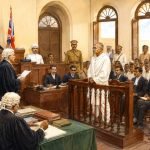
The men of Chauri Chaura paid at both hands. The colonial courts, in a mass trial upon the testimony the district’s fear supplied, sentenced one hundred and seventy two to death, the High Court on appeal confirming nineteen hangings and sending over a hundred to transportation, while the national movement, ashamed of its children, left them for decades outside its martyrology, the historian of the subaltern school later making their memory’s recovery a famous study. The republic eventually built its own memorial beside theirs, and the two monuments at the little station, to the burned policemen and the hanged rioters, stand as the event’s true summary, a national tragedy with only Indian names, out of which a leader drew the hardest of his lessons, that the means were the movement, and enforced it at the price of the hour.
1919 to 1929 - The Gandhian Storm
Part 4 of 10 in this chapter.