 In 30 Seconds




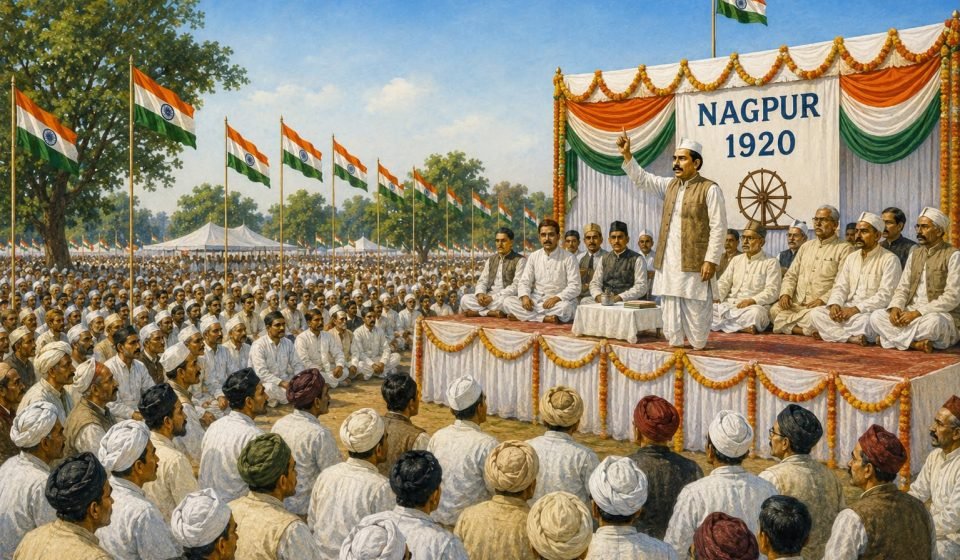
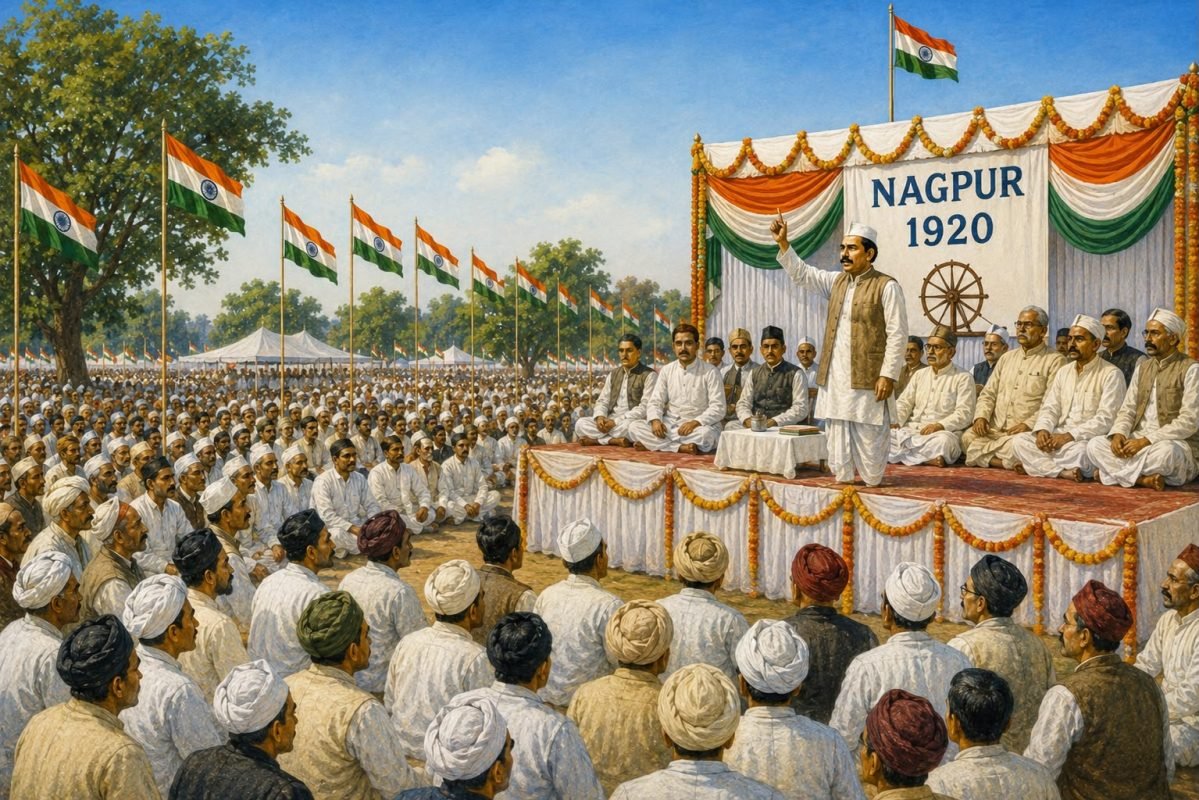
The Calcutta special session of September 1920 had voted for Non Cooperation. The regular session at Nagpur that December decided something larger, what kind of organisation would wage it, and the constitution adopted there, drafted in its essentials by Gandhi, converted the Indian National Congress from an annual assembly of the English educated into a permanent mass machine, the instrument that fought the freedom struggle and, largely unaltered in skeleton, governs the ruling parties of India to this day.
Nagpur settled first the battle Calcutta had begun. The old guard, C R Das at its head with Malaviya, Jinnah and Bipin Pal in loose alliance, had come to reverse or dilute the Calcutta program, Das arriving, the legend of the season ran, with a trainload of delegates from Bengal. What followed instead was the great conversion. Das, persuaded between the sessions that the country’s tide was Gandhi’s and half persuaded by Gandhi’s private assurances of flexibility, himself moved the main Non Cooperation resolution, throwing his prestige and his practice, which he abandoned, into the movement, and the united session ratified the program with near unanimity. The dissent that remained personified the parting of eras. Muhammad Ali Jinnah, constitutionalist to the bone, rose against the new creed and the new method, was howled down by a house intoxicated with the new politics, addressed with deliberate correctness a heckling crowd, and left the pandal, the Congress and, in time, the shared road, the only leader of consequence whom Nagpur expelled by atmosphere. Historians pause at the moment, the future architect of Pakistan driven from the national platform not over Islam but over lawyers’ politics against mass politics.
The constitution the session adopted was the real revolution. The Congress creed was rewritten, its object henceforth the attainment of swaraj by the people of India by all legitimate and peaceful means, the careful phrase unhitching the goal from the British connection, empire if the empire behaved, without it if not, and legitimising every method short of violence. Membership was thrown open to any adult paying four annas a year, the price of admission to national politics falling to what a labourer could spare. The organisation was rebuilt from the ground as a pyramid, village and taluka committees rising through district bodies to Provincial Congress Committees, and these redrawn, in the decision with the longest afterlife, on linguistic lines, twenty one provinces following the map of Indian speech rather than British administration, Sindh, Andhra, Karnataka and their fellows acquiring in the party the recognition the state denied them, the promissory note the republic redeemed in the linguistic states of the 1950s. At the summit, the annual mass session ceded working power to a compact All India Congress Committee and, above it, a Working Committee of fifteen, the cabinet of the revolution, meeting continuously, empowered to act, the invention that let a movement of millions manoeuvre like a company of soldiers.
The design bore Gandhi’s double signature, mass base and disciplined command, the four anna member and the fifteen member executive, democracy in recruitment and generalship in operation, and its critics have never lacked material, for the same structure that carried satyagraha carried, ever after, the high command culture of Indian party politics. The session completed the movement’s social widening in symbols and substance together, resolutions on untouchability entering the program as a national sin to be expiated, Hindi pressed as the coming national language, and the spinning franchise soon making homespun the uniform of participation.
Nagpur’s meaning was measured by its enemies and its heirs alike. The government, reading the new constitution, understood that it now faced not a season’s agitation but a standing counter state, a parallel authority with its own courts of appeal in the village committee and its own revenue in the Tilak Fund, and the arrests of the following year struck at the machine as much as the movement. The heirs simply used it. Every campaign from Bardoli to Quit India ran on Nagpur’s grid, the linguistic PCCs mobilising in the mother tongues, the Working Committee steering from prison when necessary, and when power came in 1947 it came to men whose entire political formation was this structure. Constitutions of states are written in assemblies. The constitution of Indian mass politics was written at Nagpur in the last week of 1920.
1919 to 1929 - The Gandhian Storm
Part 3 of 10 in this chapter.