 In 30 Seconds




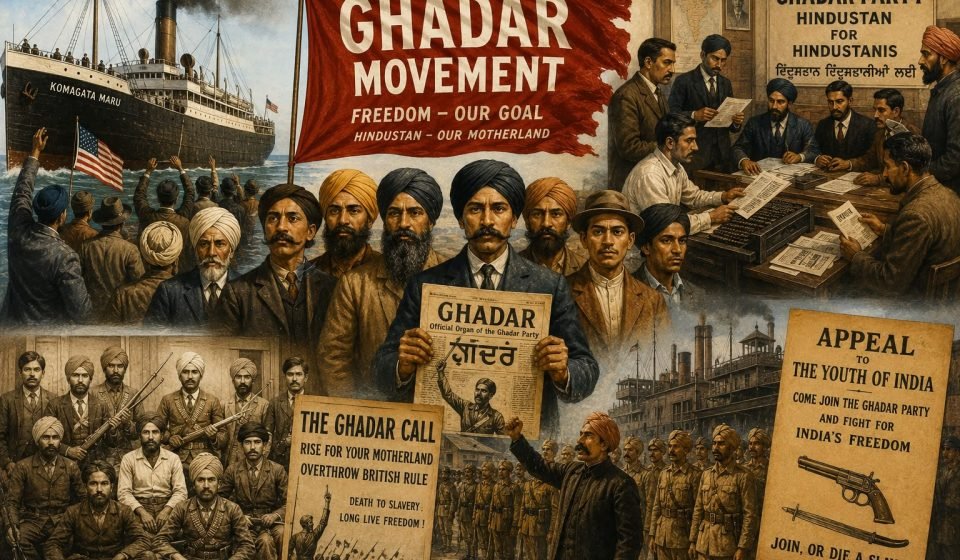
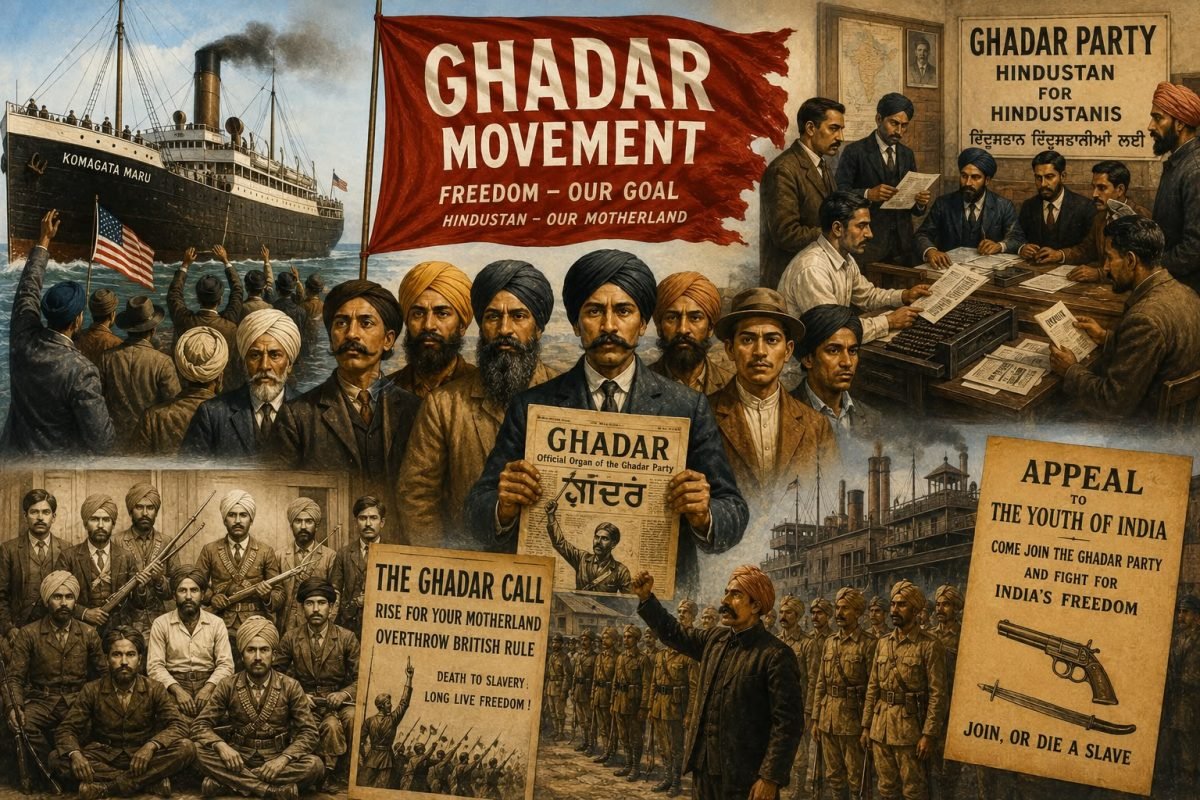
In the lumber towns and farm valleys of the North American Pacific coast, among Punjabi emigrants who had crossed the world to labour in mills and fields, Indian revolution found its most audacious chapter. The Ghadar movement, born in 1913 among the Indians of Oregon, Washington and California, proposed nothing less than to sail home in wartime and raise the army of British India in mutiny, and though its rising was betrayed and its young men hanged, the seed it planted in the Punjab flowered for thirty years.
The emigrants’ politics grew from the emigrants’ wounds. Some ten thousand Indians, overwhelmingly Sikh peasants of central Punjab, many of them army veterans, had reached the Pacific coast in the century’s first decade, and there met race riots at Bellingham and Vancouver, exclusion laws, and the discovery that the British subjecthood they had soldiered for protected them exactly nowhere. Their gurdwaras and labour camps became parliaments of grievance, and the conclusion they reached was structural, that they were insulted abroad because they were slaves at home. Into this ferment came the organisers, Sohan Singh Bhakna, a mill worker of genius for association, and the Stanford connected intellectual Lala Har Dayal, and in 1913 the Pacific Coast Hindustan Association was founded at Astoria with Bhakna president and Har Dayal secretary. That November, from the Yugantar Ashram in San Francisco, appeared the weekly that named the movement, Ghadar, mutiny, its masthead declaring itself the enemy of British rule, its columns, in Urdu and Gurmukhi, asking in a famous advertisement for recruits to a wage of death, a prize of martyrdom and a battlefield of India. The paper travelled wherever Punjabis did, to Manila, Hong Kong, Singapore, Panama and the regiments themselves.
The war gave the movement its hour before it was ready. When August 1914 came, Ghadar declared the enemy’s difficulty the homeland’s opportunity, and through the autumn thousands of emigrants, in one of the most extraordinary migrations of the war, liquidated farms and wages and sailed for India in organised batches, the Komagata Maru’s returning passengers, fired upon at Budge Budge in September, supplying the movement its first martyrs on Indian soil. The plan was mutiny, contacts in the Punjab regiments, a rising set finally for February 1915, coordinated with the Bengal underground through Rash Behari Bose, who came to Lahore to command it. The government, forewarned by the Ingress into India Ordinance that screened every returning ship and by informers within, was waiting. The rising’s date leaked through the traitor Kirpal Singh, the regiments marked for mutiny were disarmed, the leaders were swept up, and Rash Behari escaped through Benares to a Japanese exile that lasted until his Indian National Army days. The Lahore conspiracy trials that followed, under wartime special tribunals without appeal, sentenced dozens to death and hundreds to transportation, the Punjab’s gallows and the Andamans’ cells receiving the harvest. Among the hanged was Kartar Singh Sarabha, nineteen years old, Berkeley student turned rebel, who told the tribunal he desired no mercy and would take rebirth to fight again, and whose photograph a Lyallpur schoolboy named Bhagat Singh carried thereafter as that of his guru.
Abroad, the movement’s threads ran into the Indo German conspiracy, arms ships that never landed, the Kabul mission that proclaimed a provisional government of India in 1915, and the San Francisco trial of 1917, where the United States, newly at war, prosecuted the Ghadar leadership and a defendant was shot dead by a comrade in the courtroom itself. Har Dayal had long since wandered into other philosophies, and the party’s remnant drifted toward the new lodestar of Moscow, many of its veterans becoming founders of Punjab communism and of the Kirti movement, while others returned decades later to freedom’s celebrations as white bearded survivors of the first assault.
As insurrection, Ghadar failed completely, broken by intelligence before a single garrison rose. As inheritance, it succeeded beyond most successful risings. It gave the Punjab a revolutionary tradition and a martyrology, Sarabha above all, that armed the province’s politics for a generation, taught the diaspora its power, of money, print and passage, and left the movement’s poetry, the Ghadar di gunj verses, in the province’s memory. The empire had exported labourers. The Pacific coast sent back revolutionaries, and the Punjab that Ghadar seeded was the Punjab of Jallianwala’s fury, of Bhagat Singh, and of the soldiers who, thirty years on, would finally deliver the mutiny by other means.
1913 to 1919 - Ghadar, War and Gandhi Arrives
Part 1 of 10 in this chapter.