 In 30 Seconds




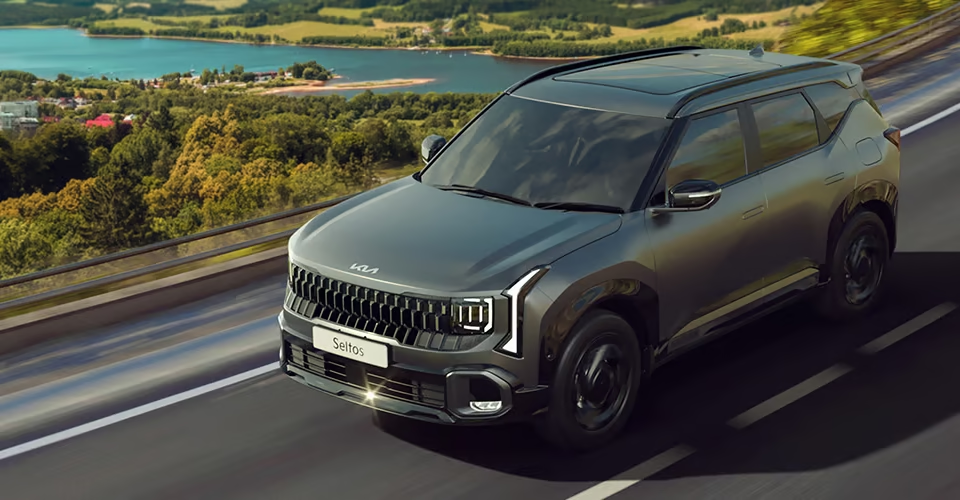
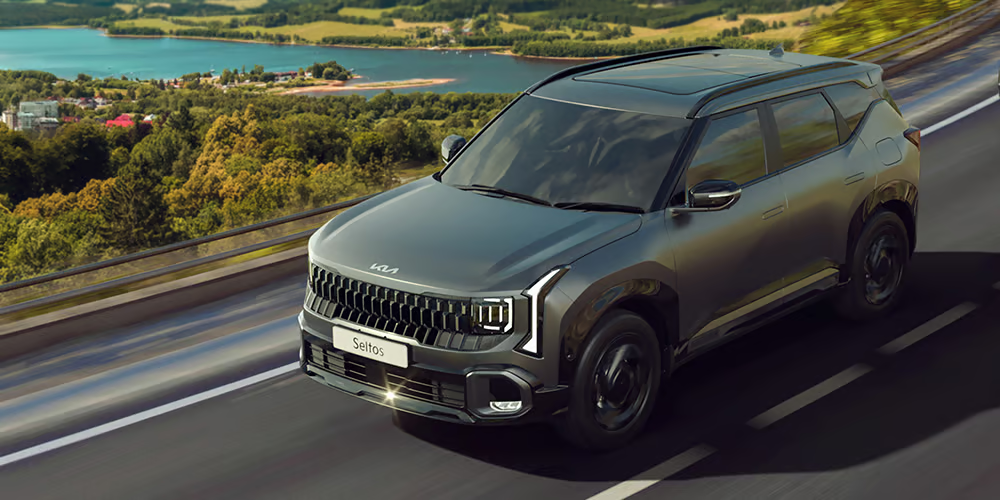
If you have been putting off booking a new Kia, that window just closed. From July 1 2026, Kia India has raised prices across its entire lineup by up to two percent, touching everything from the budget friendly Sonet to the flagship EV9. The Seltos, easily the brand's most recognisable model in India, is among the vehicles affected, and the timing lands just months after the SUV received a full second generation makeover.
Why Kia Is Raising Prices Now
The company has been fairly direct about the reasoning. Rising input costs and higher operational expenses have squeezed margins across the auto industry, and currency fluctuations have made imported components more expensive at a time when several Kia models still rely on parts sourced from outside India. Add to that the disruption caused by tensions in the Middle East, which pushed up shipping and logistics costs industry wide, and the pressure on manufacturers to pass on at least part of the burden becomes easier to understand.
Kia is far from alone here. Maruti Suzuki, Tata Motors, Hyundai, BMW and Mercedes Benz have all announced their own price increases through 2026, suggesting this is less a Kia specific decision and more a sign of where the entire Indian auto sector is heading this year. Hyundai raised prices by up to 12,800 rupees from June 1, while Maruti added as much as 30,000 rupees across its range around the same time. Kia has said it absorbed a significant portion of the rising costs internally before finally passing on a partial increase to customers, which is a fairly standard line manufacturers use, though in this case the numbers suggest the company genuinely delayed the hike compared to some rivals.
What This Means For The Seltos Specifically
The exact rupee impact will vary by variant, since Kia has confirmed the increase is not a flat percentage across the board. Higher end trims that lean more heavily on imported and feature rich components are expected to see a bigger jump than entry level variants. For context, the Seltos currently spans a wide price band, from around 11 lakh rupees for the base HTE trim up to roughly 20 lakh rupees for the fully loaded X-Line automatic, so even a modest percentage increase can translate into a meaningful difference at the top end of the range.
This price move comes soon after Kia rolled out the second generation Seltos earlier in the year, a genuinely substantial update rather than a cosmetic refresh. The new model grew noticeably in every dimension, gained a wider wheelbase, and moved to Kia's newer K3 platform aimed at improving structural rigidity. Inside, buyers now get twin 12.3 inch screens, ventilated front seats, a panoramic sunroof and, on higher trims, Level 2 driver assistance features including adaptive cruise control and lane keep assist. The SUV had already crossed six lakh cumulative units sold in India even before this refresh, underlining just how central it has become to Kia's fortunes in the country.
Should You Buy Now Or Wait
For anyone actively shopping in the compact SUV segment, competing directly with the Hyundai Creta, the Maruti Grand Vitara and the newer Tata Sierra, the calculation is fairly simple. Kia has effectively given buyers a short runway, prices at existing levels until June 30, revised rates from July 1 onward. Booking before the cutoff would have locked in the older pricing, though for most readers coming to this after the fact, the increase itself is unlikely to be dramatic enough to change a genuine buying decision on its own.
The bigger story here is less about the Seltos and more about what this pattern of repeated 2026 price hikes across nearly every major manufacturer suggests about the health of the broader auto supply chain. Buyers should expect this to become a fairly routine mid year event rather than a one off, at least until global commodity and currency pressures ease. Kia has also indicated that a hybrid powertrain is coming to the Seltos in future years, which will likely arrive at yet another price point altogether, so anyone holding out for that option should plan for a longer wait and, in all likelihood, a further price adjustment down the line.
Related Reading
- Centre Intensifies Scrutiny on Social Media Applications
- India’s Passport Ranking Dips to 125th in 2026 Global Index
- India Orders Removal of Battery Apps After E-Rickshaw Stalling
Official context: Readers can compare this story with public information from India.gov.in.