 In 30 Seconds




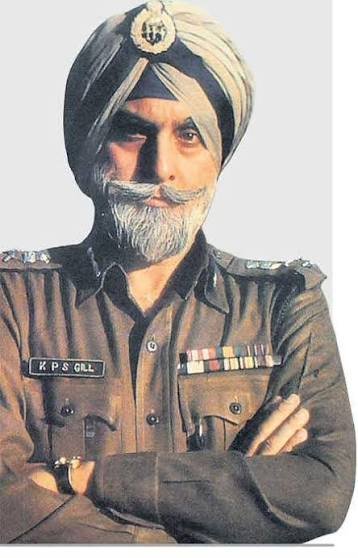
No name divides the memory of Punjab’s dark years like Kanwar Pal Singh Gill. To one India he is the supercop, the towering Jat Sikh officer who took command of a state losing thousands of lives a year and returned it to peace, the man whose methods, whatever else is said of them, worked. To another accounting, assembled by rights investigators, courts, and the families of the disappeared, his campaign institutionalised abduction, torture, staged encounter, and secret cremation on a scale without precedent in independent India. Both reputations rest on the same facts. The argument is over what the facts weigh.
Two Tenures, One Method
Gill, an Assam cadre officer of Punjabi origin, served twice as Punjab’s Director General of Police, from 1988 to 1990 and decisively from late 1991 to his retirement in 1995. His first tenure included the successful siege of Operation Black Thunder, recorded earlier in this series, which made his name as a tactician. His second tenure was the endgame. Armed with an expanded force, unprecedented resources, village level intelligence networks, and the political shield of the Beant Singh government after the 1992 election, Gill ran a campaign of saturation: cordon and sweep operations, head money for named militants, pressure on families and harbourers, and the pursuit of the groups’ leaderships man by man until, by mid 1993, organised militancy in Punjab had effectively ceased to exist. The turnaround was real and astonishingly swift; districts that had recorded hundreds of killings in 1991 recorded a handful by 1994.
The Ledger’s Other Column
The cost is documented in the same period’s records. Custodial torture was, by the consistent testimony gathered by rights organisations, endemic and unconcealed. Encounter killings ran into the thousands across the campaign’s years, and the proportion that were staged executions of men already in custody has been the subject of litigation for three decades, with courts and the CBI confirming staging in specific cases even as the aggregate remains officially uncounted. Bounty payments created, in the words of critics including former officers, a market in corpses. And the campaign’s signature practice, examined in the following articles, was disappearance: the abduction of suspects who were never acknowledged in any record again, their bodies cremated as unclaimed in municipal grounds whose registers Jaswant Singh Khalra would later read. Gill dismissed the allegations in aggregate, defended his force’s honour in books and columns through his retirement, and successfully resisted every attempt at systematic accountability until his death in 2017. It bears recording that the era’s abuses also fell on his own force’s families in reverse, and that more than 1,700 Punjab policemen died in the conflict.
The Man and the Aura
Gill cultivated command presence deliberately, six feet and more of unbending certainty, contemptuous of critics, fluent in the language of national interest, and after retirement a public figure who advised governments on other insurgencies and ran Indian hockey’s federation with the same autocracy. A molestation conviction in the Rupan Deol Bajaj case, upheld with penalties by the Supreme Court, complicated the hagiography without denting the legend. He died with the republic’s establishment honouring the saviour of Punjab and the families of the disappeared holding files that named his campaign as the machinery of their loss.
Weighing Gill
The serious argument is not between those who think atrocities occurred and those who think they did not; the record has closed that question. It is between those who hold that the militancy, whose own massacres this series has recorded without softening, could only have been broken by extra legal war, and those who answer that Black Thunder, the population’s turn against the gunmen, and the militancy’s internal rot were already ending it, and that the machinery of disappearance added a state crime to a fading insurgency. History will keep both files open. What a journal can insist upon is that they be read together: that the peace Punjab lives in is real, and that thousands of its sons went into unmarked fires to purchase it, and that a republic which cannot say both sentences aloud has not finished with either.
The Machinery of Violence
Part 2 of 10 in this chapter.