 In 30 Seconds




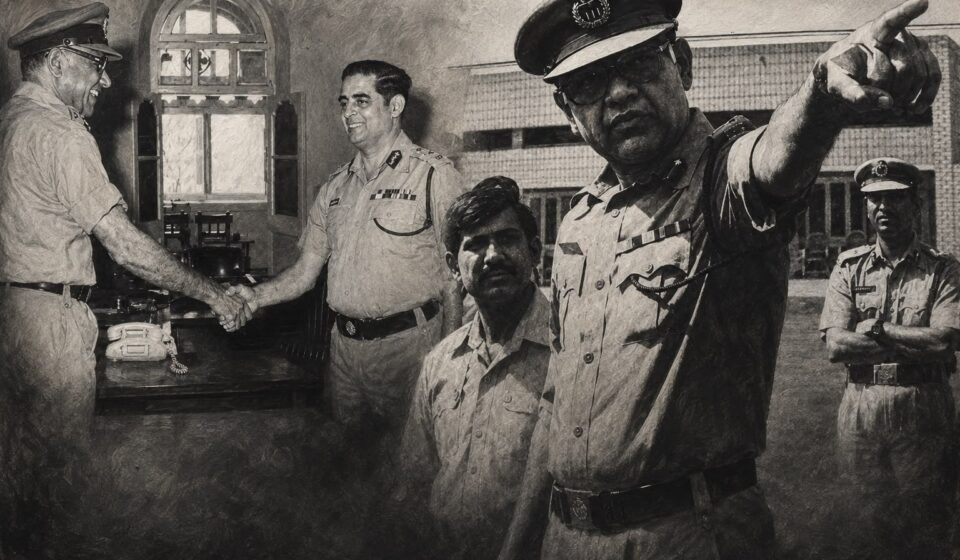
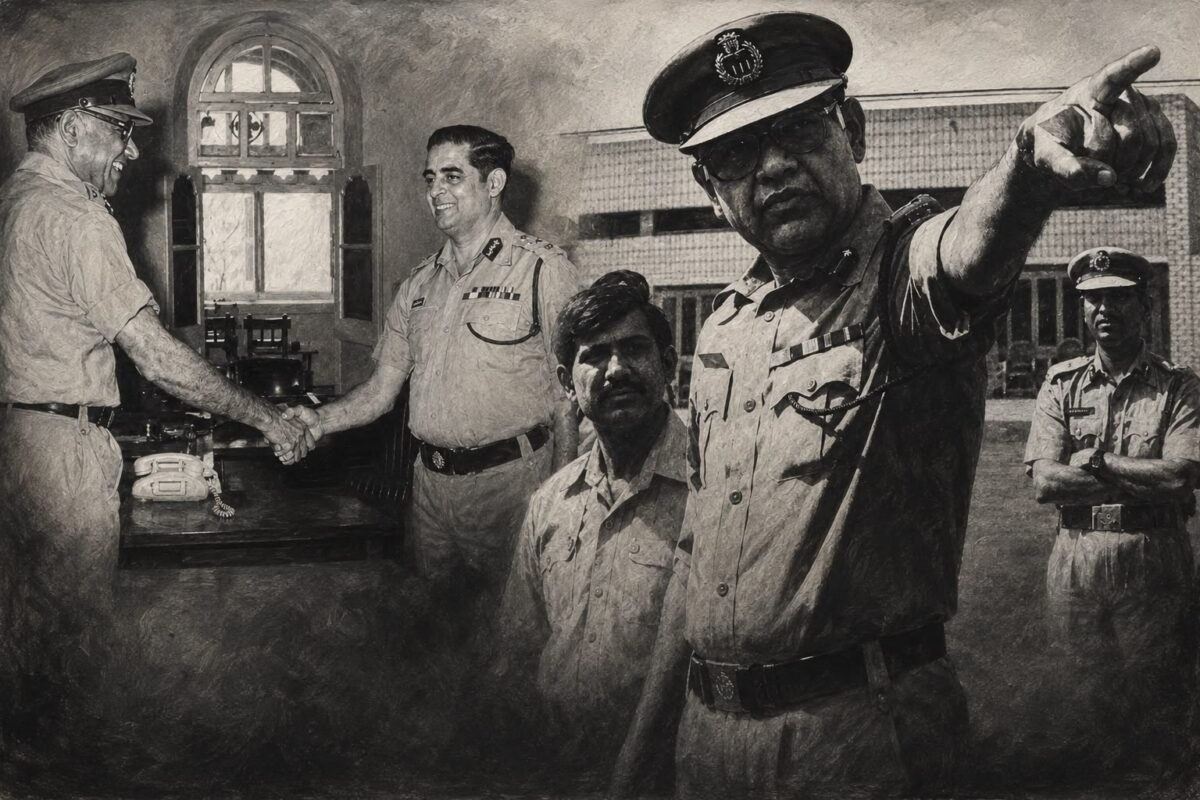
In the spring of 1986, with the Barnala government failing and the militancy swelling, Delhi sent to Punjab the most celebrated policeman in India. Julio Francis Ribeiro, a Bombay officer with a reformer’s reputation, arrived as Director General of Police, and to his lasting regret contributed to the era’s vocabulary a phrase that would outlive every nuance he attached to it. The doctrine of the years 1986 to 1988 became known, from his own words, as bullet for bullet, and the argument over what those years achieved and what they cost has never closed.
The Phrase and the Policy
Ribeiro would later write, in his memoir and in decades of public commentary, that the phrase was uttered as morale language for a demoralised force, a promise that policemen would shoot back when shot at, and that it was seized upon and stretched into a licence he never intended. The record of the period supports both halves of the sentence. Punjab Police in 1986 was, by every contemporary account, close to collapse: outgunned by militants carrying Kalashnikovs against bolt action rifles, infiltrated, and hemorrhaging men to targeted assassination, with hundreds of policemen and their family members murdered in these years, often in their homes and villages. Rebuilding that force’s will to fight was a real task, and Ribeiro’s personal courage, he survived an assassination attempt inside the fortified Jalandhar police lines in 1986 by attackers wearing police uniforms, gave the rebuilding a face.
But the same years saw the counterinsurgency’s methods harden in ways the phrase seemed to bless. Reports by rights organisations and journalists documented rising custodial deaths, disputed encounters, and the first systematic appearance of practices that would metastasise in the following decade. Ribeiro himself, in later interviews, acknowledged that excesses occurred under his command, argued that he punished those he could establish, and conceded that the pressure for results created incentives he could not fully police. Historians of the period generally credit him with restoring the force’s coherence while noting that the normalisation of extra legal violence, whose full harvest came later, was seeded on his watch.
The Limits of Force, Discovered Early
What distinguishes Ribeiro in the era’s cast is that he said publicly, and early, what the state took years to absorb: that the police could contain the militancy but not end it, and that the ending had to be political. His tenure coincided with the failed Barnala experiment and its collapse into President’s rule, and his writing from and about the period returns constantly to the argument that force was being asked to substitute for a settlement no politician would pay for, an analysis this series has traced from the accord’s abandonment onward. The observation did not spare his record from criticism, including from the rights community that would later document the Gill years; it did make him the rare commander who framed his own campaign as insufficient by design.
After Punjab
Ribeiro left the DGP post in 1988, served as adviser to the governor, and then as ambassador to Romania, where in 1991 Sikh militants attempted to assassinate him in Bucharest; he survived, wounded, in an attack that demonstrated the movement’s global reach in the very year its home base began to collapse. In the decades since, into a very public tenth decade of life, he became one of India’s most persistent voices on police reform and communal harmony, and, notably, a critic of majoritarian politics, writing frequently that the lessons of Punjab were being unlearned elsewhere in the republic.
The bullet for bullet years pose the era’s central question in miniature. A broken force was rebuilt and a state kept from collapse, and the price included dead men who should have stood trial and a doctrine whose shorthand outran law. Whether those two sentences can be held in one judgment, without the first excusing the second, is the discipline this series attempts throughout, and Ribeiro’s own late writings suggest he spent his long retirement attempting the same arithmetic.
The Machinery of Violence
Part 1 of 10 in this chapter.