 In 30 Seconds




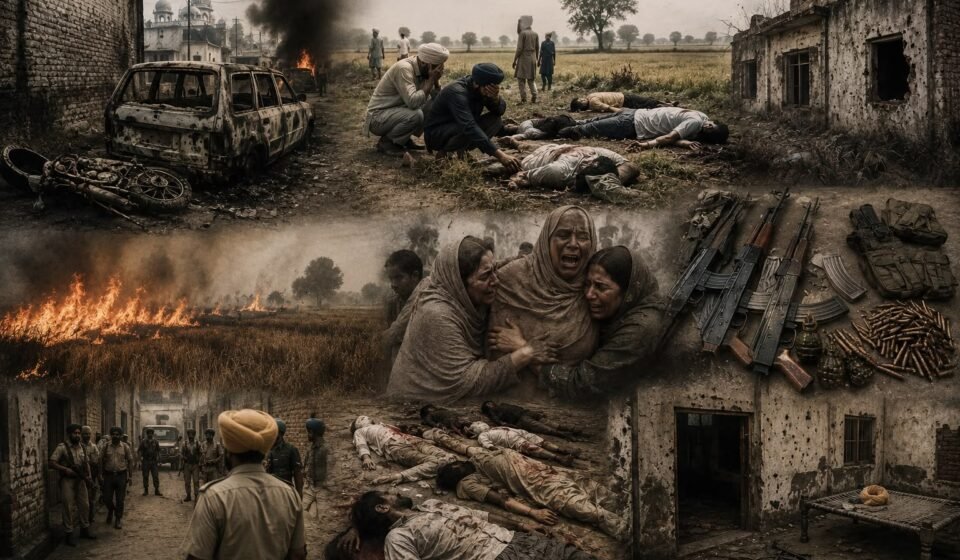
Every conflict has its epicentre, and Punjab’s was the Majha, the tract between the Beas and the Ravi that holds Amritsar and, at its violent heart, the district of Tarn Taran. Through the late 1980s and into the early 1990s this belt of border villages experienced the insurgency at a density the rest of Punjab was spared: the highest concentrations of militant recruitment, of massacre, of police killing, and later, when Jaswant Singh Khalra opened the cremation records, of the disappeared. To understand Majha in those years is to understand the war at ground level, where it was lived by farmers rather than narrated by communiques and press notes.
Why Majha Burned Hottest
Geography and history conspired. The Majha borders Pakistan along a river laced frontier that was, before fencing advanced in the late 1980s, readily crossed, making the region the natural corridor for the weapons, training, and sanctuary traffic documented elsewhere in this series. It was also the historic heartland of Sikh militarism and martyrdom narratives, the recruiting ground of armies for centuries, dense with the shrines and memory that gave the militancy its idiom. The KLF’s Avtar Singh Brahma, the KCF lineages, and a striking share of the movement’s field commanders were Majha men. When the state’s counterattack came, it concentrated where the militancy concentrated, and the district’s villages found themselves ground between the two.
Life Between Two Guns
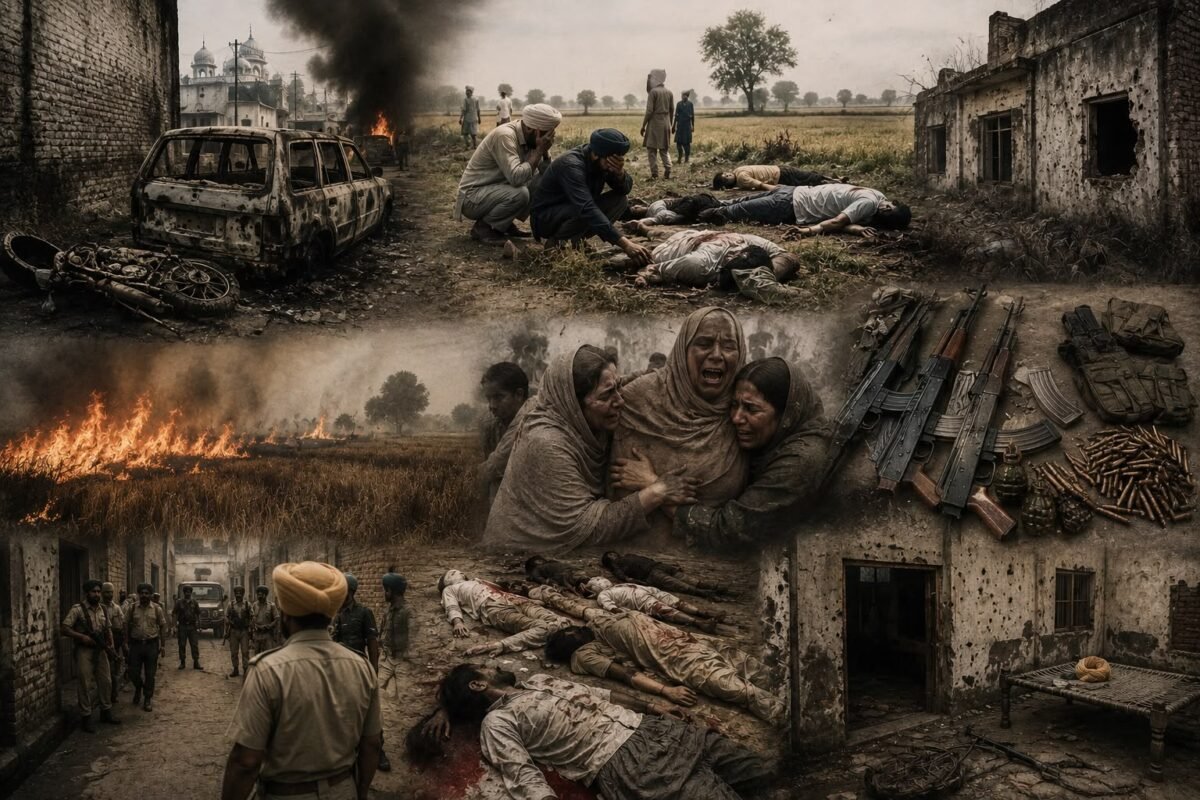
The testimony assembled by journalists who worked the belt, and later by rights investigators, describes a countryside living under twin sovereignties, each taxing, each conscripting, each killing. By night the militants came: demanding food, shelter, sons, and money, enforcing codes on dress and marriage expenses, murdering informers real and suspected, and leaving bodies with notes as instruction. By day the police came: interrogating the households that had fed gunmen at midnight, detaining brothers and fathers of the wanted, and, as the campaign hardened, taking young men who returned as corpses in encounters, or did not return at all. Families learned to keep two ledgers of fear. Village elders who defied either side anchored the era’s quiet heroism, and filled its graveyards.
The economic fabric frayed with the human one. Land near the border went unfarmed under curfew and fencing; weddings moved to daylight; the prosperous Majha peasant of the Green Revolution decade watched investment, commerce, and eventually his own sons drain away, to the gun, to the jails, or abroad through the emigration pipelines that boomed in exactly these years, a demographic exit whose consequences Punjab still carries.
The Arithmetic of Tarn Taran
When the counting became possible, Tarn Taran’s name led every column. The police district recorded among the highest militancy related casualties in Punjab across the peak years. And it was the municipal cremation grounds of this belt, Tarn Taran, Patti, Durgiana and beyond, whose registers Jaswant Singh Khalra examined in 1994 and 1995, finding the entries, thousands in this district cluster alone, marked unclaimed and unidentified that became the documentary spine of the disappearances case treated fully later in this series. The killing fields kept books, and the books survived their keepers’ intentions.
Majha as the Era’s Mirror
Majha’s experience compresses every argument of this series into one landscape. The grievances were real there, the repression was heaviest there, the militancy was born there, and the militancy’s predation upon its own people was worst there, which is why the same villages that supplied the movement’s first fighters supplied, by 1992, the informers, the resisters, and the exhausted acquiescence that ended it. No population in India paid more for the dark years, from both directions, than the Sikh peasantry of the Majha. Any account that enlists their suffering for one side’s brief, state or separatist, is misusing them. They were not a constituency. They were the ground the war was fought on, and this series records them as such.
Related Reading
- The Bus Massacres: When the Militancy Turned Its Guns on Passengers
- The Air India Kanishka Bombing: Terror Crosses the Ocean
- Operation Black Thunder: The Siege That Went Differently
Official context: Readers can compare this story with public information from India.gov.in.
The Descent
Part 10 of 10 in this chapter.